![MaritimeJournal[Seawork]](https://www.maritimejournal.com/wp-content/uploads/2026/09/MaritimeJournalSeawork.svg)

Major ship fire threat averted by quick response
Hopes are high that a major maritime environmental disaster involving a fire on a container ship has been averted following rapid intervention by both the vessel’s crew and professional salvors.
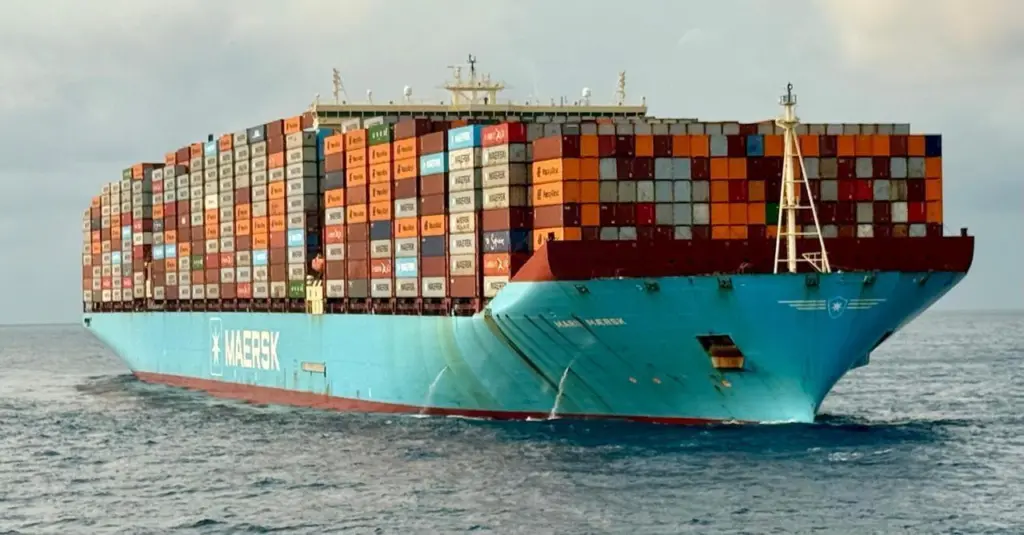
The container ship Marie Maersk was on passage from Rotterdam to Tanjung Pelepas, Malaysia earlier this month when the crew reported smoke emerging from containers on board.
The 2013-built, 19,076 TEU vessel, one of 20 Triple-E class container ships owned by Maersk, was off the coast of Liberia at the time on passage from NW Europe to Asia via the Cape of Good Hope, a now regular diversionary route from the usual shorter passage via the Red Sea and Suez Canal following Houthi rebel attacks on merchant vessels.
Response
As with most large container ship operators, Maersk is now well prepared for such incidents, and important to note is that the vast majority of such fires break out in the cargo and not the vessels themselves.
Container ship crews are now well trained and prepared to provide initial response, but inaccessibility to containers deep within the holds, the time that takes and the limited specialist equipment mean that almost invariably professional salvage assistance is required.
Such was the case for Marie Maersk, with fire-fighting tugs despatched to assist, and just five days later, Maersk confirmed that crew efforts and external fire-fighting support had prevented the blaze from spreading.
Even with the fire not completely put out, the ship remained fully operational with all machinery, navigation and steering systems working normally.
Maersk’s own Crisis Response Team had been activated, arranging coordination between the ship, salvage responders, coastal states, insurers and cargo owners.
Around two weeks later, following safety inspections and in consultation with authorities and the vessel’s class, Marie Maersk was deemed safe to resume its voyage around the Cape of Good Hope albeit with additional safety measures including the salvor’s fire-fighting team remaining on board.
Disruption
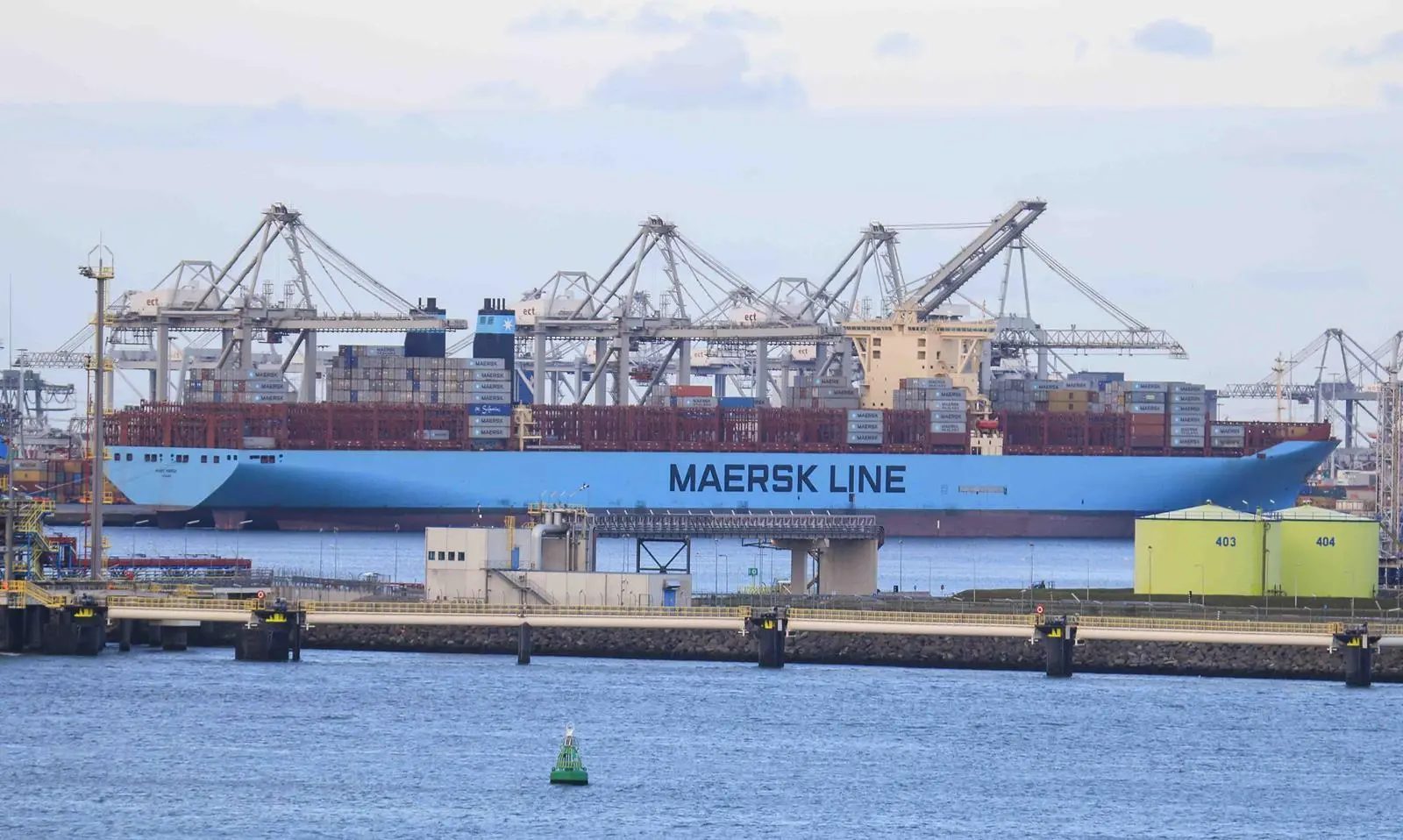
At time of writing it was not decided if an intermediate stop would be required to handle the damaged containers during its voyage to Asia, Maersk reported as saying that its overall goal was to ‘ensure a safe journey and fastest possible delivery of the sound cargo to our customers’.
It is often the case that most cargo on board container vessels that suffer fires remains undamaged, particularly with modern ship design where the accommodation block around a third of the vessel’s length provides a physical barrier to fire spreading throughout the ship.
With potential implications both financially and logistically in the ‘just-in-time’ world where the timely arrival of cargo is crucial, resuming the voyage for the undamaged cargo will be a preferred outcome.
Even once put out, there is the risk of re-ignition along with pollution from damaged cargo and toxic gases resulting from the blaze.
Seeking a port of refuge for the removal of damaged containers is an option but often difficult, given that many ports will not have the facilities for a hazardous cargo removal operation that may last weeks or even months.
With indications that the fire on Marie Maersk is restricted to a small portion of its total cargo, the vessel should continue to its original destination, albeit delayed.
Many such container ship fire casualties require removal of all damaged and undamaged cargo for onward transport, the ship itself heading for a shipyard – or worse.
Investigation
The subsequent investigation into what caused the fire will no doubt follow a well-tried process with fingers pointed at previous suspects.
An unavoidable feature of containerisation is that the contents are hidden from view and while rules and regulations are in place to ensure the contents are declared, allowing for specific risk assessments, it is impossible to physically check that each box actually contains what the paperwork says it does.
Shippers are legally required to declare hazardous goods, which comprise a surprisingly long list, including for example chemicals that really do not get on well with other chemicals close by.
Mis-declared and even undeclared hazardous cargo is a problem and along with other shipowners and ports, Maersk employs automated screening systems to flush out suspicious cargo bookings that can include incorrect UN codes and suspicious descriptions.
When the contents are accurately established, containers carrying hazardous cargo can be segregated to reduce risk and allow easier fire-fighting access, not to mention keeping such cargo well away from the crew’s own living spaces.
Prevention and response
Detection of fire, along with responses both mechanical and human, have improved vastly over time, each container cargo fire providing lessons and adding to the armoury of prevention and response measures.
Container ships are equipped with thermal monitoring sensors that detect temperature changes outside expected limits. These are not restricted to the cargo spaces but include the whole vessel.
Regular patrols of the cargo spaces are carried out, crews looking for smoke, heat build-up or unusual smells, and various detection systems such as smoke detectors immediately trigger alarms and a rapid crew response.
On board fire-suppression systems are common in ships, particularly container vessels, and can include automated systems where cargo holds can be flooded with CO2 to suppress oxygen.
High-capacity water mist and drenching systems for certain decks and spaces can be used to cool and contain fires, taking into account the potential for vessel stability. The crews also have the usual fire hoses, extinguishers and protective gear for more localised fire-fighting.
The same stability considerations have to be taken into account when salvors deploy powerful fire-fighting monitors from attending tugs, etc, and an example of where modern technology is part of their armoury is where thermal drones can be deployed to identify hotspots within container stacks.
Related Articles
 OTHER NEWS
 ACCESSORIES & EQUIPMENT
 SPECIAL REPORTS