![MaritimeJournal[Seawork]](https://www.maritimejournal.com/wp-content/uploads/2026/09/MaritimeJournalSeawork.svg)






Salvors on call for storms and typhoons
Extreme weather on opposite sides of the world have kept salvage contractors busy, reinforcing once again the industry’s contribution to protecting the marine environment along with preserving property and minimising financial losses.
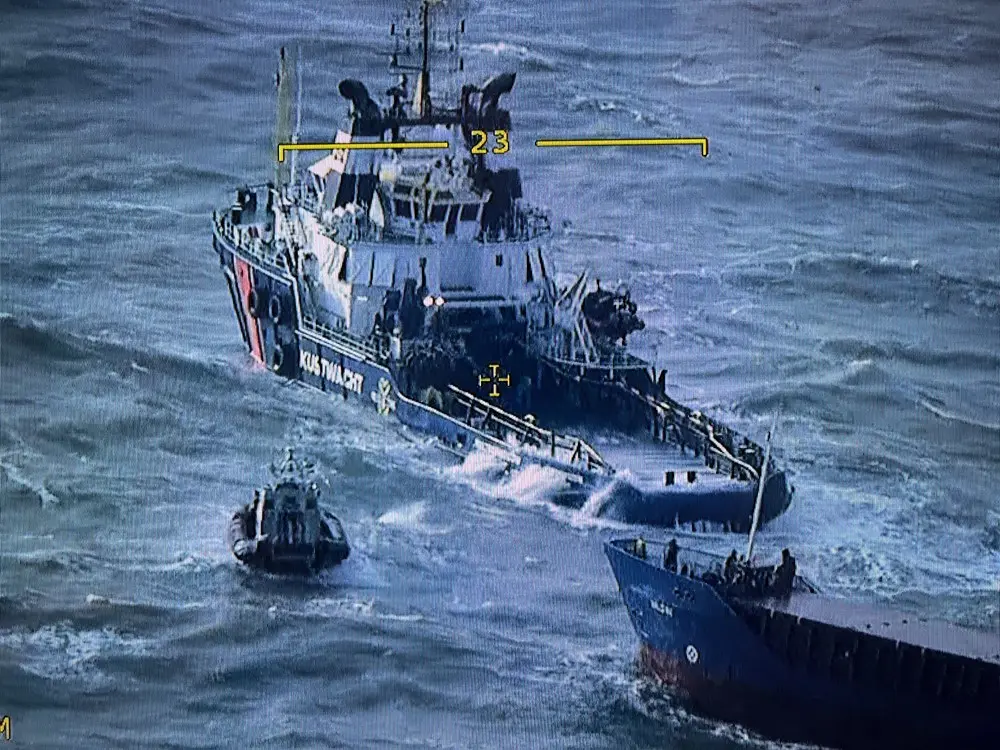
The subject of intervention from state-sponsored Emergency Towing Vessels (ETVs) was brought into focus recently when storm Darragh battered western Europe, causing disruption and problems both on land and at sea.
During the storm, the Antigua and Barbuda-registered general cargo vessel Valday contacted Netherlands Coast Guard after losing its rudder around 15 miles off Rotterdam. The 81.8m long, 2,503dwt vessel, with a crew of seven, also lost its anchors attempting to recover from the situation.
The Coast Guard tasked its chartered ETV Multraship Commander to the scene, one of three such vessels managed by Terneuzen-based, International Salvage Union (ISU) member Multraship Towage & Salvage. Fairplay Towage’s 75tbp, Voith tractor tug Fairplay-33 also responded, with a lifeboat from the Dutch KNRM organisation also involved.
Demonstrating the difficulties professional salvors face in bad weather situations, several unsuccessful attempts were made to connect a towline to the stricken vessel, including where an injured crew member on one of the tugs had to be airlifted to safety.
Multraship Commander eventually managed to connect a towline to Valday, preventing the vessel from grounding on the Dutch coast, meanwhile, Multraship mobilised a salvage team and with assistance from the tugs Fairplay-21 and Fairplay-29, the vessel was towed to the safety of Rotterdam and redelivered to its owners.
As well as Multraship Commander, Multraship also operates its sister vessel Multraship Protector and the Den Helder-based ETV Guardian, all three on charter to the Netherlands Coast Guard.
Pollutant removal
Shortly before this incident, and on the other side of the world, Smit Salvage, part of the Dutch Boskalis group, was in action removing pollutants from a cargo vessel wrecked after extreme weather conditions.
During typhoon Krathon and while navigating east of the coast of Orchid Island, Taiwan, the 79,00dwt bulk carrier Blue Lagoon lost power, laden with a cargo of steel slag residue.
The result was catastrophic for the vessel, which experienced heavy structural damage and “severe water ingress” due to the impact of large waves from the typhoon. For safety reasons the crew abandoned the vessel and were airlifted to safety by rescue helicopter.
Driven by wind and swell, Blue Lagoon eventually grounded on the rocky coastline of Taiwan near Lanyu and broke in two, and with any wreck removal activity a longer-term issue, attention turned to protecting the environment by removing pollutants on the vessel.
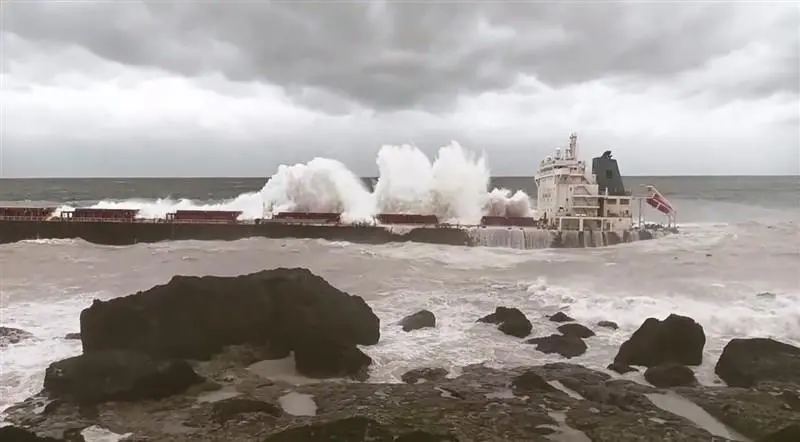
Potential pollutants included ‘hundreds of tons of fuel’, and Smit was appointed by the vessel’s interests to undertake the bunker and pollutants removal operation.
The first phase involved using ‘hot tapping’ techniques and following pumping and skimming of hydrocarbons from the surface of the flooded engine room, along with removal of other pollutants, the heavy fuel oil tanks were washed with hot water to remove any residual fuel.
Port of Refuge issue
Despite several typhoons affecting the salvage site, the operation was completed in line with the client’s and authorities’ requirements.
Smit has been kept busy elsewhere, including continued fire-fighting and salvage operations to container vessels in Asia and the Middle East, the latter involving a fire on a vessel crossing the Indian Ocean.
Initial stages for Smit involved controlling and extinguishing the fire, then attention turned to the sometimes difficult task of finding a suitable Port of Refuge to accept the vessel for continuing recovery operations.
In anticipation of the outcome of the Port of Refuge applications, the salvage team remained on board to monitor the extinguished containers and control fire-fighting water within the cargo holds.
ISU reports that Smit said the issue of Port of Refuge and dangerous cargo ‘proved once again a subject which affected the progress of the salvage operation which had a detrimental effect on part of the cargo’.
After a prolonged period and various applications, the UAE port of Jebel Ali was able and willing to accept the stricken vessel and after discharging all the damaged containers according to the salvor’s discharge plan, the vessel was finally re-delivered.
Related Articles
 OTHER NEWS
 ACCESSORIES & EQUIPMENT
 SPECIAL REPORTS