![MaritimeJournal[Seawork]](https://www.maritimejournal.com/wp-content/uploads/2026/09/MaritimeJournalSeawork.svg)






Shipwrecks, fires and abandoned ships: Inside international salvage missions
From wartime wrecks to modern maritime mayhem, the International Salvage Union’s latest report reveals 15 missions in the first quarter of the year in a pertinent reminder that in salvage, writes Peter Barker, no two battles are ever the same.
Marine salvage has its (semi-organised) origins in the 16th century but less formal recovery of treasure from sunken ships dates back more than 2,000 years.
There are two basic camps: salvage and wreck removal, both using similar hardware and expertise but under different legal and contractual arrangements, each activity drawing on different skill requirements.
The ISU’s analysis of the last 15 incidents has revealed they consisted of four vessel groundings, four fires, two capsizes and two vessel breakdowns. The other two involved fuel removal and oil response, and collision.
Running aground incidents
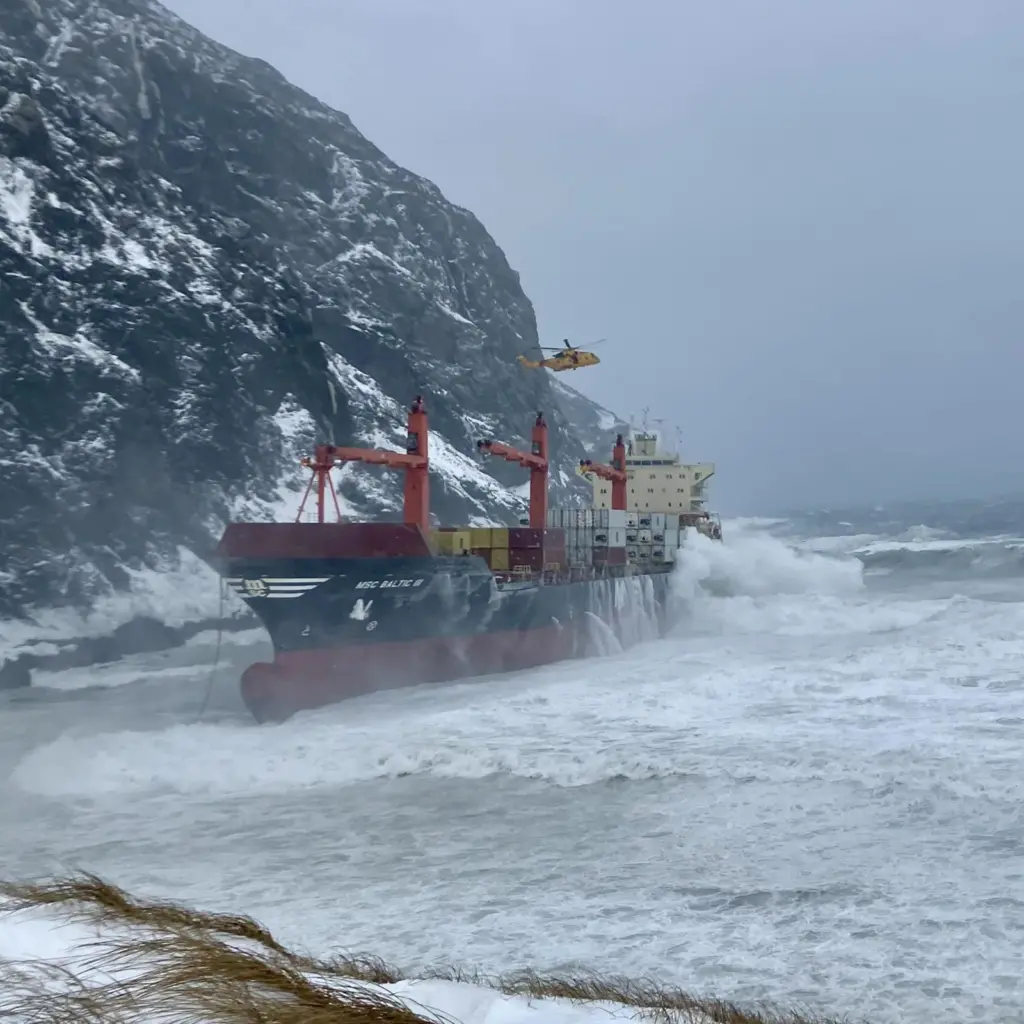
Prospects do not look good for the 2,478teu container ship MSC Baltic III, hard aground in a secluded cove in Newfoundland, Canada, with the Canadian Coast Guard maintaining an oversight into an operation that includes removal of pollutants into a barge alongside, with the removal of cargo also a priority.
T&T Salvage has been appointed to assess the vessel’s condition, with sources reporting that construction of a road to allow shoreside access to the vessel to mitigate weather delays is being considered, clearly a story with an end yet to be told.
When Smit Salvage signed a Lloyd’s Open Form with the owners of a geophysical survey vessel after it grounded on the Italian island of Elba, it collaborated with local partner Fratelli Neri to manage the situation.
The twin-hulled catamaran sustained a breach in its port hull and a diving inspection was organised to assess the damage. After the vessel’s bunkers were removed, buoyancy aids were installed and ‘acting with urgency and expertise’ due to imminent bad weather, the vessel was successfully re-floated, towed to a nearby marina and safely lifted ashore.
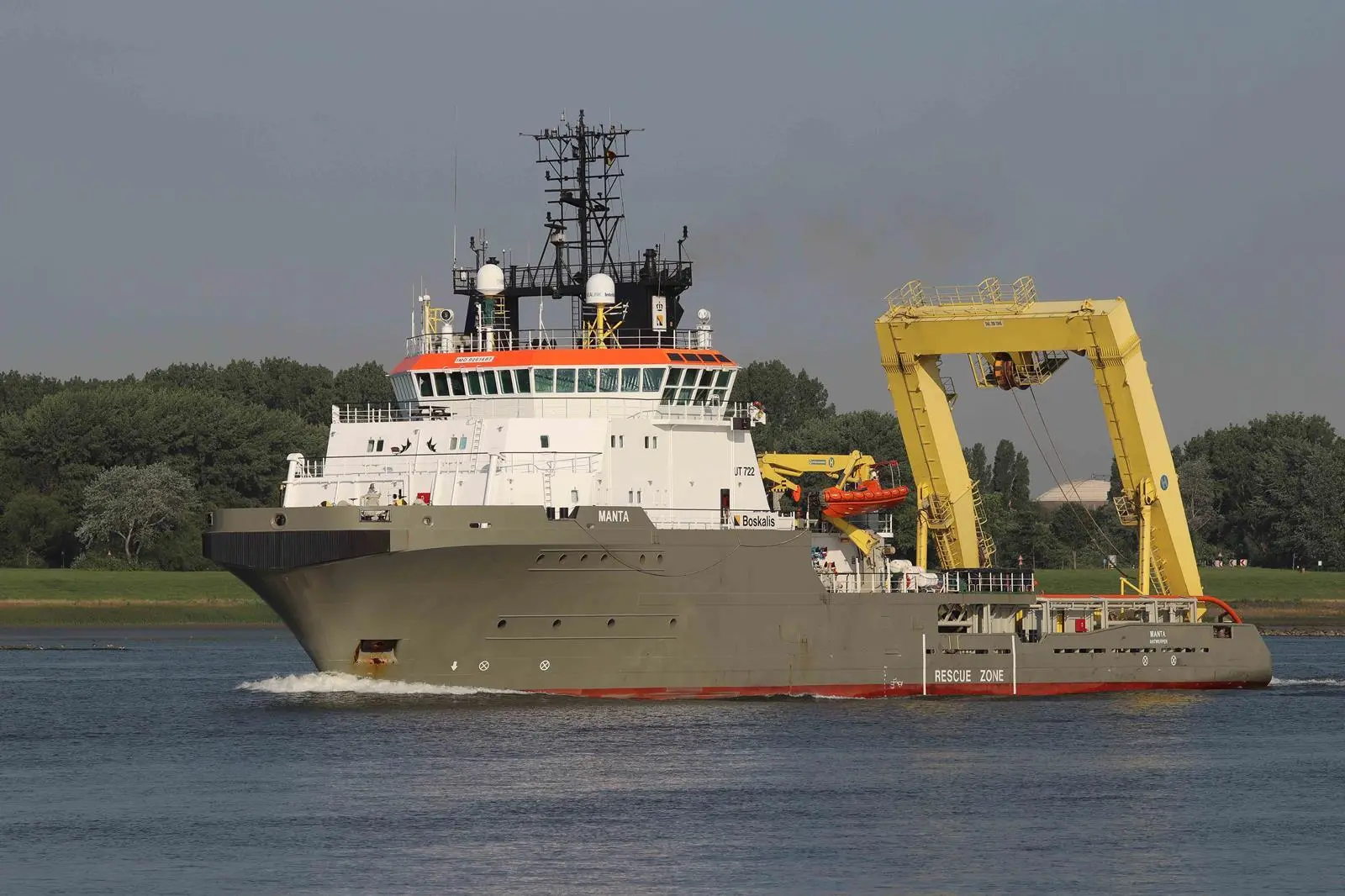
Meanwhile Greek salvor Tsavliris was engaged in a two-month operation when the bulk carrier Kamari stranded due to steering gear problems off Recife, Brazil. The Boskalis tug Manta was engaged for towing the vessel to Cadiz in Spain.
Fire: the most feared
Shipboard fires are among the most feared incidents seafarers face and they also pose particular problems for responders.
Fires can result from a sequence of unrelated events or spontaneously, perhaps from the ship’s cargo, conflagrations within containers, or increasingly, some believe, from electric vehicle transport.
Italy’s Grimaldi Group has experienced a run of bad fortune recently including fires on two of its roro/container ships. Smit Salvage was contracted under Lloyd’s Open Form earlier in 2025 when the Grande Brasile reported a fire on board during transit of the Dover Strait.
Initially it had been thought the vessel’s crew had the blaze under control, and a tow was requested to a port of refuge from partner and fellow ISU member Multraship.
But another fire broke out the same day, forcing the crew to abandon ship, and Smit was asked to assist with fire fighting. Parent company Boskalis deployed its 83tbp AHTS Kamara with a salvage team, bad weather later requiring a second more powerful Boskalis tug, the 180tbp Bear, to assist. Two days of boundary cooling followed before salvors were able to board Grande Brasile. Kamara was replaced by another tug, together with extra salvage personnel, allowing it to depart for its original project. Along with partner Multraship, the vessel was eventually towed to Antwerp, where Smit continued care-taking work until the cargo was unloaded.
Grande Brasile was later declared a total loss and recently reported to be heading for a recycling yard in Turkey.
Another incident involving a Grimaldi vessel highlights the role of America’s OPA 90 regulations, when after severe weather and shifting cargo, Grande Congo encountered a fire on passage from Valencia to Baltimore.
The vessel’s onboard CO2 system put out the fire, but the US Coast Guard issued an order directing the ship to Newport News Marine Terminal. Donjon-SMIT, as designated OPA 90 provider, mobilised a salvage team and along with shoreside agencies met the vessel and embarked on an extensive recovery programme.
Work included removing part of the vessel’s cargo, pollution prevention measures and temporary repairs including structural reinforcements, and following clearance from class and USCG, Grande Congo resumed its voyage just short of a month after the initial alert.
Finally, what started out as a fire led to a complex salvage operation when the yacht Atina sank off Olbia, Sardinia in the course of fire-fighting activities. Working with Dutch Offshore, Resolve Marine mobilised the 1,400t lift crane barge Conquest MB1, which parbuckled the casualty before lifting it onto the barge for onward transport to a scrapping facility.
Disabled vessels
Disabled vessels being towed to a place of safety can give the impression of a simple ‘tow you home’ operation but can mask the often complex issues involved.
The 53,284dwt bulker Evanthia was laden with raw sugar when it encountered main engine problems 300nm west of Cape Town. Tsavliris arranged for the salvage tug Umkhuseli to tow the vessel to Durban, redelivering the vessel around three weeks later.
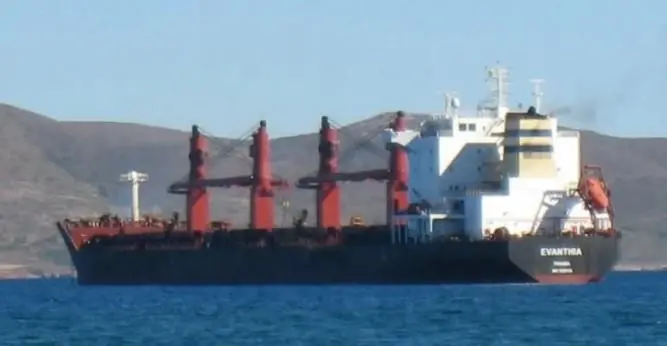
Tsavliris was engaged when the Evanthia broke down west of Cape Town
More thought was called for when another large bulk carrier was immobilised in bad weather 40 miles off Norway’s northern coast. Five Oceans Salvage mobilised the 62tbp tug Borge Parat from Tromso, the only available tug in the region.
With the casualty’s rudder stuck at hard to port, the subsequent tow was reported as ‘very slow’ and the Norwegian authorities assisted with their Emergency Towing Vessel KV Jarl, the two tugs bringing the vessel to the safe anchorage of Vannvag.
After salvors provided portable generators to provide power for the vessel, Borg Parat remained in attendance until the casualty vessel’s crew completed repairs and continued their voyage to Brazil.
Collision and abandonment
Collisions carry the risk of foundering for the vessels involved, and the bulk carrier Bosphorus-M was left ‘critically unstable’ with a 4m rupture below the waterline because of a collision with another vessel, losing nearly half its cargo of wheat.
Resolve Marine and ISU associate member Prantik Bengal Salvage & Diving restored buoyancy, and redistributed and discharged 9,000 tonnes of damaged wheat. Initial temporary patching did not survive subsequent bad weather and a doubler plate was installed over the damaged area.
The operation, completed successfully over 36 days, involved six vessels and 34 salvage crew members in what Prantik described as ‘one of the most technically demanding salvage operations in recent history’.
Other incidents reported by ISU include the complex recovery by Aras Salvage of a container ship in Turkey where the vessel had been abandoned by its crew, its owners, managers and even its insurers.
Following loss of stability the vessel sank during loading operations and the recovery involved removing containers and the vessel’s superstructure to reduce weight, sealing openings and stabilising with a 700t floating crane aft to ensure controlled lifting.
Historical shipwrecks
The final operation to mention demonstrates how shipwrecks dating back many decades are now threatening the environment because of deteriorating fuel tanks – having made the headlines in an era when removal of pollutants was not considered with the same degree of priority as today.
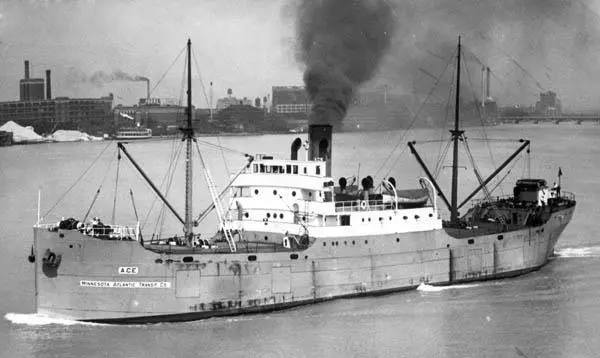
Resolve Marine was tasked by the Canadian Coast Guard to deal with the US Army transport ship General Zelinski, which sank in 1946 in British Columbia. Resolve’s work involved installing new hot tap valves, pumping out the remaining heavy fuel oil and placing pollution protection domes in six locations as designated by the coast guard.
While the International Salvage Union report covers Q1 2025, a wider view is required given that dealing with incidents can last from a few days to years, and there are almost always legal processes to deal with that can become protracted affairs before the case file is finally closed.
The range of activities salvage contractors undertake in modern times are far more complex than a roadside ‘tow home’ solution. And today, the marine equivalent requires even more focused attention on protecting the environment, now commonly seen as a priority before even saving property.
Related Articles
 OTHER NEWS
 ACCESSORIES & EQUIPMENT
 SPECIAL REPORTS