![MaritimeJournal[Seawork]](https://www.maritimejournal.com/wp-content/uploads/2026/09/MaritimeJournalSeawork.svg)


Strongest sea trials ever at Speed@Seawork
A record-breaking Speed@Seawork held on the Isle of Wight on Monday unveiled the strongest show of boats yet, reports Jake Frith.
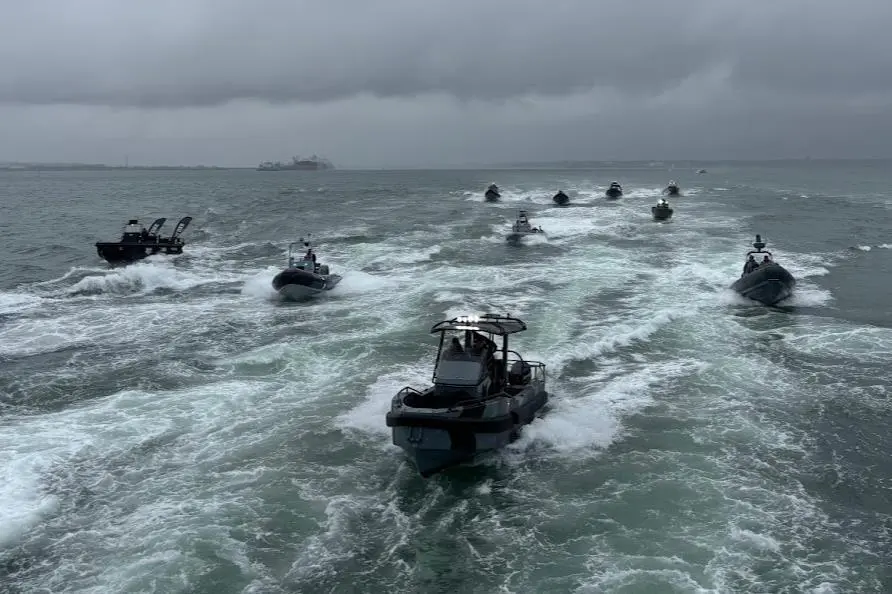
Having attended every Speed@Seawork event since its inception, I can confidently say that the 2026 edition was the most impressive yet.
This year’s event featured 18 vessels available for sea trials, significantly up on the 12 to 14 boats that have typically formed the demonstration fleet in previous years. The increased participation reflected both growing confidence in the sector due to recent geopolitical conflagrations and the growing importance of the event as a platform for showcasing high-speed maritime capability.
Notable was a strong international defence presence. Representatives from navies and maritime security organisations from around the world were in attendance, evaluating platforms ranging from military raiding craft and interception vessels through to commercial workboats and emerging autonomous systems.
One factor that continues to distinguish Speed@Seawork from many comparable events is its location. Operating in a section of the Solent free from speed restrictions allows manufacturers to demonstrate vessels in the environment for which they are actually designed. Prospective buyers are not limited to gentle harbour circuits; they can experience high-speed runs, aggressive manoeuvring and the real-world handling characteristics that are a key determinant of whether such a vessel is fit for purpose.
The day began in suitably dramatic fashion. Rain swept across Southampton Water as delegates boarded the Blue Funnel cruiser for the traditional on-water rendezvous. Emerging from the drizzle, all 18 participating craft assembled around the vessel before conducting a series of high-speed demonstrations. Viewed from the aft deck, the display provided an immediate indication of the diversity of designs represented at this year’s event.
Following the transit to Trinity Landing in Cowes, delegates gathered at the Royal Ocean Racing Club for welcome speeches, landside exhibitors, refreshments and the confirmation of sea trial slots before heading back onto the water.
Viking Norsafe Marathon S-900
The Viking Norsafe Marathon S-900 is a high-speed interception and rapid response platform powered by twin Mercury Racing 500 hp outboards mounted on hydraulic jack plates. Previously recorded at speeds of up to 84 knots in flat-water conditions, it arrived at Speed@Seawork with a formidable reputation.
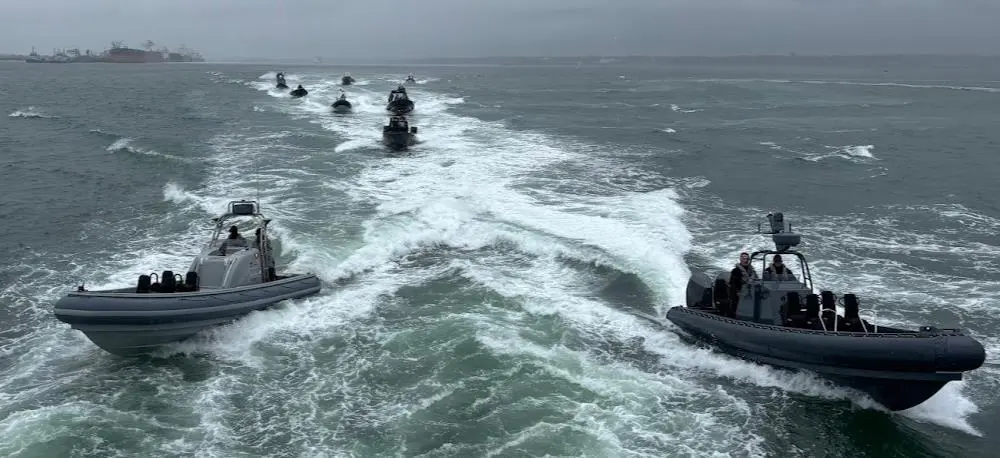
Despite the challenging sea state, the S-900 demonstrated remarkable capability. During our trial the boat achieved 74 knots in the Solent’s choppy conditions, making it by far the fastest vessel I experienced at the event and arguably the fastest I have encountered at any Speed@Seawork gathering.
Speed is just a number though. What impressed most was not simply the speed but the composure with which it was delivered. The vacuum-infused sandwich-core vinylester hull incorporates a twin-step design, yet handling remained predictable and confidence inspiring throughout. The rigid D-type fender system contributes to the vessel’s operational practicality while maintaining a clean, low profile enabling sure-footed turns at dramatic angles of roll.
Many high-performance craft become noisy and tiring when pushed beyond 60 knots. The S-900 did not. Instead, it felt refined, controlled and surprisingly quiet. It is a vessel clearly designed for operators who need to cover large distances quickly while maintaining crew effectiveness on arrival.
Viking Norsafe Marathon 800
A complete contrast to its S-900 sister’s headline-grabbing speed, the Viking Norsafe Marathon 800 demonstrated the virtues of balance and refinement.
Powered by Volvo Penta inboard diesel propulsion, the eight-metre RIB delivered one of the most polished experiences of the day. While not chasing outright speed records, it offered precisely the characteristics many professional operators prioritise: comfort, control and predictability.
The boat proved capable of exceptionally tight turns while maintaining composure and passenger confidence. Throughout the trial it felt like a thoroughly developed package rather than a collection of individual components.
For organisations requiring a dependable platform for long operational days on the water, the Marathon 800 arguably represented one of the most complete solutions on display.
Commando Raiding Craft, redeveloped by Griffon Marine
If the Viking represented raw speed, the Commando Raiding Craft (CRC) showcased operational practicality and conservative military-focused design evolution.
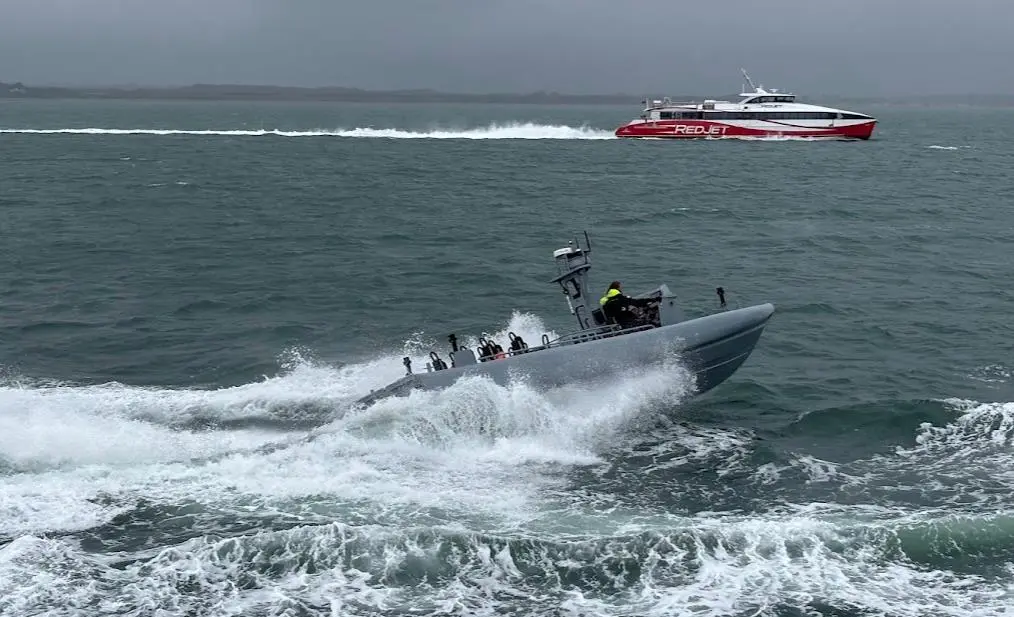
Developed by Griffon Marine, formerly Griffon Hoverwork, the 9m aluminium craft is designed for the Royal Marines (UK) and supports a range of littoral operations including reconnaissance, troop insertion and unmanned system deployment. Griffon brought one of their many hovercraft for which they are most famous to Speed too, but as I sampled one last year, I chose to forego this memorable experience this time.
The CRC represents the evolution of the former Offshore Raiding Craft (ORC). One of the most noticeable changes is the repositioning of the helm console. Whereas the ORC placed the driver aft, effectively giving the helmsman the most comfortable position while exposing passengers to a harsher ride, the CRC relocates the helm forward of the engine box with passengers seated aft.
The difference is immediately apparent. During the trial the CRC delivered an exceptionally smooth and refined ride. Twin inboard diesel engines coupled to Kongsberg waterjets provided strong performance while maintaining excellent crew comfort.
The demonstration also highlighted the tactical advantages of waterjet propulsion. The experienced helmsman performed a series of crash stops and bucket turns, manoeuvres that would allow military operators to rapidly alter course, reduce exposure and perhaps even react to threats in confined waters.
The vessel’s modular architecture reflects modern military thinking, where adaptability and rapid mission reconfiguration are increasingly important. It is a highly capable platform tailored to the dispersed and agile operating concepts now being adopted by many armed forces.
ROAM RX Beachlander
One of the more interesting stories at this year’s event came from ROAM Boats, a company whose origins lie firmly within the superyacht sector.
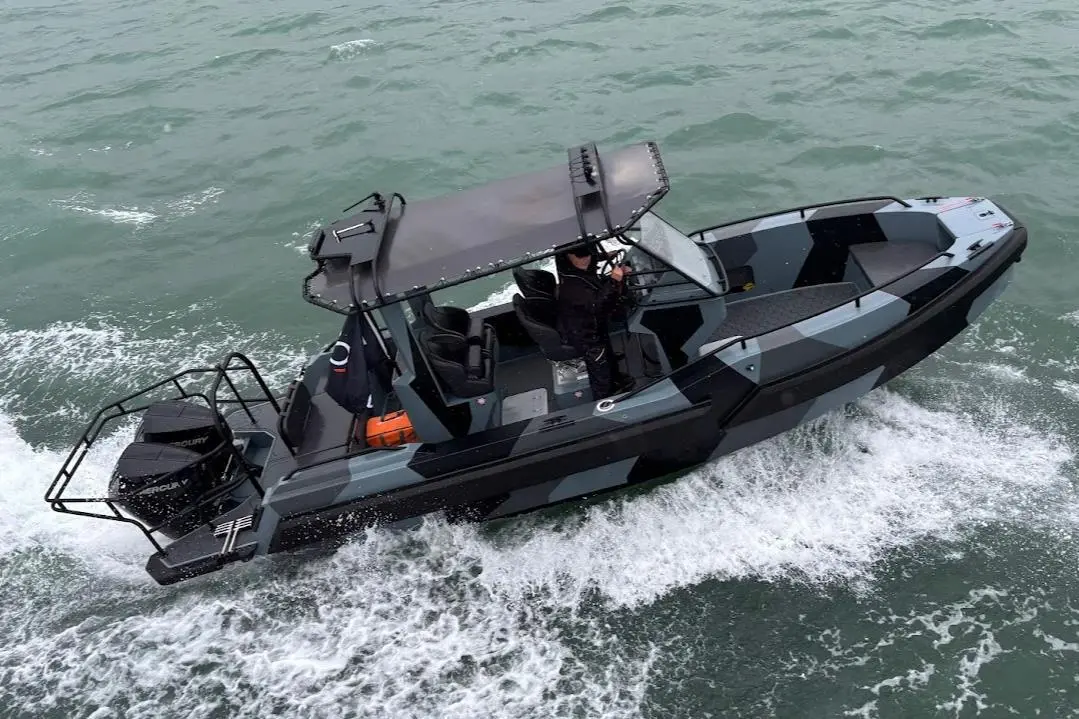
The crossover between luxury yacht tenders and military or commercial workboats may initially appear unlikely, but as ROAM’s CEO and joint founder Josh Richardson explained, the operational requirements often overlap significantly.
“Both sectors demand versatile platforms capable of carrying varied payloads, operating independently and landing personnel in locations with little or no supporting infrastructure,” he said.
The 8m RX Beachlander addresses these requirements through a robust aluminium hull and a distinctive folding bow access system that enables straightforward beach landings and personnel transfer.
The example demonstrated at Speed@Seawork formed part of an order for the Dubai military, illustrating this growing defence interest in designs originating from the yacht industry.
During our trial, one characteristic stood out above all others: visibility. The elevated driving position and carefully considered layout delivered excellent situational awareness, an increasingly important factor whether operating in a military, security or commercial environment.
ROAM’s approach demonstrates how innovation from adjacent sectors can produce practical solutions for professional operators.
Belassi USV
Few exhibitors represented a more unconventional path into the defence market than Austria’s Belassi.
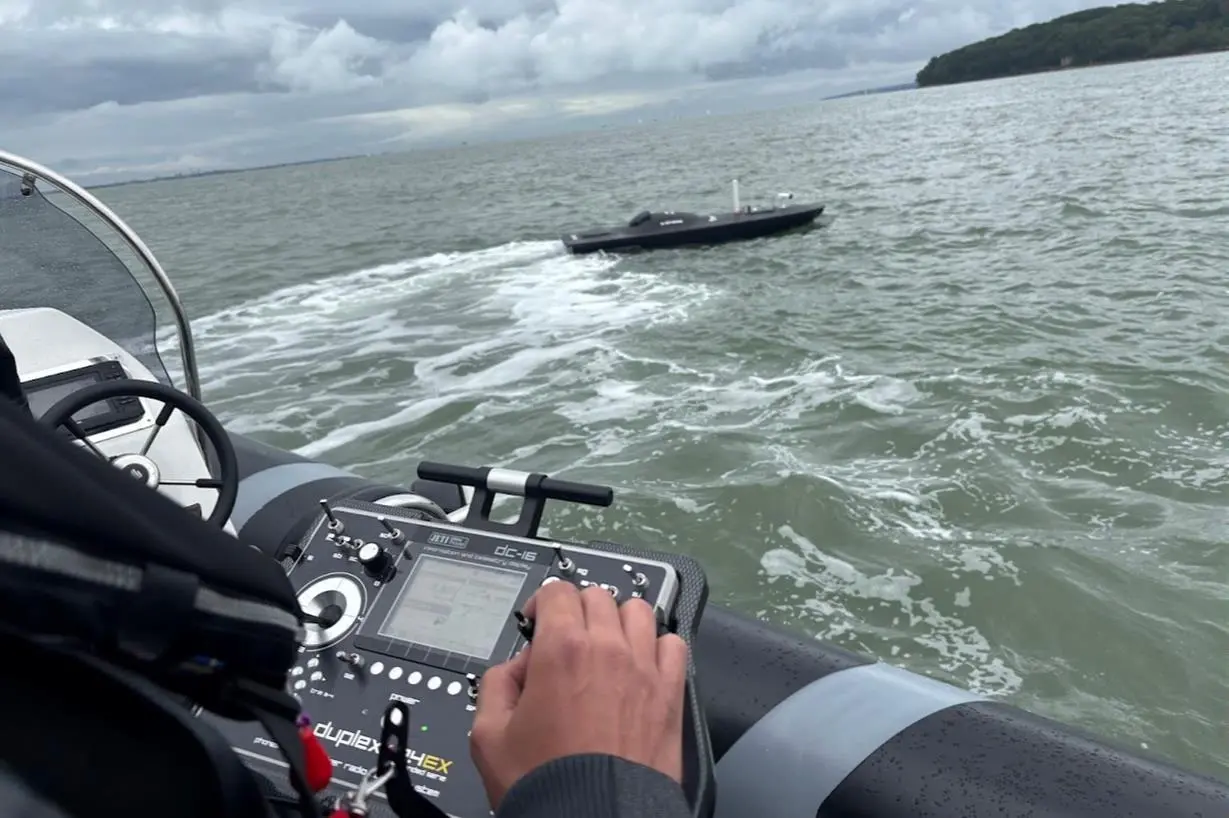
The company originally established itself through the development of a high-end, full carbon-fibre high-performance personal watercraft and, in doing so, needed to create its own advanced marine propulsion technology (turns out Yamaha or Bombardier won’t sell you any engines if you’re proposing to put them in a competitor PWC!) That expertise has now been applied to an uncrewed surface vessel platform capable of speeds above 70 knots, although variants of the engine are just as suitable for jet boats, tenders etc.
Despite a displacement of just 1.6 litres and a weight of only 118kg, the remarkable in-house-developed twin-turbocharged petrol engine produces approximately 400hp. And apparently that’s giving some power away to a massive cooling system and a lot of water passing into its exhaust to keep it quiet and with a low heat signature for military stealth.
The demonstration vessel was operated remotely during the event, highlighting the growing maturity of autonomous and remotely operated maritime systems.
While many companies entering the USV market integrate commercially available propulsion packages, Belassi’s decision to develop its own lightweight, high-output engine provides a unique technological differentiator. For a relatively small manufacturer, the achievement is impressive and indicative of the innovation currently emerging from which the autonomous maritime sector can benefit.
Diesel outboards come of age
One of the most valuable comparisons of the day came through back-to-back trials aboard two vessels powered by competing diesel outboard technologies.
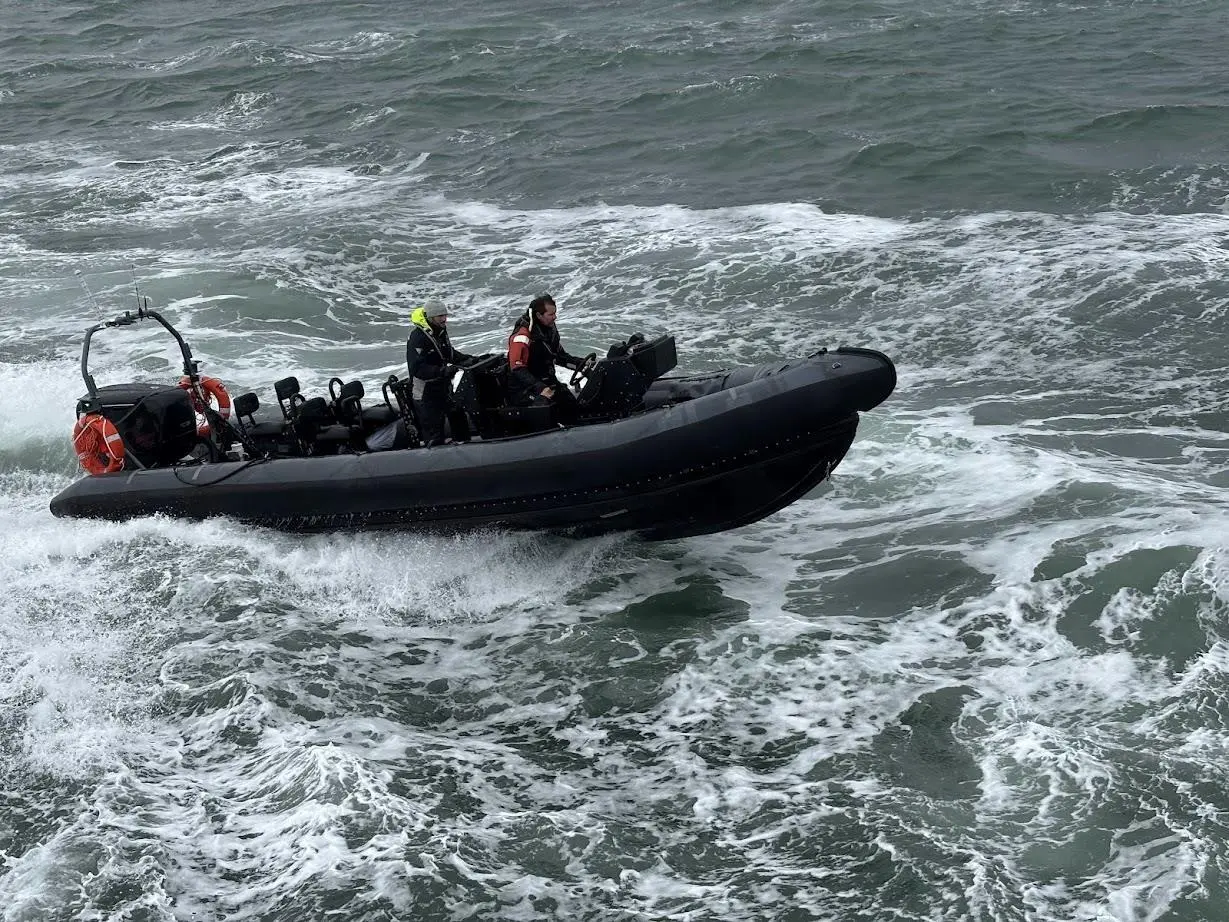
The first was a well-used Ministry of Defence specification Halmatic Arctic 24 RIB re-engined by exhibitor EP Barrus with a Cox Marine 300hp diesel outboard. The second was a Tideman RBB 900 centre-console workboat equipped with an OXE 300 hp diesel outboard supplied by Proteum.
Selecting a winner between the two would be difficult. What both demonstrated, however, was how far diesel outboard technology has matured.
Gone are many of the compromises associated with diesel propulsion. Instead, operators benefit from strong low-end torque, refined power delivery and reduced fuel consumption compared with equivalent petrol-powered alternatives.
The economics remain compelling. The Cox-powered Arctic reportedly consumes around 70 litres per hour at wide-open throttle, while operators using OXE-powered vessels are reporting savings of several thousand pounds per week in intensive commercial applications such as aquaculture support.
As fuel costs remain a significant operational concern across the maritime sector, diesel outboards continue to present a credible alternative for high-utilisation users.
Island RIBs 10m
My final trial of the day also proved to be one of the most memorable.
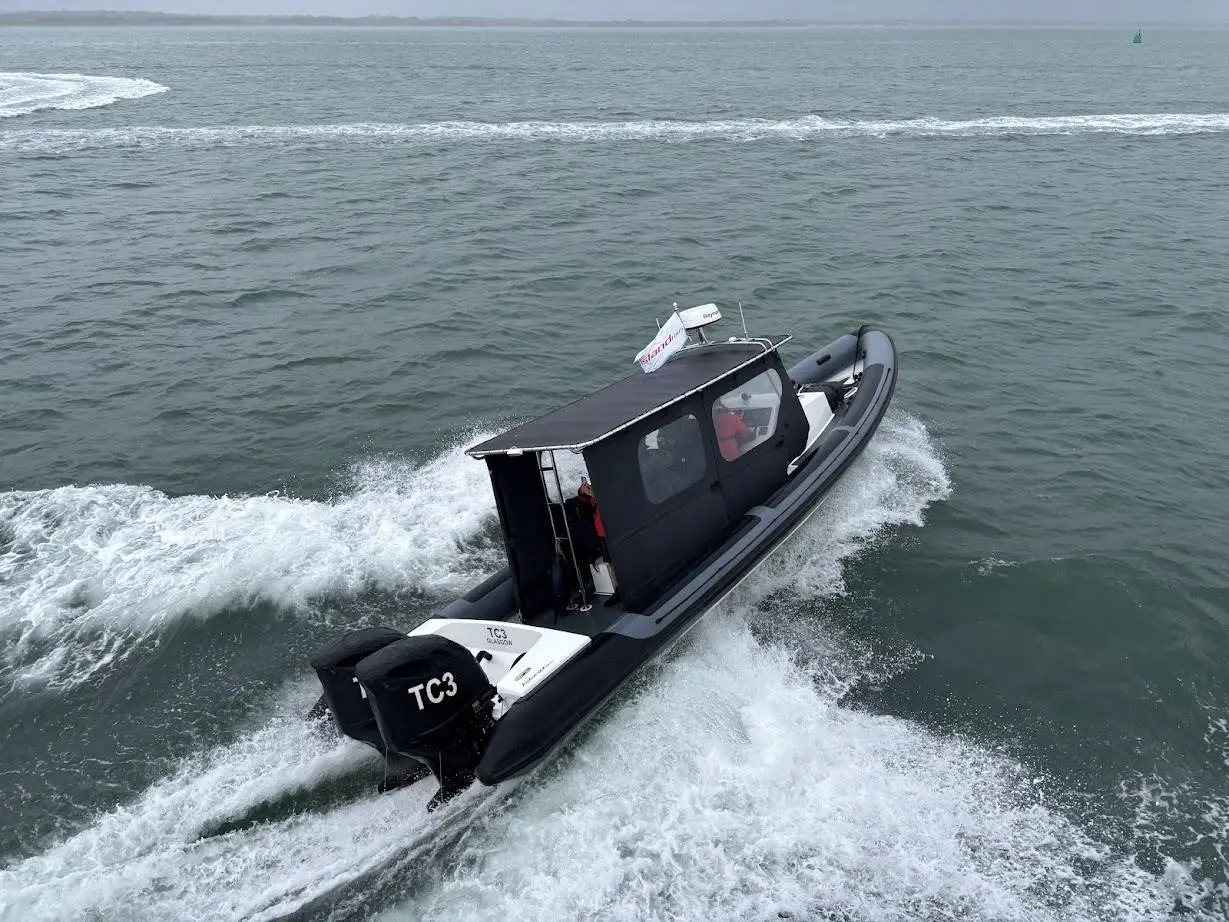
Built in Cowes, only a short distance from the event itself, the IR10 demonstrated that local expertise continues to compete successfully on the global stage.
The vessel currently operates from Islay, supporting activities ranging from premium wildlife and sightseeing charters through to event support operations. Yet the Island RIBs designs are also employed in demanding commercial applications around the world.
As Island RIBs Managing Director Alex Cottle explained, vessels from the range can be found surveying whale populations in Arctic waters before craft of the same design under different operators undertake similar scientific work, potentially on some of the same whales, months later in the Falkland Islands.
The common theme throughout the design is attention to detail. During the trial, numerous examples of thoughtful engineering and practical refinement became apparent. Nothing felt accidental.
The reward for that meticulous approach was a boat that handled beautifully. It tracked accurately, cornered predictably and maintained 53 knots through the Solent chop with minimal slamming or fuss.
The IR10 embodied a quality sometimes overlooked amid headline speed figures and technological innovation: genuine usability. It is a vessel designed by people who clearly understand the realities of working on the water.
Looking ahead
Speed@Seawork 2026 highlighted several themes shaping the future of professional maritime operations.
High-speed interception craft continue to push performance boundaries, military platforms are becoming increasingly modular and adaptable, autonomous systems are moving from concept to reality, and diesel outboard technology is gaining traction among commercial operators seeking improved efficiency.
Most importantly, the event once again demonstrated the value of practical sea trials. Specifications on paper tell only part of the story. Although most of these vessels will remain on display at Mayflower Park for the upcoming three days of Seawork, and Seawork itself does allow milder sea trials, experiencing these vessels at speed, in real sea conditions and performing operational manoeuvres provided insights that no static exhibition can replicate.
With record participation, strong international attendance and one of the most diverse fleets assembled to date, Speed@Seawork 2026 set a new benchmark for future editions of the event.
Related Articles
 OTHER NEWS
 ACCESSORIES & EQUIPMENT
 SPECIAL REPORTS