![MaritimeJournal[Seawork]](https://www.maritimejournal.com/wp-content/uploads/2026/09/MaritimeJournalSeawork.svg)


Tug heroes win award for saving 21 lives
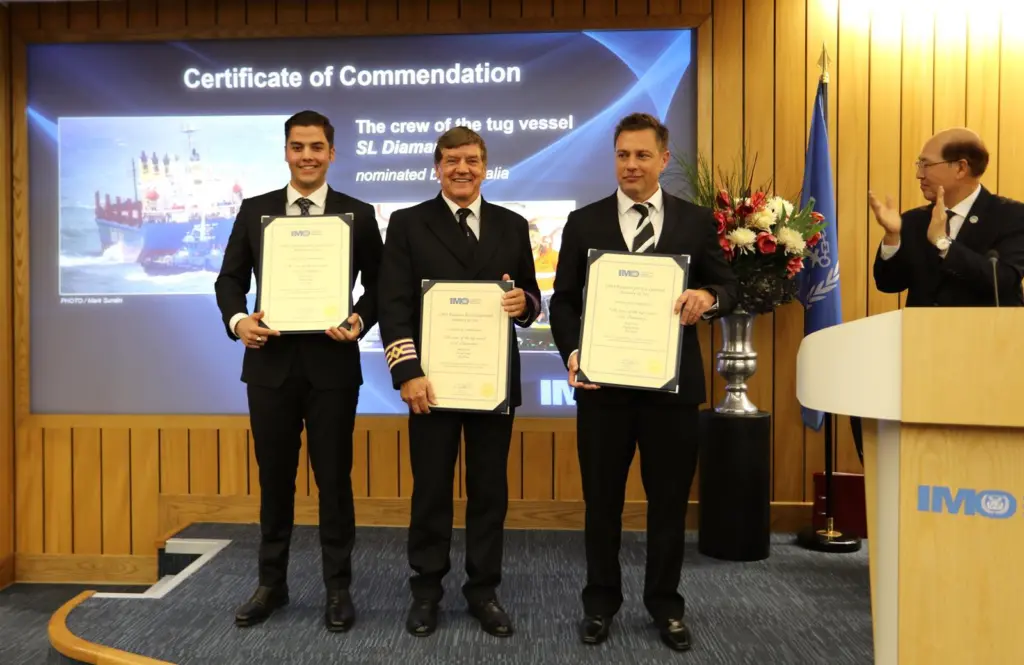
A three-man tug crew who saved the lives of 21 men and avoided a catastrophic oil spill were officially commended by the International Maritime organisation last week.
One of them, engineer Marius Fenger, 65, is still off work because of tendons torn when he fell on the stairs of the tug he was on that kept slamming into the vessel they were trying to save.
Fenger, captain Bradley Lucas, 47, and deckhand Alex Alsop, 23, were awarded the Exceptional Bravery at Sea prize by the International Maritime Organisation for an incredible rescue they carried out in July 2022, when the 169m oil tanker Portland Bay lost power and started drifting towards some cliffs at the Royal National Park near Sydney, Australia.
If the tanker had reached the cliffs she would have been smashed to bits along with everyone inside her. A thousand tonnes of spilled oil would also have wreaked deadly havoc to fishing stocks and marine life in the area.
At 8am on July 4, 2022 Bradley Lucas received a call to assist a stricken vessel – no other details were given – and within an hour, he and his ‘scratch crew’ had prepped and boarded the 32m tug Diamantina and set off from the Port of Botany in 8-10m waves. The tug should have had a minimum crew of six, ‘but there was no one else’.
“I was on captive duty on Fitzroy when the call came through,” said Lucas, speaking to Maritime Journal with his crew at the awards event at the IMO headquarters in London. “The port had been shut for two days and I was on standby in case one of the three ships there came off its berth.
“I was looking forward to a quiet day; the weather was pretty nasty outside. When the call came it was quite casual – it just said there was a vessel offshore that has lost its engines and were we able to assist? The details were very scant.

“It wasn’t a Mayday but when I looked at the chart plotters I knew in an instant that this was going to be catastrophic. I could see it was going sideways in a westerly direction, heading straight for the National Park.”
Lucas got hold of Alex Alsop and Marius Fenger.
“We were a scratch crew really,” said Fenger. “We know each other but we don’t normally sail together. We thought we’d be the last people to be called but there was simply no one else – we were the last resort.”
Action stations
When the crew heard that a helicopter dispatched had been unable to assist the crew on the tanker, they knew it was critical.
“I didn’t think we’d get there,” said Lucas. “I thought all my tyres would flip over and it would just be too rough. But I couldn’t just sit back and watch a ship smash into the rocks. We had to make an attempt. I didn’t think i was going to save a ship, but I was hoping to save people.”
It took 45 minutes to get clearance from AMSA (Australian Maritime Safety Agency) and Engage, the tug operator, during which time the crew desperately prepared Diamantina. They grabbed what food they could, which amounted to a loaf of bread, some chicken that had been cooked a couple of days before, peanuts and some dried mango strips.
“We needed to make sure the engines didn’t stop so I pushed the oil levels to the max,” said Fenger. “We transferred fuel and filled the tanks otherwise we’d be the ones being rescued. We had to tie stuff down because everything becomes a missile, so it all had to be taken off or be put away.”
“Looking at the swell I could see things were bad,” said Alsop. “When I got the call I raced down to the port and helped to take everything off the vessel that wasn’t needed. As we left the port the tug was taking on very heavy waves, rising to 8 to 10 metres out to sea, until we were going through them.
“It does cross your mind that you might not be coming back.”
Approaching Portland Bay
“As we approached the casualty, the tug was taking on substantial green seas, which carries the risk of taking away deck fittings, which is how you can get water ingress,” said Alsop. “The conditions were terrible. As we approached we couldn’t even see the vessel.”
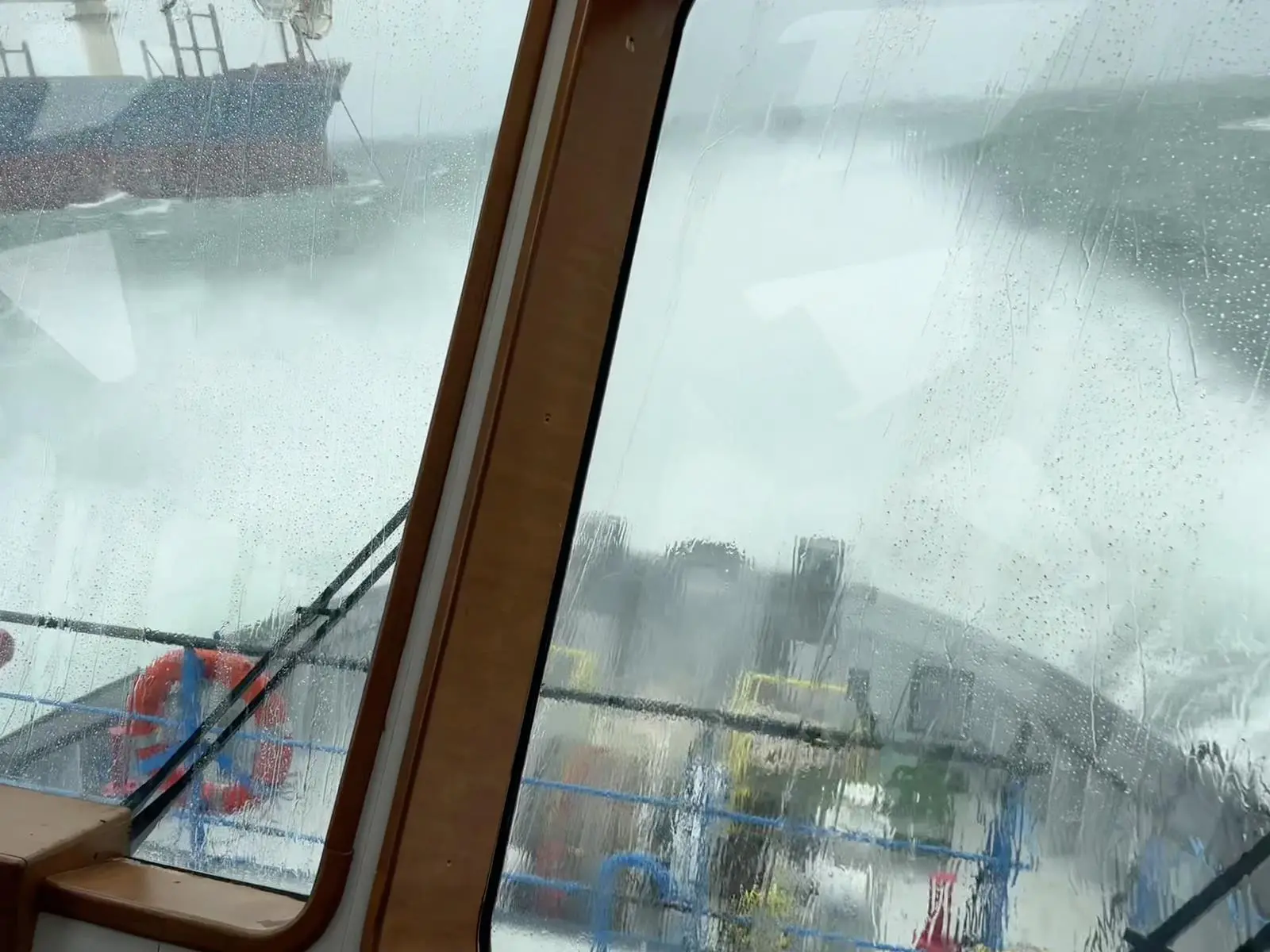
“I was worrying about the tyres because if they broke off and went underneath they could take out the propellers,” said Lucas. “But they went over the top, which eliminated some of the danger.
“When I heard the helicopter talking to the captain and saying that they had to abort that was a real game-changing moment for me personally, because I knew we were the only ones that could help.
“The captain, who was Ukrainian, didn’t say anything and he remained calm. I called him up and said I was on my way. He said it was about 42 minutes before they would run aground, and I estimated we were about 45 minutes away. That’s when we had to go at full speed.”
The crew could hear everything below decks being smashed as the tug was thrown around on the 10-metre waves. Everything was soaked.
“But adrenaline is amazing and we were just thinking about the people on the boat,” said Fenger. “We had to make sure the ladders and ropes were ready because the life rafts were useless. We had visibility of about 400 metres and we could see the cliffs.”
Portland Bay had dropped both anchors but they were dragging, said Lucas. He could see the bow of the ship coming up and about a third of the keel.
“Then the stern would come up and we could see the propellers and the rudders,” he said. “We had to do everything using radar. All of the experience I’ve had before with poor visibility and just using radar kicked in. Radar really is the number one piece of equipment.”
The tug was unable to push at the stern because of the propellers popping up out of the water. They tried to push from the side, but had to avoid the anchor chains so that was impossible too.
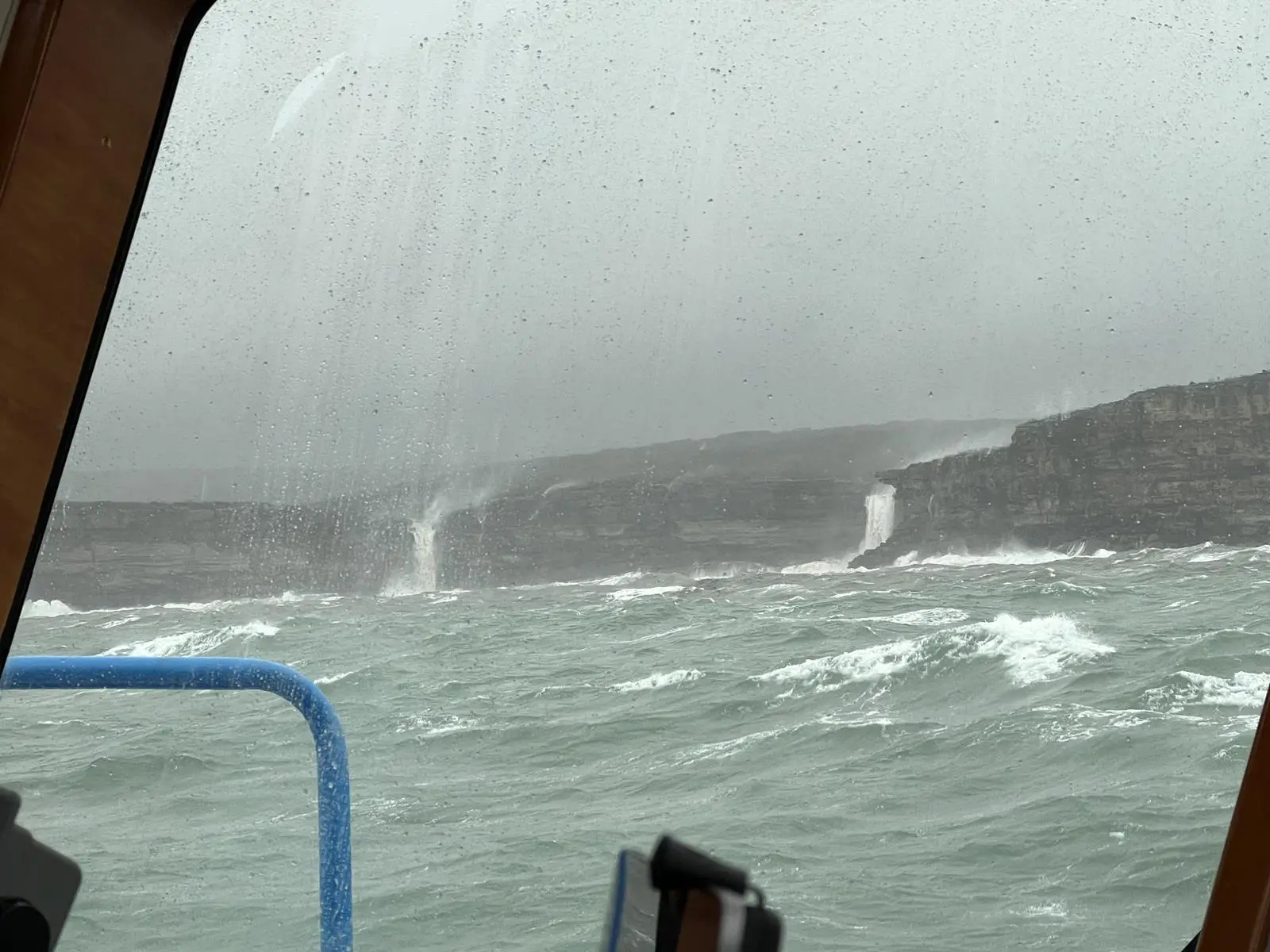
“We tried to push on the side of the ship and it immediately went on to the side of the swell, keeling over, and I thought the keel of our tug was going to pierce its hull,” he said. “We were lost for ideas, and all the time it was heading for the cliffs.”
Rescue
Lucas told the crew he would come down on their starboard side so they could try and throw a line for Alsop to grab at the front deck.
“The ship was going sideways at three to four knots, so we only had one shot,” he said.
Alsop made his way to the front deck by running from handrail to handrail as the tug pitched.
“I remember seeing the looks on the tanker crew’s faces,” he said. “It was just desperation. I saw a bit of defeat there.”
Indeed they had all but given up – the Diamantina crew later found out that after heading all night towards the cliffs and being aborted by the helicopter, the men on board the Portland Bay had said farewells to their families in the Philippines.
Here, literally, was their life line.
Catching the line was the scariest bit, said Lucas. They couldn’t see it but there was no other way to do it – and if they got it wrong, Alsop could have lost an arm.
But he made the catch first time and for the first hour they were attached, while Diamantina tried to turn the ship around.
There then followed a sequence of attaching and breaking lines, until eventually they had to fix the tow line to the mooring line because they had run out of tow wire.
“We still don’t know why the lines kept breaking, what they were attaching them to,” said Lucas.
This carried on for four hours while below the noise of smashing cups, plates and microwaves continued, and the storm lashed the vessels.
“I remember a massive water drum that I just couldn’t fix anywhere,” said Alsop. “No matter how I tried it always broke free, breaking everything in its path.”
As the crew did their best to hold the tanker, which was still drifting in the direction of the rocks but much more slowly, they were tracking the tugs in Sydney harbour that were getting on their way.
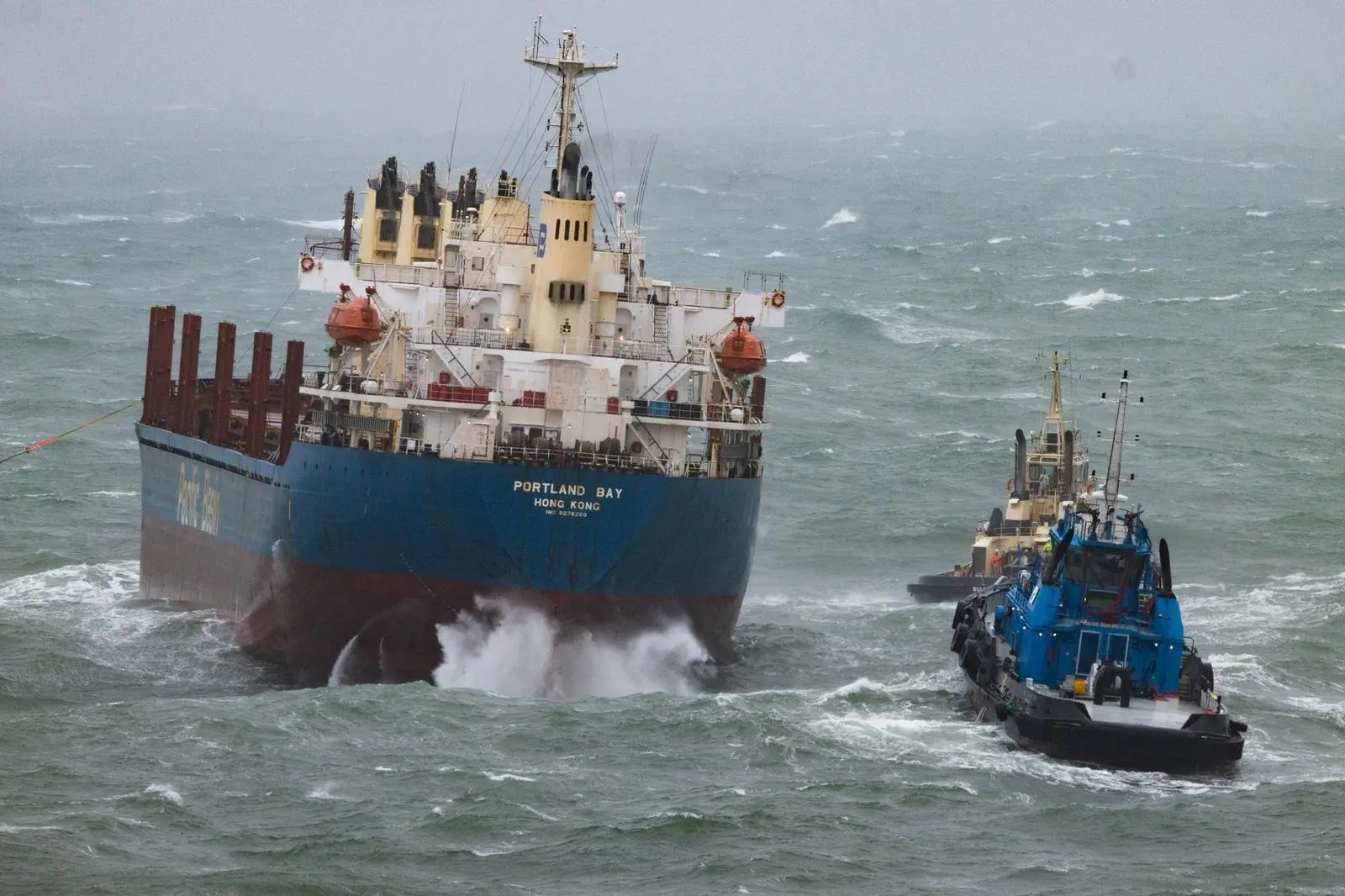
Two arrived at 2pm with bigger crews, longer lines and the equipment to finally tow Portland Bay to safe waters. Diamantina shadowed the vessels until they were safe, and could return home to worried families.
Last word
More than a year later, memories are still fresh.
“One of the main things is the values of teamwork,” said Alsop, who is now a skipper. “And demonstrating outstanding courage in the face of overwhelming odds to render assistance to our fellow brothers and sisters at sea.”
“I’m particularly proud of the cohesiveness within the group of the three of us to hang in there to stay together and just keep trying and trying,” said Fenger.
“I know what these tugs can do out in bad weather. The vessel will go through it, it’s a tough boat, said Lucas. “But I want to thank these guys.
“I work with a lot of different deckhands and engineers but I believe I probably got the best. Alex was unbelievable on the deck, he risked his life – he was the one who got out on deck and he caught the line.
“Marius was up and down controlling that vessel – it wouldn’t have gone without Marius. He injured himself on the stairs and didn’t say a word, he carried on with his duties.
”We should have had a crew with a minimum of six, but there were just three of us. I couldn’t have done it without either of them.”