![MaritimeJournal[Seawork]](https://www.maritimejournal.com/wp-content/uploads/2026/09/MaritimeJournalSeawork.svg)

Ulsteins jack of all trades reveals growing vessel trend
The design for one new offshore wind installation vessel unveiled by Norwegian shipbuilder Ulstein will be welcome in an industry chronically short of such vessels.
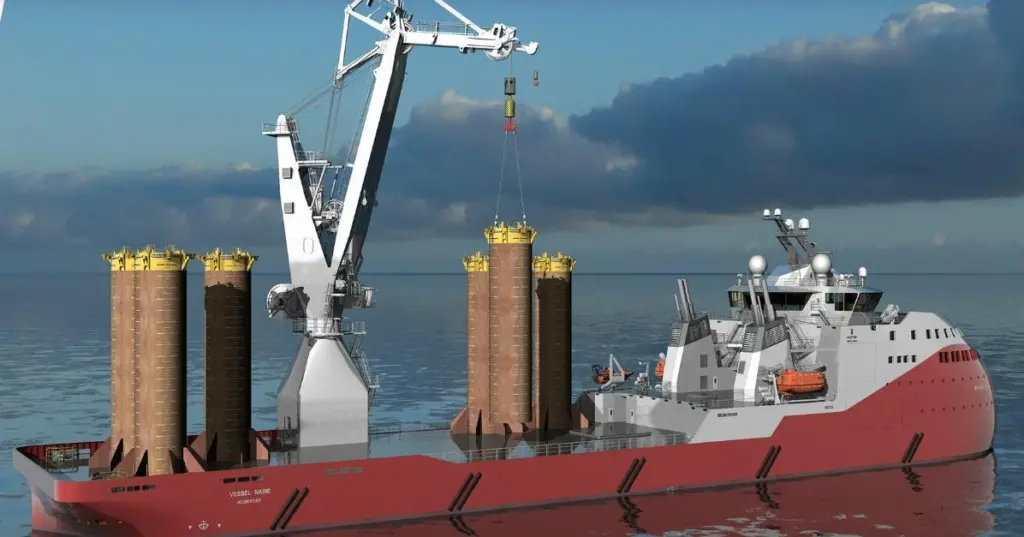
The company has unveiled a subsea vessel concept that targets both floating and fixed-bottom offshore wind, but is also equipped to support oil and gas.
The Ulstein SX232 combines heavy-lift capability, a large deck space of around 2.000m2 and ‘battery and alternative fuel options’, which it does not specify.
The deck could accommodate cable carousels, subsea structures or modular installation spreads, Ulstein says.
The SX232 incorporates a centre moonpool and twin ROV hangars, enabling the deployment of remotely operated vehicles for inspection, construction and intervention tasks. In its baseline configuration, the vessel is equipped with a 250-tonne offshore crane, with the design allowing for an upgrade to as much as 400 tonnes for heavier subsea lifts.
The vessel, says Ulstein, is based on three core principles ‘that make it stand out from the competition’:
- An optimised hull design based on its Twin X-Stern hull
- A smart power and propulsion system developed to minimise energy consumption
- An integrated energy recovery system that uses all waste heat in the machinery systems, such as cooling water and the exhaust.
Slow growth in the global fleet
One of the hurdles to installing offshore wind has been the chronic lack of specialised vessels with which to do so.
The cost of building a single vessel can range from €300 million to €500 million, so it’s a big risk to take, especially when the size of turbines is growing year by year, rendering the older installation vessels obsolete. Uncertainty in the offshore wind sector has also thrown up red flags.
A Rystad Energy report published in February 2022 projected that demand for offshore wind turbine installation vessels worldwide, excluding China, would grow from 11 vessel-years in 2021 to almost 79 vessel-years by 2030, ‘vessel-years’ being the number of years a vessel would be needed to work full time.
According to WindEurope, Europe alone will need 20 to 25 high-capacity installation vessels, 45 to 55 Service Operation Vessels and more than 170 Crew Transfer Vessels on top of the current fleet by 2030 to meet its offshore wind targets.
Another chronic lack is that of crew, and these vessels need highly specialised marine engineers, crane operators and offshore construction crew to operate them. Training pipelines take years to develop, meaning that even if vessels could be built quickly, finding qualified crews to operate them remains a serious constraint.
Jacks of all trades
In developing a multi-purpose vessel, Ulstein is covering some of its bases: while wind farms have long been partially built by vessels whose primary use was in oil and gas, an emerging trend seems to be that developers are designing vessels at the outside to straddle both worlds.
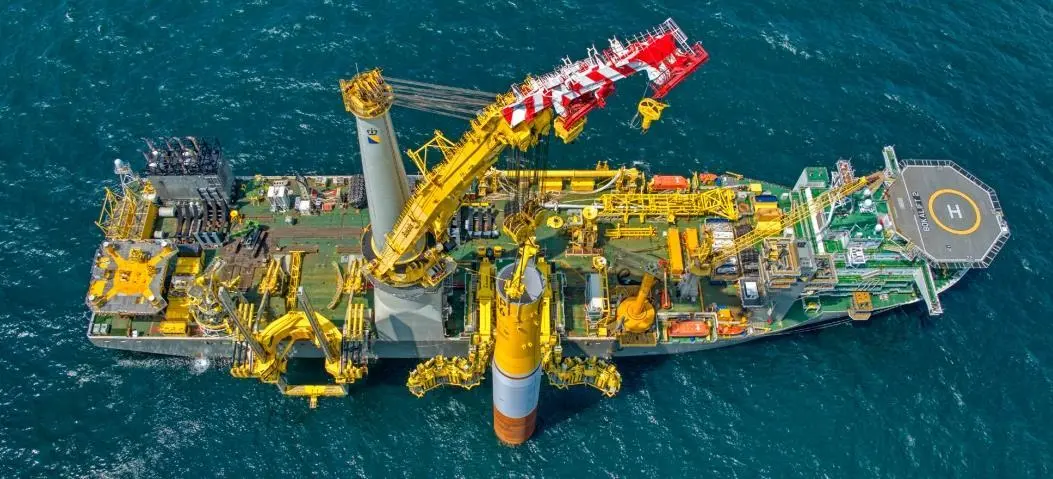
Boskalis, for example, has two heavy-lift vessels – Bokalift 1 and Bokalift 2 – which have crane capacities of 3,000 and 4,000 tonnes and can be used for the transport and installation of jackets and monopiles for offshore wind turbines, or for oil and gas platform installation and decommissioning work.
Seaway 7’s Alfa Lift, also designed by Ulstein, can also work across both industries.
The 216-metre semi-submersible can carry up to 14 giant monopiles per trip and submerge its main deck to a depth of 14.66 metres. While its primary role is offshore wind foundation installation — its first assignment was Dogger Bank in the North Sea — the flexibility in its design makes it capable of carrying out heavy transport, installation and decommissioning activities in oil and gas.
The SX232 sits at the intersection of these segments: more versatile than a pure jack-up turbine installer, less extreme in heavy-lift capability than the largest wind installation ships, but purpose-designed to bridge floating and fixed wind, cable work and subsea construction.
Related Articles
 OTHER NEWS
 ACCESSORIES & EQUIPMENT
 SPECIAL REPORTS