![MaritimeJournal[Seawork]](https://www.maritimejournal.com/wp-content/uploads/2026/09/MaritimeJournalSeawork.svg)

Viking raids fast craft market with battle-ready RHIBs
Viking Life-Saving Equipment is expanding its presence in the fast craft sector, using Seawork 2026 to showcase its high-performance RHIB design capabilities.
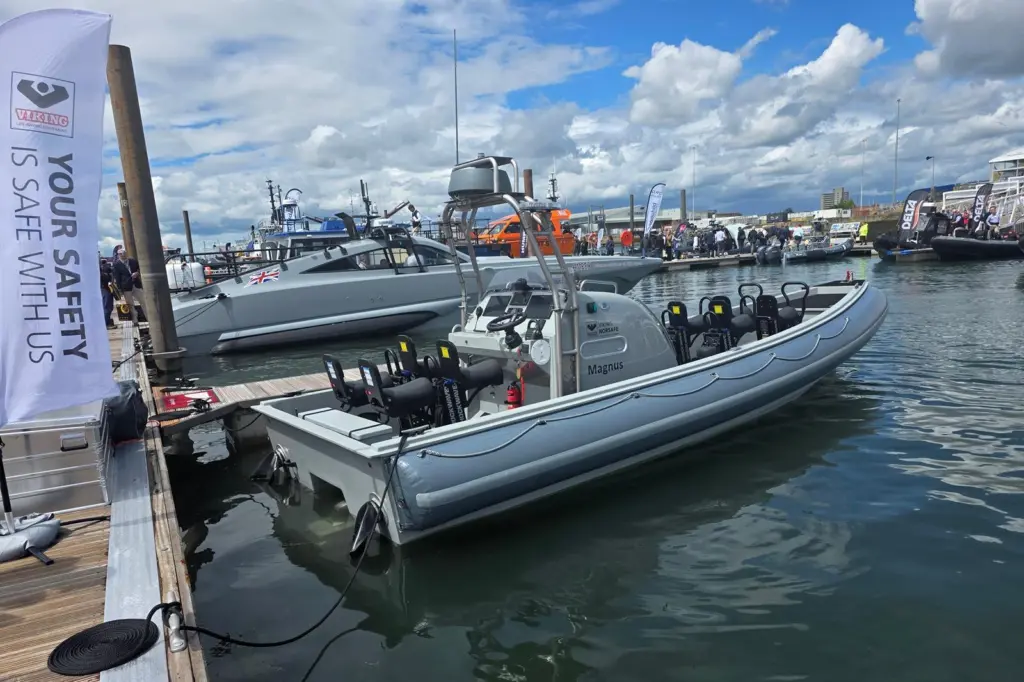
The maritime safety specialist demonstrated its Viking Norsafe Marathon 800 and S-900 interceptor RHIBs during sea trials between Fawley and Cowes, targeting defence, search & rescue and professional maritime operators seeking greater performance, versatility and operational support.
“We have more than 120 years of boatbuilding heritage, so high-performance RHIBs are not a new direction for Viking,” Greg Allanach, director – Defence & Professional at Viking Life-Saving Equipment, tells Maritime Journal.
“Through Viking Norsafe, we are an established and trusted partner to defence, border security and professional maritime operators across the Nordics, Scandinavia, Greece and beyond.”
More than equipment
Although Viking is globally recognised for its life-saving appliances, evacuation systems and maritime safety equipment, the company is now looking to increase awareness of its vessel design expertise within the UK commercial marine and defence sectors.
Allanach says Seawork 2026 was a strategic opportunity to demonstrate that capability directly to UK operators and procurement teams.
As operational pressures intensify across defence, border security, law enforcement and SAR operations, he believes demand is growing for fast craft capable of delivering high-speed performance without compromising safety, durability or operational flexibility.
“As operational demands facing these operators continue to intensify, there is a clear need for fast craft combining mission-critical performance and build quality with the safety standards Viking is known for globally,” he says.
“With the Marathon platform, we have vessels that can genuinely set new benchmarks in this segment and make a difference for our customers.”
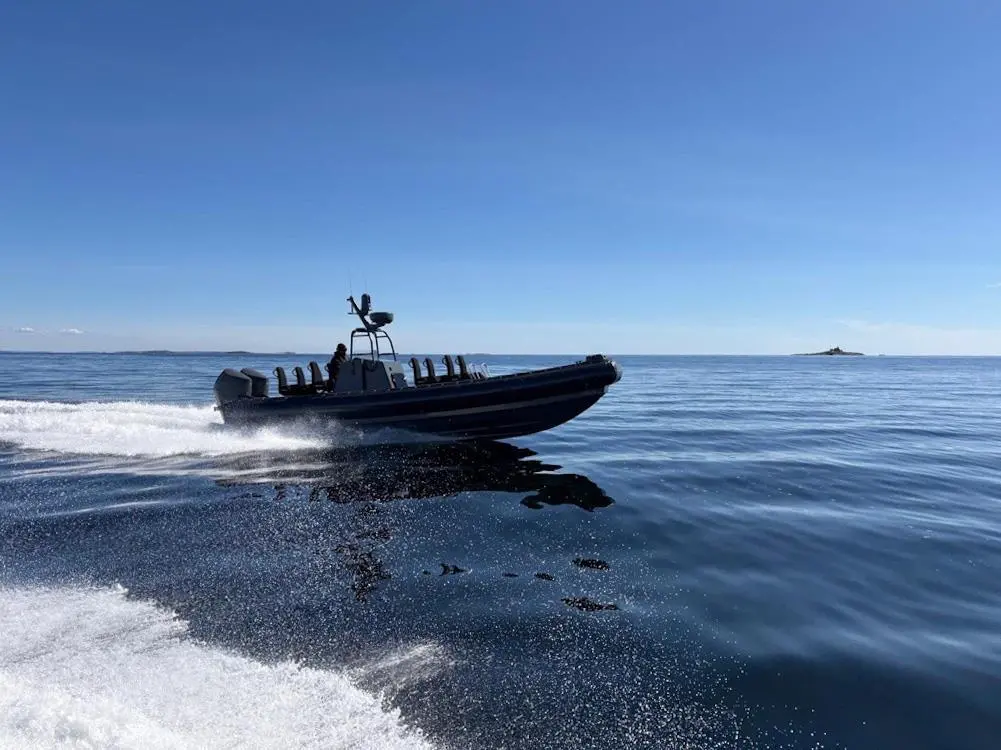
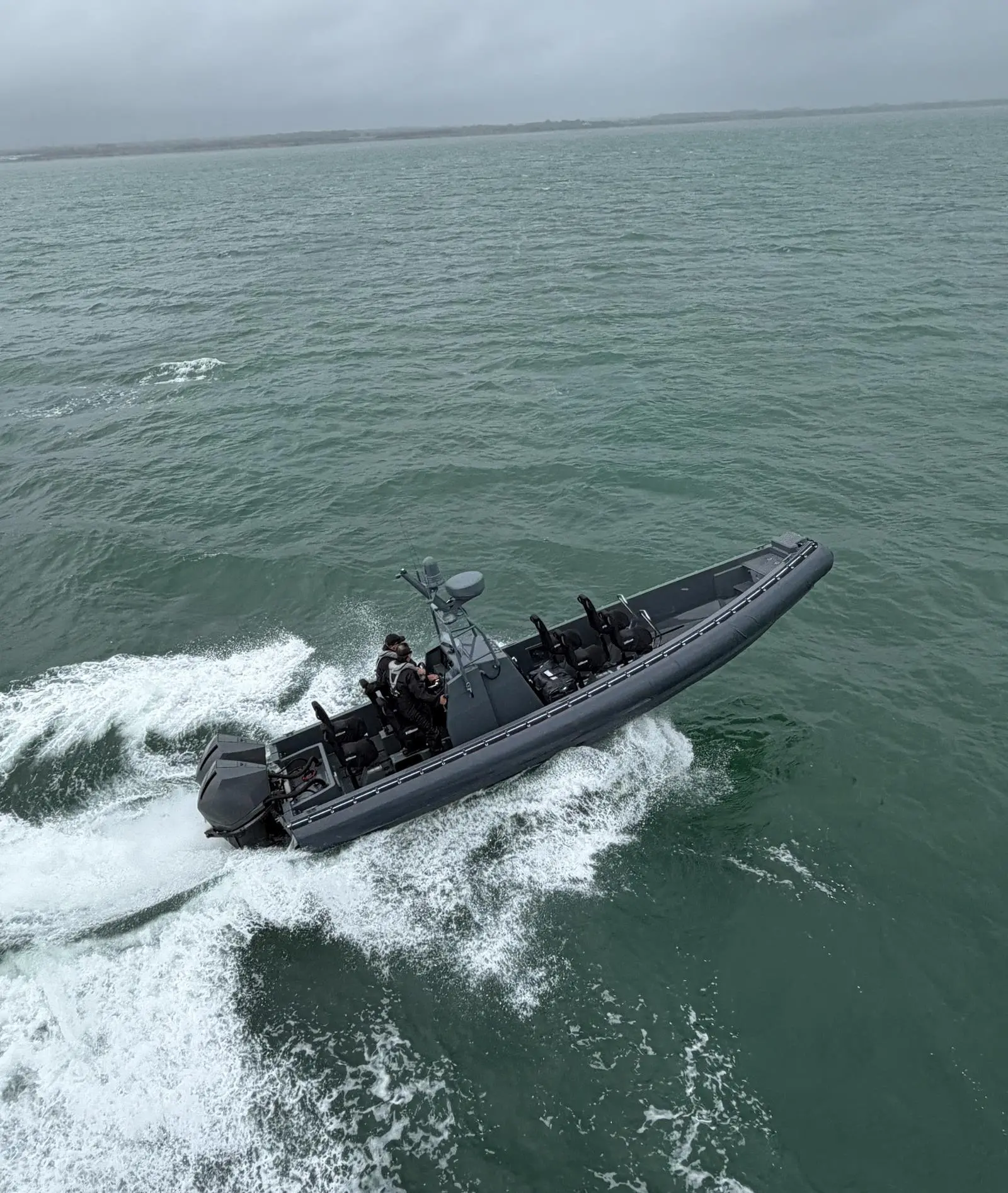
The Marathon RHIB platform formed the centrepiece of Viking’s Seawork presence. The company showcased both the Marathon 800 and the S-900 interceptor RHIB during live on-water demonstrations in Solent conditions, allowing operators to assess the vessels in realistic operating environments.
Allanach says the demonstrations were designed not simply as product showcases, but as practical evidence of the vessels’ operational handling, performance and adaptability.
“The S-900’s performance, capable of over 80 knots, yet composed under challenging Solent conditions at Speed@Seawork spoke for itself,” he says.
“But equally important is what Maritime Journal observed about the Marathon 800: its balance, comfort and polished handling make a case for the Marathon being one of the most complete and flexible platforms available for professional operators.
“We like to say there is a Marathon for any mission.”
Competitive market
The RHIB design market remains highly competitive, particularly within defence, search & rescue, offshore energy support and law enforcement applications. Operators increasingly require vessels capable of multi-role deployment while maintaining low downtime, high reliability and manageable lifecycle costs.
Allanach argues that VIKING’s differentiation lies in combining high-speed vessel design with the company’s wider global maritime support infrastructure and longstanding safety engineering expertise.
“The Marathon RHIB platform combines extreme performance with customisation flexibility and operational practicality, qualities rarely found together,” he says.
Behind the vessels themselves sits Viking’s broader operational network. The company employs approximately 3,800 staff globally across seven manufacturing facilities, eight training academies and 75 locations supporting maritime operators worldwide.
“Behind every boat we deliver is the global Viking organisation – our service infrastructure, safety expertise and a solid supply chain built for serving the needs of maritime operators across industries and applications,” says Allanach.
That global support capability is becoming increasingly important for professional operators managing dispersed fleets and demanding operational schedules. Procurement decisions across defence and search & rescue sectors are increasingly influenced not only by vessel performance, but also by lifecycle support, crew safety, training provision and long-term operational resilience.
Allanach believes this is an area where Viking can drive a meaningful step change in the fast craft sector over the coming years.
“Operators face growing pressure for greater mission versatility, lower total cost of ownership and no compromise on crew comfort and safety,” he says. “Viking’s opportunity is to bring our safety engineering heritage and global service capability into a segment historically underserved on those dimensions.
“We intend to demonstrate that the highest-performing vessels can also be the safest and best-supported — and that Viking is uniquely positioned to deliver that at scale.”
Commercial momentum
The company’s recent commercial momentum reflects growing international demand for high-speed professional craft across defence, customs enforcement and border protection operations.
One of Viking’s most notable recent contracts involved supplying interceptor vessels to the Norwegian Customs Service.
The agreement, announced late last year, highlighted increasing demand for high-performance RHIB design capable of supporting anti-smuggling, border enforcement and rapid-response operations in challenging environments.
Allanach says that project represents only part of a much broader international trend.
“Interest in our boat solutions is genuinely broad,” he says. “At Seawork, we hosted representatives from police, defence, border patrol, coastguard, port authority and SAR organisations from the UK and overseas.”
He adds that navy special operations units and anti-drug border force professionals are also among Viking’s recent customers – sectors where vessel reliability, operational endurance and high-speed handling are critical requirements.
The Seawork event itself provided an important platform for Viking to strengthen relationships with both existing stakeholders and new UK contacts.
“Our objectives were to demonstrate real-world capability and deepen relationships with users and decision-makers alike,” says Allanach.
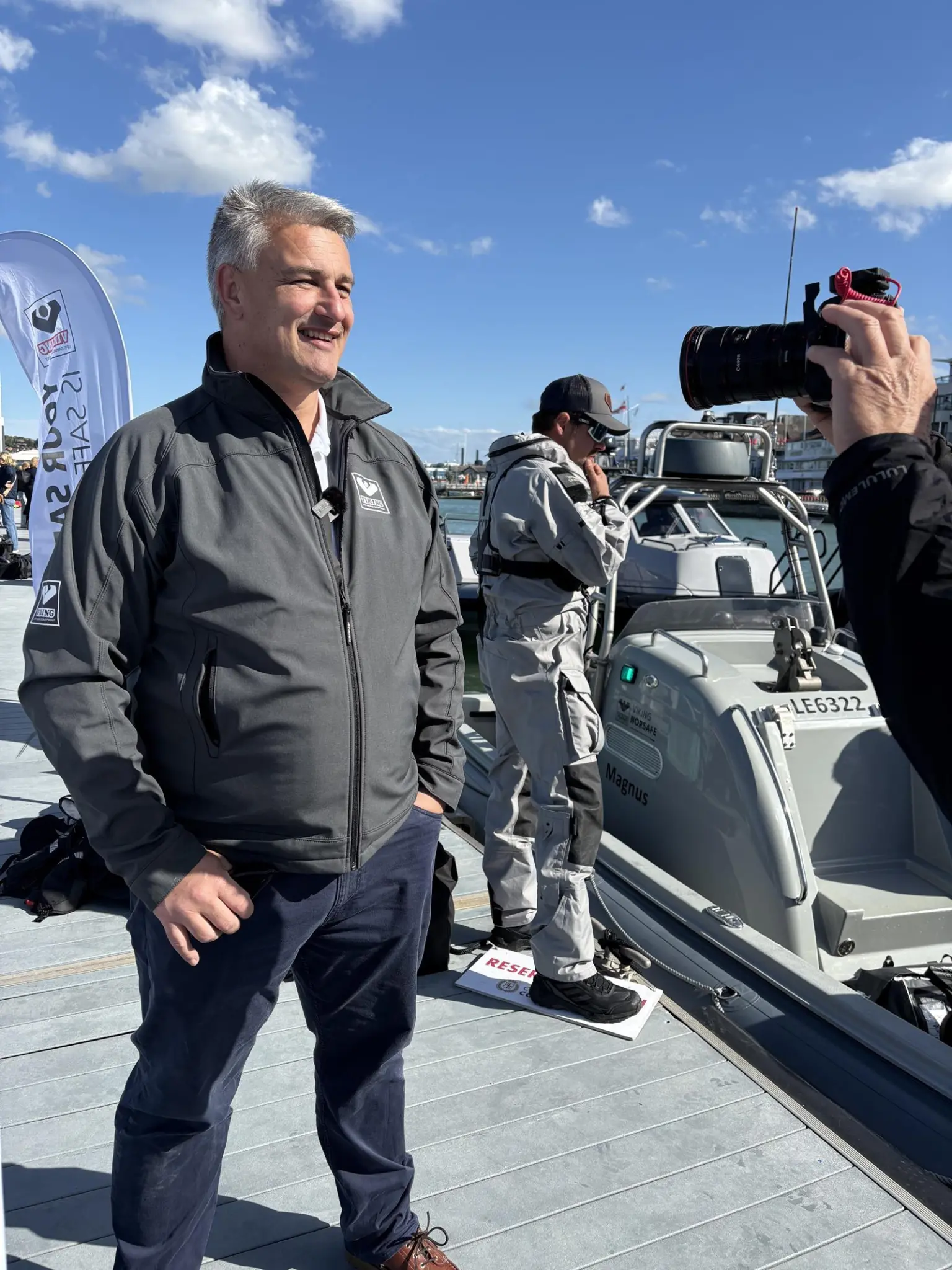
“A key objective was to raise awareness of our boat-building capabilities in the UK – a market where Viking’s RHIB expertise is less established than in our core geographies.”
The company’s on-water demonstrations attracted interest throughout the exhibition. Viking took representatives from Border Force, the Ministry of Defence and the Metropolitan Police aboard the vessels during demonstration runs.
“The on-water demonstrations proved highly effective,” Allanach says. “We took out several representatives from defence operators and government departments, law enforcement and border force command, all of whom came away genuinely impressed – many of whom had no idea Viking produced vessels of this calibre.”
In total, the company welcomed approximately 150 registered visitors to its stand and hosted around 70 guests aboard the vessels during the exhibition period.
“Feedback was exceptionally strong,” he says. “Fellow exhibitors noted the Marathon was generating significant conversation across the show floor and piers alike.”
Strong outlook
That market engagement is now feeding directly into Viking’s commercial outlook for the UK and wider European fast craft sectors.
“The engagement from serious procurement contacts reinforces our confidence in the pipeline ahead,” says Allanach.
For the wider workboat and professional marine sector, Viking’s expansion reflects broader changes taking place across vessel design and procurement priorities. Operators increasingly require platforms capable of operating across multiple mission profiles while simultaneously improving crew safety, operational uptime and supportability.
High-performance RHIBs are no longer viewed purely as specialist interception craft. Across defence, search & rescue, offshore support and maritime law enforcement applications, operators are increasingly demanding adaptable platforms capable of delivering speed, endurance and operational flexibility within a single package.
Allanach believes Viking’s heritage positions the company strongly to respond to those changing requirements.
With roots in boatbuilding dating back to 1903, combined with decades of experience supplying maritime safety systems to professional operators, the company sees vessel integration, safety engineering and aftersales support as increasingly interconnected requirements rather than separate disciplines.
As maritime agencies and professional operators continue to modernise fleets under growing operational pressure, the ability to combine advanced RHIB design with long-term operational support may prove an increasingly decisive factor in procurement decisions.
Related Articles
 OTHER NEWS
 ACCESSORIES & EQUIPMENT
 SPECIAL REPORTS