![MaritimeJournal[Seawork]](https://www.maritimejournal.com/wp-content/uploads/2026/09/MaritimeJournalSeawork.svg)






WATCH: Autonomous cleanup redefines pollution control
A groundbreaking demonstration in Marseille has showcased how autonomous vessels can transform pollution control and tackle marine litter across the Mediterranean.
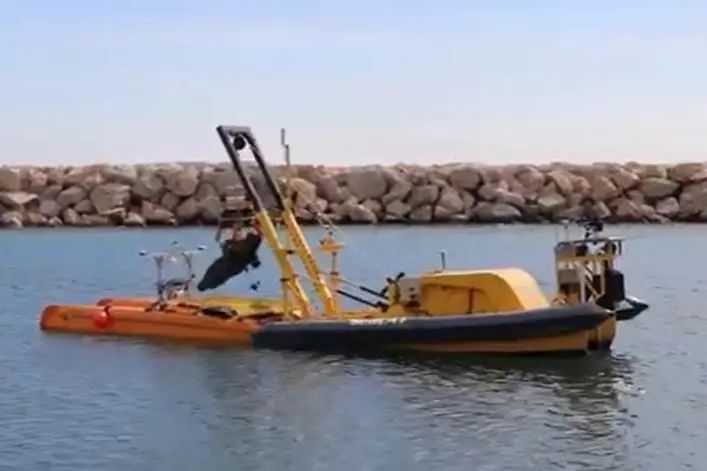
The SeaClear and SeaClear2.0 projects successully tested cutting-edge AI controlled robotic systems designed for the autonomous detection, collection and removal of underwater debris.
“The first demonstration of SeaClear2.0 was a great opportunity to showcase our solution for cleaning the seabed of waste,” said Yves Chardard, CEO of Subsea Tech.
“With up to eight autonomous and remote-controlled robots working together, we have shown that a fully unmanned system can safely and efficiently clean our oceans.”
Marine litter remediation
The European Union co-funded SeaClear2.0 project aims to deliver scalable, full-cycle marine litter remediation solutions.
Fraunhofer CML contributed expertise in system integration and scaling during the demonstration in Marseille.
Using a coordinated fleet of drones, unmanned surface vehicles and remotely operated underwater vehicles, SeaClear2.0 identifies and removes marine litter from the seabed and water column.
Its AI-driven system enables precise seabed mapping, allowing robots to detect and lift debris from depths of up to 100 metres, including objects weighing as much as 250kg.
The SeaClear2.0 project is a collaboration between research institutions, industry partners and civil society organisations from nine countries, including Delft University of Technology, Hamburg Port Authority, Subsea Tech, Tecnosub, the Technical University of Munich and Veolia.
It builds on the work of the Horizon 2020-funded SeaClear project, which developed the first autonomous robotic system for collecting marine litter and ended in December 2023.
Related Articles
 OTHER NEWS
 ACCESSORIES & EQUIPMENT
 SPECIAL REPORTS