![MaritimeJournal[Seawork]](https://www.maritimejournal.com/wp-content/uploads/2026/09/MaritimeJournalSeawork.svg)




Wind farm seabed inspection with uncrewed vessels
Leading renewable energy company Vattenfall has achieved a significant breakthrough in offshore wind farm operations by conducting the first large-scale seabed survey using uncrewed surface vessels.
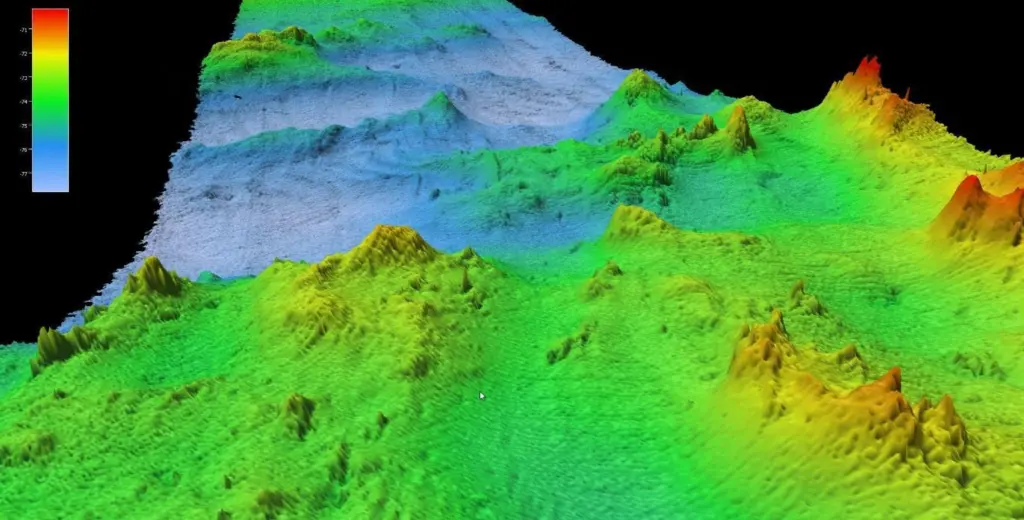
The results of the most recent survey have been overwhelmingly positive, not only from an environmental perspective but also in terms of improved safety. This milestone paves the way for broader implementation of this cutting-edge technology in the renewable energy industry.
The project began during the late summer and early autumn of 2022, when Vattenfall successfully conducted extensive seabed surveys at several of its offshore wind farms in Denmark, Sweden and the UK. Facilitated by XOcean, these surveys play a crucial role in monitoring changes in cable burial depth and scour development, essential for maintenance and repair activities. Traditionally, such surveys have been carried out using crewed vessels, which consume huge amounts of fuel and emit carbon dioxide.
“When we issued the tender for seabed surveys across our Danish wind farms, we received a compelling proposal utilizing uncrewed vessels,” said Rasmus Juncher, senior lead geophysicist at Vattenfall. “After observing their successful deployment in smaller-scale trials, we were intrigued to see their effectiveness on a larger scale.
“This technology offers substantial fuel savings compared to traditional survey vessels, and by controlling the vessel from an onshore operations centre, we can enhance safety and well-being by reducing offshore personnel exposure.”
The uncrewed vessels used in the survey are considerably smaller, with a total length of 4.5 metres, compared to their crewed counterparts. The smaller size, coupled with modern technology, enables fuel savings while maintaining survey quality and accuracy.
Vattenfall aims to expand the use of uncrewed vessels, envisioning their potential for visual inspections of assets above and below water and broader in-site investigations to support wind farm design. As the journey of autonomous vehicles begins, the possibilities for innovation and optimisation are seemingly limitless.
Sustainable data acquisition
The seabed survey was facilitated by XOcean, a leading ocean data acquisition company that has been using uncrewed survey services since 2019.
“Our uncrewed survey vessel platform offers a safe, reliable, and low-carbon solution for collecting ocean data,” said James Ives, CEO of XOcean. “We are delighted to support Vattenfall by providing sustainable data to meet their survey requirements throughout the development and operation of their offshore wind farms.”
Uncrewed vessels, which Vattenfall refers to as ‘sailing drones’, are revolutionising offshore operations. The vessels are remotely controlled by onshore operators, ensuring precision and efficiency in every mission, and in some cases slashing fuel consumption by up to 90%.
By eliminating the need for a crew in offshore environments, these vessels also contribute to enhanced health and safety standards with workers no longer exposed to the inherent risks associated with working in such challenging conditions.
Uncrewed vessels offer a safer alternative, allowing personnel to monitor operations from the comfort and security of onshore facilities.
During the summer and autumn of 2022, uncrewed vessels took centre stage as they conducted seabed surveys across Vattenfall’s offshore wind farms at Horns Rev 1, Horns Rev 3, and Krieger’s Flak in Denmark, as well as Lillgrund in Sweden and Thanet in the UK.
The deployment of uncrewed vessels in large-scale seabed surveys could also be a step towards safer and more environmentally friendly operations in the offshore wind industry.
![XOCEAN’s XO-LARS [Launch & Recovery System] used in Taiwan](https://www.maritimejournal.com/wp-content/uploads/2023/05/01_278910_xoceansxolarslaunchrecoverysystemusedintaiwan_242687.webp)
The rapid expansion of the offshore wind industry calls for innovative solutions to meet the ongoing survey and data requirements at each phase of a wind farm’s lifespan.
Ireland’s XOcean and UK competitor Ocean Infinity, both leading ocean data acquisition companies, have emerged as a pioneers in this field, perhaps suggesting early stages of the British Isles representing the nucleus of a tech cluster in this.
Redfining subsea data systems
XOcean has introduced a groundbreaking platform that combines subsea acoustic transceivers and satellite broadband connections, creating a highly flexible and cost-effective unmanned gateway to subsea systems. This platform enables real-time interaction from any location globally, enhancing data harvesting options.
XOcean’s turnkey offering plays a crucial role in supporting the development, construction, operation and maintenance of offshore wind farms worldwide.
Since their commercial launch in 2019, XOcean has completed more than 65,000 operational hours of survey for leading energy companies, working on more than 150 projects in 18 jurisdictions globally. They claim 12,000 hours of carbon-neutral uncrewed survey operations delivered to offshore wind farms in the first half of 2022 alone.
XOcean’s USVs offer full uncrewed Over The Horizon operations using satellite communications. Each USV sends real-time images and situational awareness data to XOcean’s Operations Centre, where a team of qualified USV Pilots keep watch and control the vessels 24/7. XOcean’s USV Pilots are responsible for collision avoidance.
XOcean’s USV system is also designed to comply with the requirements of existing IMO instruments.
Building experience
XOcean recently used these USVs to conduct a series of site surveys for bp’s Morgan and Mona offshore wind farms in the Irish Sea.
These wind farms, jointly developed by bp and EnBW, should have a generating capacity of 3GW by 2029. XOcean’s USVs were contracted to acquire high-resolution seabed surveys, providing valuable insights for robust designs and efficient operations. The data collected also facilitated identifying viable options for export cable corridors, significantly reducing the carbon footprint.
XOcean has also been actively engaged in ongoing seabed monitoring and construction surveys at Ørsted’s Greater Changhua 1 & 2a Offshore Wind Farms in Taiwan.
With multiple surveys completed within various stages of the construction, the USVs have provided accurate and consistent views of the seabed. The data collected helps ensure the integrity of turbines, cables, and other critical infrastructure, enabling informed decisions during installation and development.
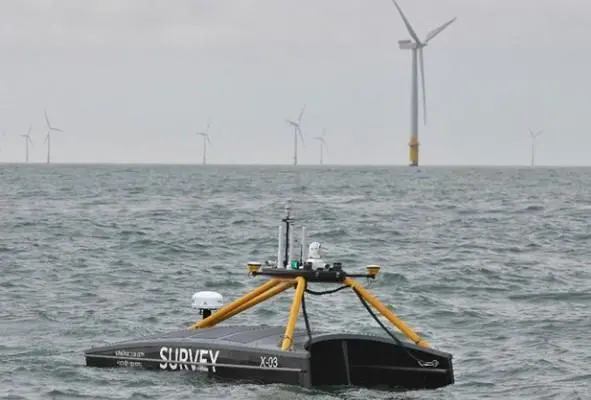
XOcean has also conducted a routine operations and maintenance inspection at Equinor’s Sheringham Shoal Offshore Wind Farm in the UK. Deploying multiple USVs equipped with advanced sensors, high-quality bathymetry and backscatter data was collected. This comprehensive dataset aided Reach Subsea and Equinor in identifying potential changes to the seabed that could impact the wind farm’s performance and integrity. The small size and agility of the USVs allowed for safe navigation even in challenging shallow waters.
While it undoubtedly has high-profile competitors, XOcean is clearly filling an important role in transforming offshore wind surveys and data collection, enabling cost-effective and sustainable operations throughout the lifecycle of wind farms.
The partnership with Vattenfall demonstrates how uncrewed surface vessels can be suitable for large-scale seabed surveys. As the offshore wind industry grows, XOcean’s solutions pave the way for increased efficiency, enhanced data collection and safer operations.
Uncrewed vessels represent a new era of efficiency, sustainability and safety in offshore operations and these capable little craft are shaping the future of the renewable energy industry.