



Offshore wind drives soil testing growth
Fugro has opened an expanded soils testing laboratory at the Group’s UK headquarters in Wallingford, Oxfordshire.
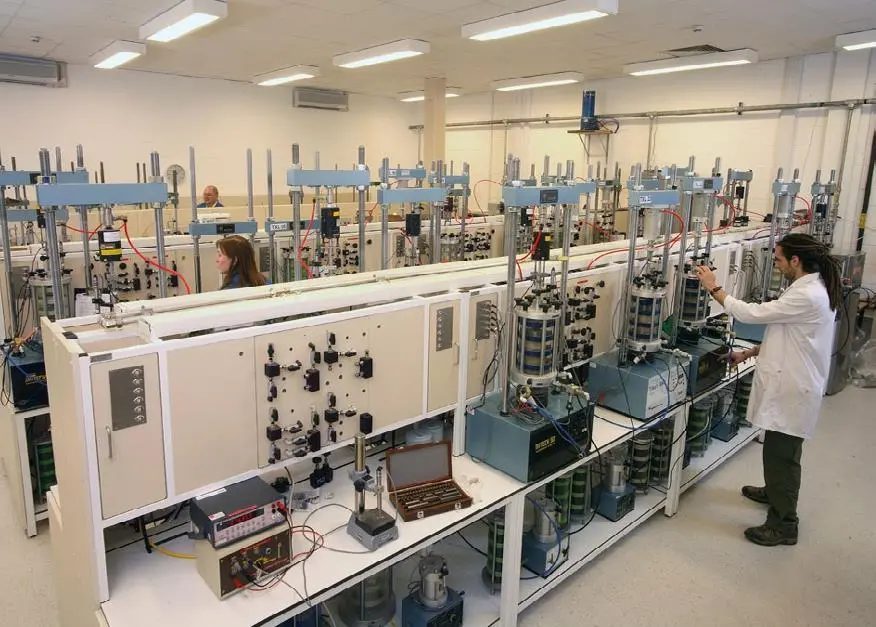
An investment of over £1m has been made in increasing the capacity and in equipment, as a direct result of the significant increase in the number of samples being taken from offshore wind developments, coupled with Fugro’s existing work in the buoyant global offshore oil and gas industry.
The number of Fugro laboratory technicians has already been increased by 25% with plans for further employment opportunities. The new facilities now increase the output of the laboratory by 50%.
“We confidently expect demand to grow from the marine renewables sector during the next few years and are now ready to meet, and hopefully surpass expectations, says Tony Hodgson, Fugro’s global renewable energy business development manager. “A better understanding of the seabed conditions can result in a more cost effective foundation design. What’s more, the wide choice of foundation options means different types of soil testing are required to determine the design parameters.”
He looks at an increasingly typical offshore wind scenario: “A Round 3 offshore wind project zone development, such as the Hornsea offshore wind farm off the Yorkshire coast, will have between 150 and 332 turbines wind turbines in Phase 1, with associated cables and sub-stations, etc. Soil samples will be required to analyse the seabed conditions for their strength and consistency to design the most efficient foundations. The forces acting on the structure are highly dynamic and Fugro’s lab expansion has accommodated an increase in the capacity for these high tech tests to assess the soil strength under dynamic loads. This will significantly reduce the programme time to deliver the test results to our clients.”
In the last ten years Fugro has been extremely active in preliminary and detailed soil investigations for offshore wind development in the North Sea and Baltic Sea, and more recently in United States waters, performing more than 50 preliminary geotechnical investigations and more than 25 detailed investigations in accordance with German BSH regulations.
Related Articles
 OFFSHORE RENEWABLES
 OTHER NEWS
 MARINE CIVILS NEWS