



‘Old lady’ turns out to be historic pilot boat
It’s become more than a project, and seems almost a mission. Rafal Zahorski of Magemar is restoring the ‘MV Bembridge’, a task that has seen him trawl the lengths of the UK for its original equipment.
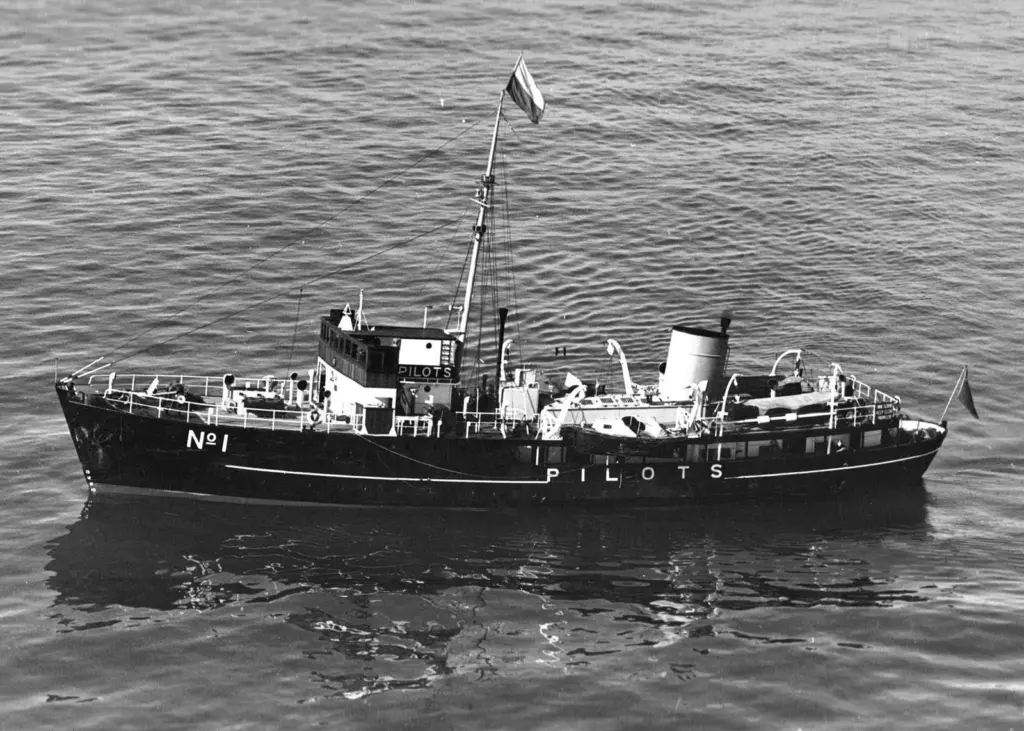
‘Our old lady’, Mr Zahorski tells MJ, had been languishing for some time after a failed attempt to turn it into a restaurant. He adds that fresh paint had been used to cover serious decay. Moved by the vessel’s plight, he devised a plan to restore the boat and use it as a floating office for the maritime company.
However, at the time the boat’s identity was still a mystery. The nameplate couldn’t be relied on and there had been many changes to the craft’s outline over the years. It had lost a huge part of its rear main deck to give room for a boom and other stern equipment, and the shape of the bridge had been changed. The vessel had lost its engine, chimney and all davits and lifeboats when it became the Essex Yacht Club’s HQ in the 70s, as has subsequently been learned.
Eventually the team pieced together the past of THPV Bembridge. It was built at the well known Smith’s Dock yard at Middlesbrough in 1938, having been designed by Sir William Reed for Trinity House’s Isle of Wight district, a prototype of a new class, the Diesel Cruising Pilot Cutters, which took 25 pilots and 19 crew members. The vessel saw ‘a lot of life’, including action at Dunkirk and Normandy before becoming, amongst other unexpected commissions, a floating night club.
The boat was taken back to Poland for repairs where it gained a new chimney, third mast and the original boom. Mr Zahorski explained that the whole deck had to be rebuilt, but the most difficult project was the hull. ‘We were forced to replace 80 square metres of steel plates. Now she looks almost like new.’
After tracking down a number of original items, Mr Zahorski and another of the team improbably loaded some of them into one car, including a table from the Pilot Saloon, the original navigational lights, three oil lamps from the engine room, two voice tubes, a Marconi Radio, some 100 signal flags, documents concerning a school for underprivileged youth, and charts which proved where Bembridge had been working.
Repairs and more items followed, including pilot boarding boats, the last two of the model in existence. The craft will now be more than a company HQ, housing its own museum and showing memorabilia from the Smith’s Dock shipyard, including the history of Trinity House London pilot activity and pilot class vessels.
The project is nearing completion, and soon the brass lettering will be back on the stern, bearing the legend ‘BEMBRIDGE LONDON’. There will be cheers and perhaps a few tears. Meanwhile, Mr Zahorski is still tracking down the last of the fittings, including the original bell.
Related Articles
 ACCESSORIES & EQUIPMENT
 ELECTRICAL SYSTEMS
 VESSELS