![MaritimeJournal[Seawork]](https://www.maritimejournal.com/wp-content/uploads/2026/09/MaritimeJournalSeawork.svg)



WTIV crashes into containership, exposing ship-to-shore safety gaps
Emergency services were called to the Port of Tyne on Sunday when an offshore wind turbine installation vessel (WTIV) crashed into a container ship, resulting in severe damage to a gantry crane.

According to the port, the WTIV Wind Orca was leaving dock when it collided with the berthed container ship BG Orange. A quayside gantry crane was then seriously damaged and one man was taken to hospital with injuries that police said were not believed to be life threatening.
The incident has prompted software company Evalu-8’s EHS senior member Josh McNicholas to offer some advice on where ship-to-shore operations are going wrong, and how ports and terminals need to examine a wider safety challenge: the management of operational interfaces.
Separate procedures do not automatically form one safe system
Ports bring together complex activities within a restricted and changing environment. Vessels manoeuvre alongside fixed infrastructure. Cranes operate close to ships, cargo, vehicles and people. Port employees, vessel crews, contractors and maintenance teams may all work under different management arrangements.
Each group may have a suitable procedure: the vessel may have a movement plan; the crane may have current examination records; shore teams may have exclusion zones and traffic controls; and contractors may have been briefed.
The critical question is whether those arrangements have been brought together into one shared operational plan.
Interface risk develops where one system meets another: between a vessel’s intended movement and the position of shore equipment; between a cargo sequence and an exclusion area; or between an instruction issued by one supervisor and the information received by another team.
The Ports and Marine Facilities Safety Code applies across UK ports, berths, terminals and other marine facilities. It expects organisations to support safe marine operations through appropriate risk assessment and marine safety management arrangements, with clear accountability and effective incident and emergency procedures.
Those systems must work across organisational boundaries rather than stopping at the edge of a department, contractor package or vessel procedure.
Build one shared operational picture
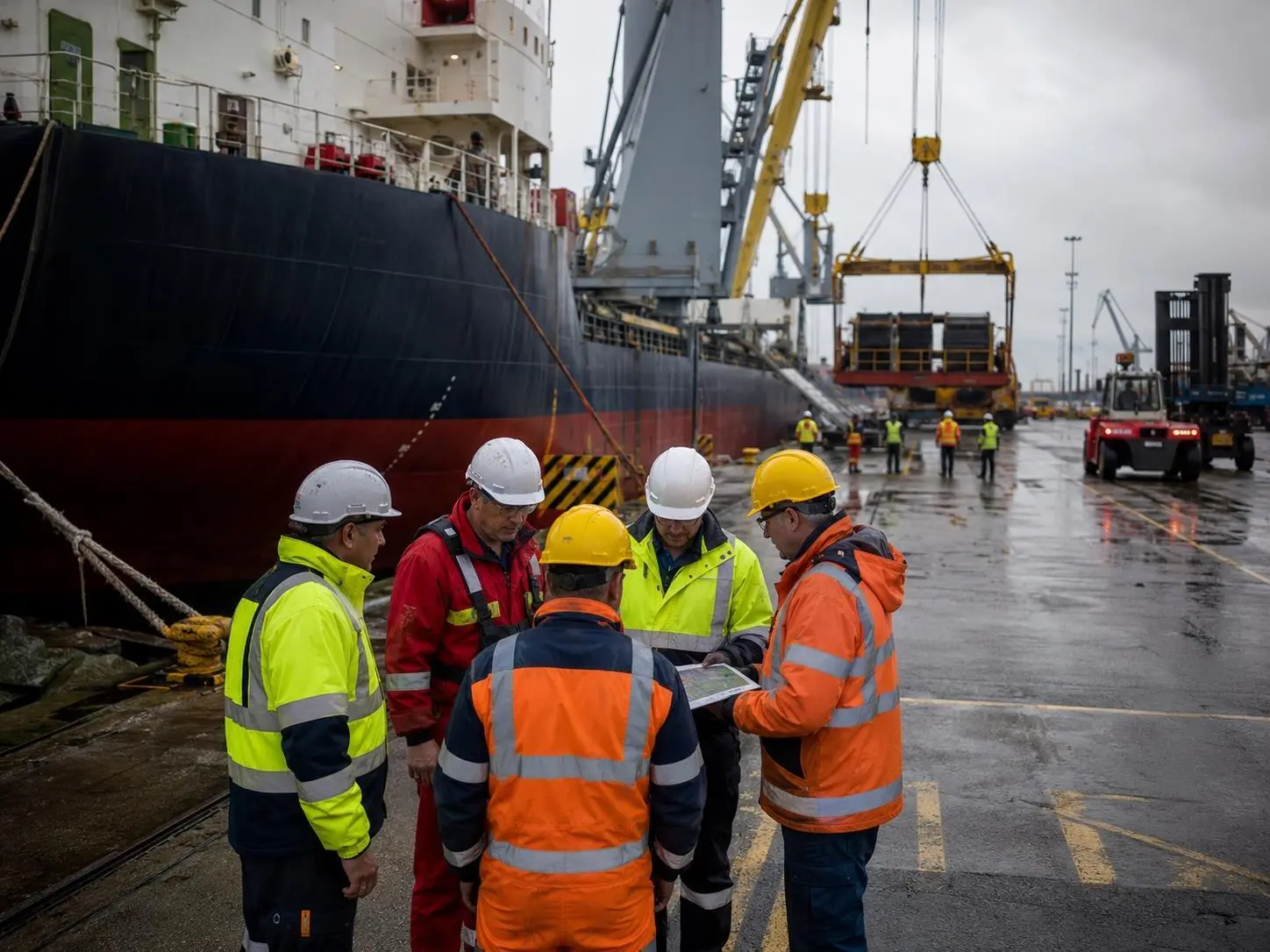
Before a complex ship-to-shore activity begins, everyone involved should be working from the same information.
That picture should cover the vessel’s intended movement, crane location and operating envelope, cargo sequence, quay traffic, exclusion areas, environmental conditions and simultaneous activity nearby.
A generic plan may be accurate in normal conditions but inadequate for the operation taking place that day. If the vessel position, equipment configuration, visibility or nearby work changes, the assessment may also need to change.
Where several teams contribute to the same operation, risk assessments, inspection findings, actions and supporting evidence can easily become separated across different documents and systems. Some organisations use platforms such as Evalu-8 EHS to maintain a central record, but the software itself is not the control. What matters is that changes are recorded, responsibilities are clear and everyone affected can confirm that they are working from current information.
Otherwise, people can be following an approved procedure that no longer reflects the work in front of them.
Make authority clear where responsibilities overlap
Several competent people may hold authority over different parts of an operation. The vessel’s master controls the ship. A lifting supervisor oversees lifting activity. Terminal management controls the quay. Contractors may control specialist work or equipment.
Everyone should understand who confirms that movement can begin, who can order an immediate stop, how that instruction will be communicated, who reassesses the operation following a change and who authorises a restart.
This does not mean one person must make every technical decision. It means the coordination structure must be unmistakable.
HSE guidance requires lifting operations to be properly planned by a competent person, appropriately supervised and carried out safely. It also states that employers sharing a workplace must cooperate, coordinate their safety measures and exchange relevant information about risks.
Treat communication as a safety-critical control
“Maintain communication” is not a complete arrangement.
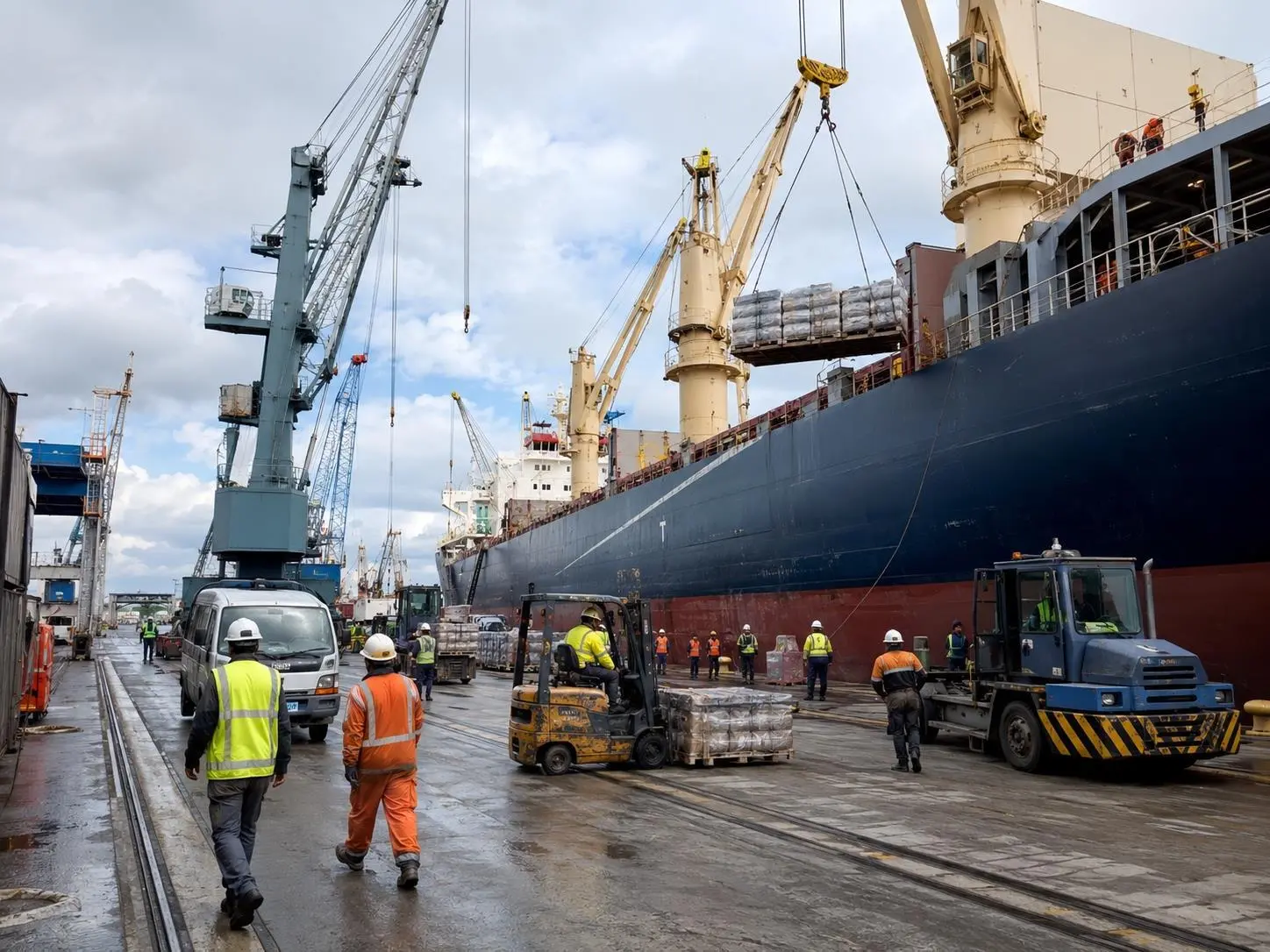
Teams need an agreed channel, clear terminology and a reliable acknowledgement process. They also need to know what happens if a message is missed, radio contact is lost or an instruction is not understood.
Noise, obstructed sightlines, language differences and competing radio traffic can all affect communication. A stop instruction must be distinguishable from routine conversation, and a loss of communication should trigger a predetermined response.
HSE identifies communication as particularly important in safety-critical activities such as lifting, emergency response and coordinating work between different organisations. It should therefore be tested as a control that can fail, not treated simply as a line in a method statement.
Make restarting a separate decision
Following an abnormal event, there may be pressure to restore access, recover cargo or resume operations. That is precisely when assumptions must be avoided.
A safe restart may require engineering inspections, checks on vessels and lifting equipment, revised exclusion areas, an updated movement plan and formal approval from the responsible roles.
An inspection record can show that an individual component has been checked. It does not automatically demonstrate that the combined operation is ready to resume.
The cause of the Port of Tyne incident remains under investigation. The wider lesson is not that any particular control failed, but that ports must continually test whether vessels, equipment, people, information and authority are being managed as one connected system.