




Plough position monitoring for shallow water
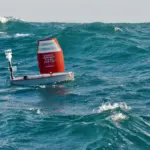
On behalf of its client Boskalis, subsea technology company Seatools has completed the development, manufacturing and testing of a plough position monitoring buoy.
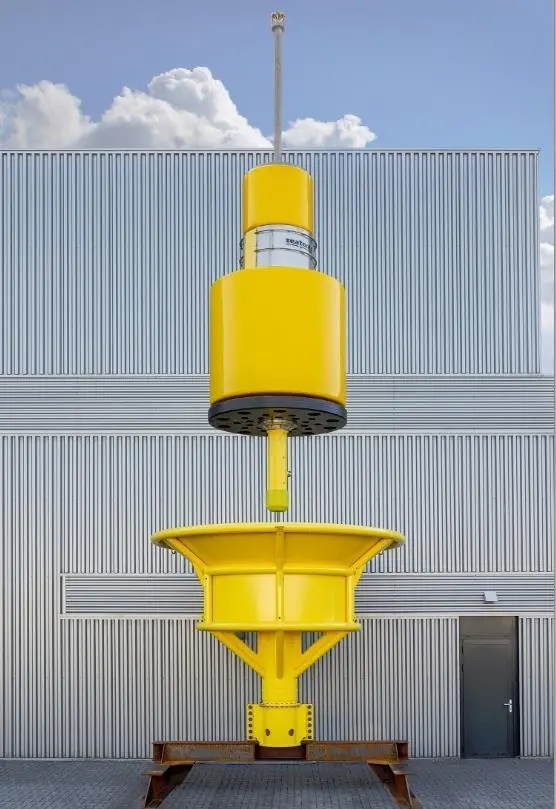
After successful sea trials, the buoy is now being deployed for a subsea cable route clearance project, where the buoy has been fitted onto a subsea plough.
Whereas USBL is the conventional way to determine the position of subsea vehicles, this acoustic method fails to function properly for towed vehicles that operate in shallow waters with much ambient noise, such as thruster wash. Looking for a solution that meets the strict requirements for following and registering the defined cable track, Boskalis developed a buoy-based monitoring method that monitors the position of its subsea ploughs and boulder clearance tools.
The buoy monitoring system is based on fairly simple and effective principles. The monitoring buoy is connected to the towed vehicle by means of a steel cable. As soon as the vehicle is placed on the seafloor, the buoy is floated. By combining multiple, real-time data, including winch paid out wire length measurement, Rovins data, and DGPS data, the position of the plough can be accurately determined in all three dimensions. The buoy features an integrated subsea winch system whereby it can be fully retracted when launching and recovering the towed vehicle.
While Boskalis was responsible for the fundamental concept and operational procedures, Seatools brought the concept alive. More specifically Seatools was responsible for concept engineering, detailed engineering, as well as the manufacturing and factory testing of the positioning buoy.
By Jake Frith
Related Articles
 MARINE CIVILS
 OTHER NEWS
 MERGERS & ACQUISITIONS