





Catalytic hydrogen boost for surface dredger
COP26 hosts, Glasgow City Council, have made significant steps towards their ambitious goal of reducing their environmental impact and improving air quality for all by upgrading their Water Witch Surface Dredger ‘St Mungo’ with the latest hydrogen catalytic technology.
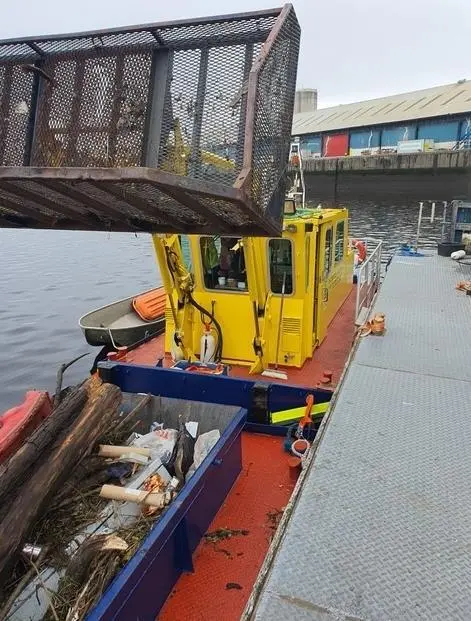
Normally moored outside the COP26 venue, the 14-tonne vessel has worked on the River Clyde for the past 19 years removing debris and pollution from the City’s River. The vessel has been retro fitted with a unique electrolyser system for producing catalytic hydrogen which offers immediate reductions in fossil fuel consumption and harmful air pollution.
This system reduces diesel particulates, NOx, and CO2 emissions by improving the quality of the combustion process, and by extending the efficiency of the engine, reducing the amount of fuel being consumed. Emissions are reduced by up to 85%.
The ‘EcoPro’ is a RINA Type Approved, patented standalone catalytic hydrogen system designed to immediately reduce the vessel’s engine pollution without any invasive modifications being required. Supplying a controlled quantity of pure hydrogen-on-demand to give a more complete fuel burn during combustion, it is neatly installed next to the vessel’s main Perkins Sabre 6-cylinder 185hp 160 kwh diesel engine.
Hydrogen is produced from its own electronic system whilst the engine is running and automatically ceases when the engine is switched off. The system has worked exceptionally well since installation earlier this month and Glasgow City Council has had the perfect opportunity to showcase their cleaner, greener, pollution control vessel to Climate Change Delegates at the Summit.
Developed by Ecomotus, the EcoPro technology is a vital transition between fossil fuels and a hydrogen/electric economy. Jason Munro, Director says: “We are all aware that the marine industry needs to change away from fossil fuels and towards sustainable power to progressively reduce the greenhouse gases, harmful emissions and particulates produced. This standalone system is designed to work in harmony with existing combustion engines and reduces the operator’s carbon footprint”. Ecomotus, based in South Devon, were awarded an Innovate UK grant for R&D testing and trials, enabling them to secure both Type A Approval and Maritime and Coastguard (MCA) accreditation.
Related Articles
 ACCESSORIES & EQUIPMENT
 ENVIRONMENT
 MARINE CONSTRUCTION