

Ramora takes on deepest ever EOD operation
Bomb disposal experts Ramora UK operate on a 24/7 basis so it is not unusual to receive a call from a major oil and gas company believing it has located un-exploded ordinance (UXO) near a subsea asset.
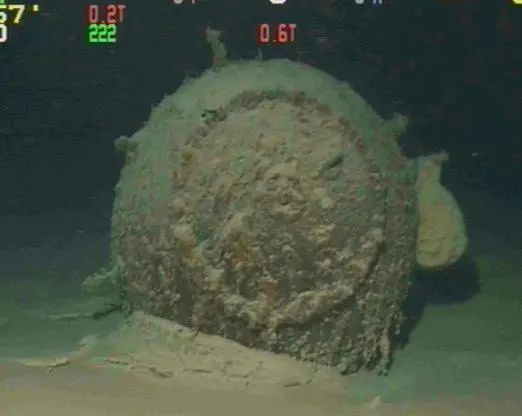
What is unusual is for that asset to be located in 1,200m of water.
The usual flurry of hazard identification meetings, risk assessments and equipment mobilisations quickly followed and the team with all of their equipment embarked on the chosen vessel 48 hours after the initial call. In addition to this, the various liaisons with the Department of Energy and Climate Change (DECC) and the Maritime Management Organisation (MMO) were undertaken to ensure approval to undertake the operation and confirm compliance with all environmental factors.
The scenario presented to Ramora UK was a British buoyant contact mine in just under 1,200m of water and in close proximity to a subsea installation. Clearly the item could not be detonated in its current location and therefore a relocation was required.
On arrival at the scene, the first task was to undertake a survey of the item and attempt a positive ID. Up to that point, the ROV footage had not provided sufficient detail to permit this. One of the two available Schilling UHD ROVs launched and took around 25 minutes to descend to the seabed. This revealed a flat and relatively featureless seabed and gin-clear visibility out to approximately 25m. But there was still some 250m to travel to the UXO itself due to the vessel being located outside a 200m Mine Safety Range.
Prior to any works to relocate the mine, a series of surveys and mammal monitoring observations needed to be completed, easily taking up the initial 24 hours on site.
The relocation phase of the operation would normally have been undertaken by lifting the item off of the seabed and moving it suspended under a bag or other floatation. Given the depth involved and the fact the seabed was flat and made up of sand and mud, Ramora UK opted to do a controlled tow of the item along the seabed.
Relocating the item into the capture net (part of the Ramora UK REODS equipment) was relatively straightforward and, once captured, was connected to the tow line which in turn was attached to the vessel’s crane wire. Sufficient tow line, water depth and crane wire ensured that the vessel was outside the damage radius at all times.
Too deep for the normal acoustic detonation systems, Ramora UK used a wireline detonation to fire the REODS countermining charge. With the wireline and detonator securely attached within the REODS countermining charge, the load was deployed through the vessel’s moon pool and monitored by the ROV down to the seabed.
The vessel then relocated to 1,000m and a series of safety checks were undertaken along with MMO recordings and MCA notification prior to detonating the charge. Although the mine detonated and the explosives were consumed, much of the actual mine case and fittings remained intact. In keeping with the provisions of the MMO permits, Ramora UK then commenced a six hour seabed clearance task to recover all of the items to deck for subsequent disposal. Each item was also assessed for any explosive residue/hazard by the Ramora UK team.