
Reclamation extends Ronaldsway Airport runway
Veils of fog dissolve in the cold morning sun. Six shivering men hurry to the reclamation area to man the bulldozers. They must be ready, engines running, when the dredger arrives. Suddenly Pearl River’s massive green bow materializes out of the fog, bow coupling already connected.
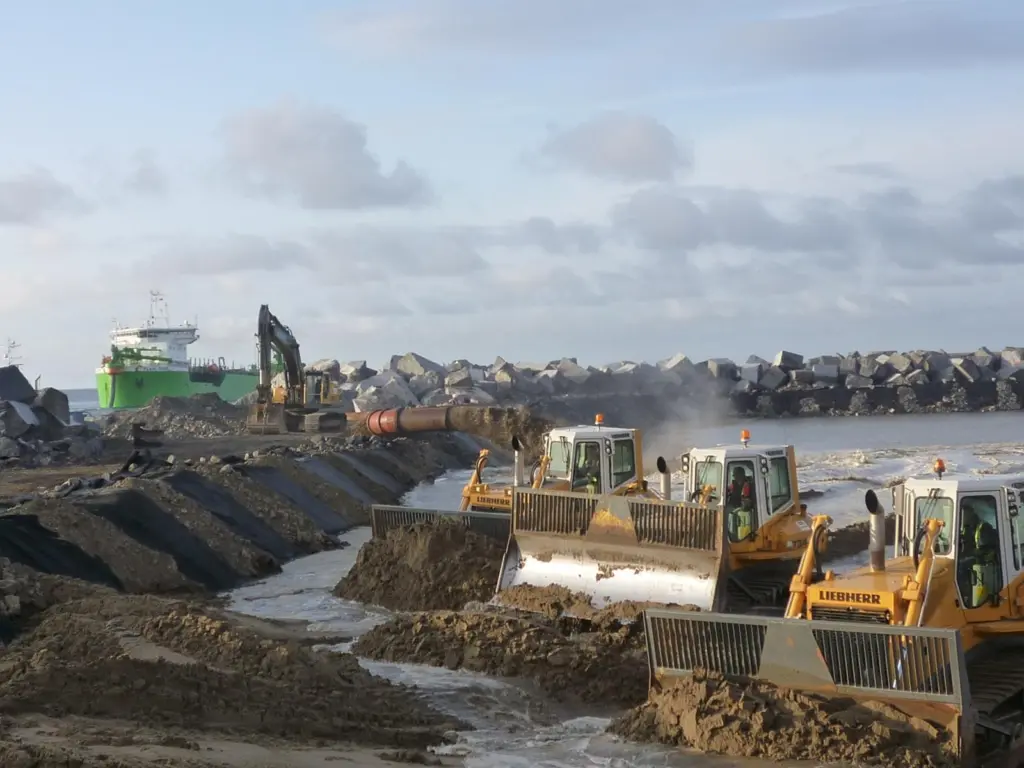
Over the next two hours men, machines and steel pipes scurry across the reclamation area to guide the sand. A brisk radio exchange between shore crew and Captain to ensure all is OK and the bow connection drops back into the sea. Pearl River leaves the island for another load.
Ronaldsway Airport on the Isle of Man is a lifeline to the Manx population. New regulations requested a safety addition to the Runway end, which left the Manx Government and Ronaldsway Airport with a bit of a problem: they’d run out of island. The only solution was to build a promontory into the sea to construct the runway safety area on top of it.
Within a massive rock bund constructed by main contractor Balfour Beatty, Dredging International has reclaimed 320,000 cu/m of sand to form the promontory on which Balfour Beatty constructs the Runway End Safety Area (RESA). The rock bund represents an engineering feat in its own right, tons of rock is used to form the first line of defense against the particularly inclement wave conditions attacking the island.
After an Early Contractor Involvement process lasting almost four years, an enthusiastic crew led by project manager Robin Houben carries out the meticulously planned fill works.
Robin Houben said, ‘Health and Safety is an extremely important element of the DEME group’s daily activities. But we try to evolve beyond the obvious moral duty to ensure everyone returns home safely. By actively preparing and detailing all stages of the work in advance we not only deal with all health and safety aspects, but we end up with a finely tuned process. This leads to less downtime, higher productions and eventually a more efficient company, courtesy of proper planning and a thorough HS&E policy.’
Balfour Beatty contracts director Keith Bowman added, ‘I would say this operation was probably the best planned, executed and within budget mass filling operation I have had the pleasure to manage in my 25 years with Balfour Beatty.’
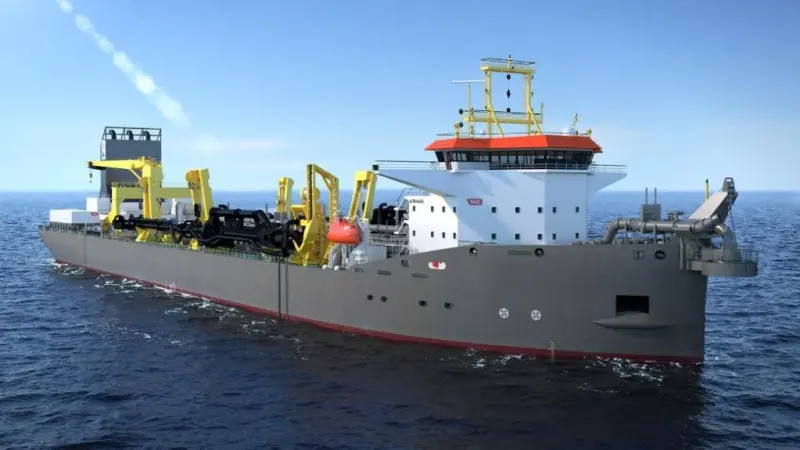
The 24,000 cu/m capacity trailing suction hopper dredger Pearl River (see also MJ ShipShot January 2010 issue), the first ever ‘jumbo’ dredger, built the reclamation in barely 12 days, leaving no room for a learning curve. It had to be a perfect project from day one, again stressing the need for thorough preparation.
Together with Balfour Beatty, Dredging International had investigated several sources of material for the promontory fill. Eventually material from Tarmac/UMD’s Irish Sea license 331 was selected.