![MaritimeJournal[Seawork]](https://www.maritimejournal.com/wp-content/uploads/2026/09/MaritimeJournalSeawork.svg)




Renovation of Nab Tower lighthouse begins
Work to secure the future of a vital aid to navigation in the UK’s Solent is set to start this summer.
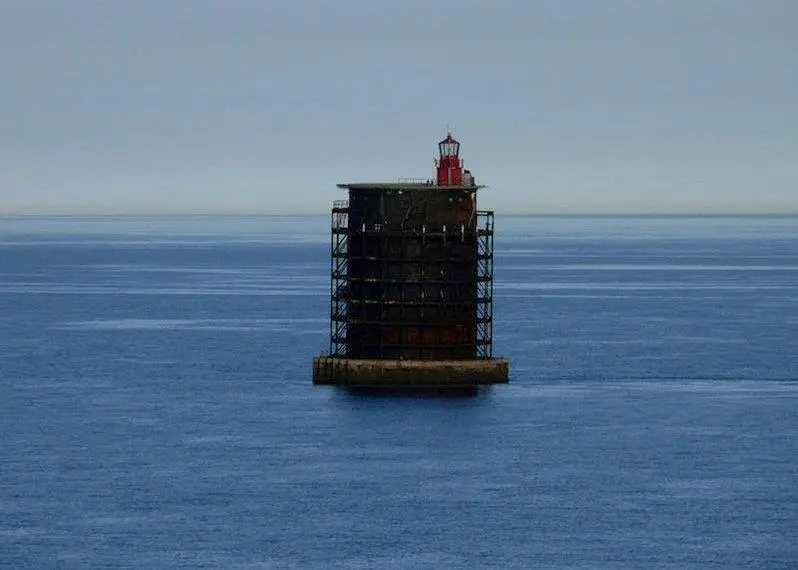
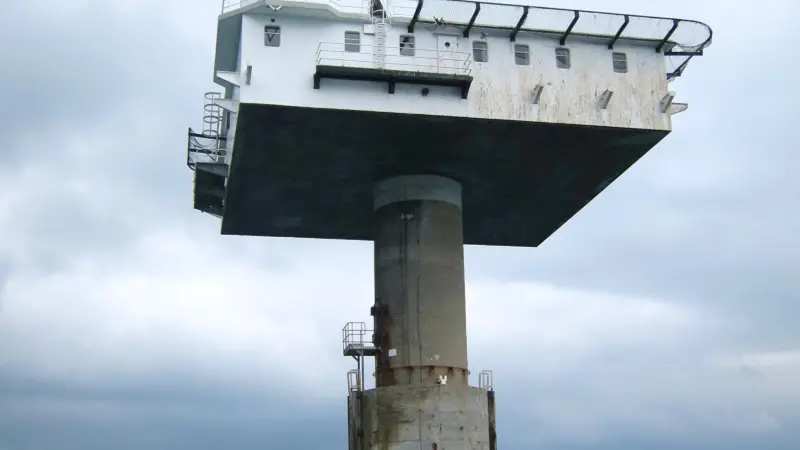
The Nab Tower’s structure has been gradually deteriorating following almost a century of battling the elements and in recent years this deterioration has increased to an unacceptable and dangerous degree. At present the helicopter pad is off-limits to helicopter landing and boat access is almost untenable due to the poor condition of the external superstructure.
Trinity House has commissioned a project to extend the structure’s lifespan by at least 50 years, by reducing the structure’s height, removing all external steel and cladding the existing concrete sub-structure in gun-applied concrete.
Nab Tower is located in the eastern approaches to the Solent (50040’.05N 00057’.07W). Originally built as a defensive structure in Shoreham for the Admiralty in 1918, it became redundant when the First World War ended.
Trinity House occupied part of the tower from 1920 onward, installing a light to replace the Nab lightvessel, with the structure remaining under the control of the Ministry of Defence (MOD).
The station was staffed as an offshore lighthouse, with three keepers who were relieved monthly, until the lighthouse was automated in 1983. The MOD built the helicopter deck and internal reinforced concrete caisson prior to Trinity House acquiring the freehold in 1984.
The Nab Tower was conveyed by the Secretary of State for Defence to Trinity House by deed on 21 May 1984.
The Trinity House Examiners’ navigational requirements as at 2010 specified a need for a fixed main light of a 12 nautical mile range, a fog signal range of two nautical miles, AIS and a RACON.
The remodelled structure will support the requirements of the aid to navigation into the future and result in reduced maintenance costs as the station will be able to be attended by Trinity House vessels without the need for a helicopter.
The work will complete in the summer of 2013 with a break over the winter to avoid the seasonal weather.
Related Articles
 VESSELS
 MARINE CONSTRUCTION
 VESSELS