




Safety benefits of autonomous operations
Pioneering autonomous technology is set to be demonstrated in the US to show its ability to increase the safety, response time and productivity of marine oil-spill response operations.
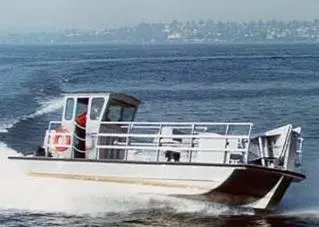
As part of a cooperative agreement with the US Department of Transportation’s Maritime Administration (MARAD), Boston-based Sea Machines Robotics will install its SM300 autonomous-command system aboard a Marine Spill Response Corp. (MSRC)-owned MARCO skimming vessel and will train MSRC personnel to operate the system. On 21 August, Sea Machines and MSRC will execute simulated oil spill recovery exercises in the harbour of Portland, Maine.
“Autonomous technology has the power to not only help prevent vessel accidents that can lead to spills, but can also facilitate better preparedness; aid in safer, efficient, and effective clean-up,” said Michael G. Johnson, CEO of Sea Machines.
The response skimming vessel is manufactured by Kvichak Marine Industries and is equipped with a MARCO filter belt skimmer to recover oil from the surface of the water.
Once installed, the SM300 will provide the MSRC vessel with remote autonomous control from an onshore location or secondary vessel; ENC-based mission planning; autonomous waypoint tracking; autonomous grid line tracking; collaborative autonomy for multi-vessel operations; wireless remote payload control to deploy onboard boom and other response equipment; and obstacle detection and collision avoidance.
As Sea Machines enables minimally manned and unmanned autonomous operations, operators can respond to spill events 24/7 depending on recovery conditions, even when crews are unavailable or restricted. The autonomous capabilities also ensure reduced or eliminated exposure to toxic fumes and other safety hazards.
By Rebecca Jeffrey
Related Articles
 ACCESSORIES & EQUIPMENT
 ENVIRONMENT
 MARINE CONSTRUCTION