![MaritimeJournal[Seawork]](https://www.maritimejournal.com/wp-content/uploads/2026/09/MaritimeJournalSeawork.svg)



Artificial intelligence, AIS and maritime security: A promising future
Maritime security is a critical issue in an increasingly interconnected world and with the increase in maritime trade and the complexity of threats, artificial intelligence (AI) is emerging as an essential tool to enhance the security of the seas, writes Simon Jouan, Sales manager with Athanor Engineering, based in Paris.
This article explores how AI is transforming maritime security, focusing on the manipulation of Automatic Identification System (AIS) data and its implications.
The AIS system is a fundamental tool for maritime navigation. It allows ships to communicate their position, speed and course, thus contributing to safety at sea.
However, this data can be manipulated, posing significant challenges for marine security: malicious actors can falsify their location or turn off their transponder to evade surveillance. Thanks to advanced algorithms, AI systems can process huge volumes of data in real time. For example, AI-powered maritime surveillance systems can identify suspicious behaviour, such as unexpected changes in trajectory or prolonged stops at sea, which could indicate illegal activities.
As ships have illegal activities generally cut off their AIS, this unexpected shutdown on board a ship can precisely signal the imminence of such activity. Even if it is increasingly true that the AIS system is hijacked by malicious actors, a market player is committed to using it to secure critical areas, such as offshore wind farms.
Offshore wind farm protection
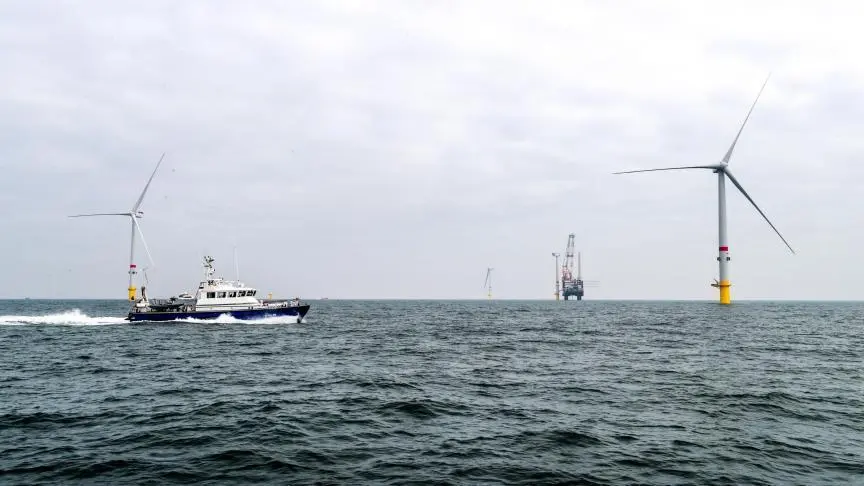
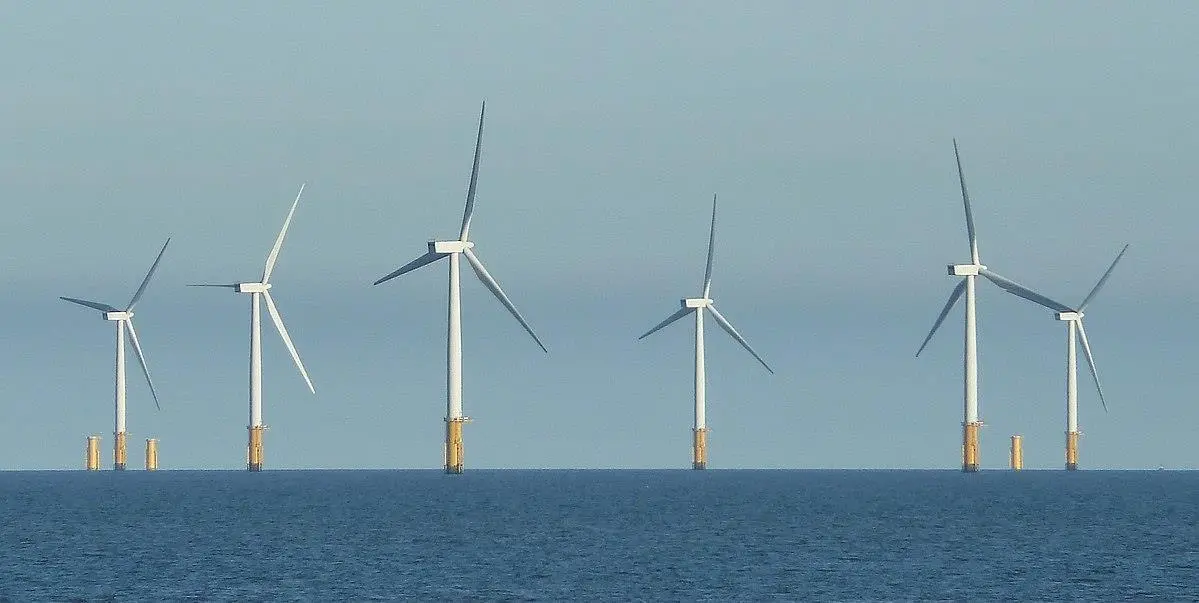
In a context where the demand for clean energy continues to grow, offshore wind farm protection vessels are proving to be essential players in securing these infrastructures. Indeed, these facilities, which play a key role in the energy transition, must be protected against a multitude of threats, ranging from bad weather to fishing activities, not to mention other maritime hazards.
Protection vessels provide regular surveillance and patrol of wind areas. This vigilance allows for the early detection of suspicious or unauthorised activity, preventing incidents before they occur.
The defensive use of the AIS system allows them to create a community, with collaborative vessels monitoring the area and administrations (coast guard, maritime gendarmerie and others). Within these communities, he shares key information in a quantified way, ensuring that they are more responsive to incidents.
AIS data is also shared on maritime traffic analysis platforms, improving the training of AI systems to recognise normal patterns of maritime behaviour. When a vessel deviates from these patterns, an alert can be generated. For example, if a vessel that usually follows a well-defined trade route is navigating in less frequented or unusual waters, this may trigger an investigation. AI can also analyse historical data to identify trends and anomalies, strengthening the ability of authorities to respond quickly.
Recently, a commercial vessel with a curious trajectory in an area little frequented by commercial traffic attracted the attention of the administrations. This ship was actually about to transfer an illegal cargo.
Remaining challenges

Despite the undeniable benefits of AI in maritime security, several challenges remain.
The quality of the data, especially AIS, can vary, and the manipulation of this data further complicates the situation. In addition, the integration of AI into existing systems requires significant investments.
However, with the continued evolution of technologies and the improvement of machine-learning algorithms, it is likely that AI will play an increasingly central role in protecting seaways. Artificial intelligence represents a major advance for maritime security, offering powerful tools to detect and prevent threats. Data manipulation, and especially AIS, while challenging, can be countered by sophisticated AI systems that can analyse and interpret data effectively.

By investing in these technologies, maritime authorities can strengthen their ability to protect the seas and ensure the safety of global maritime trade.
Athanor Engineering was founded in 2016, and specialises in the manufacture of AIS systems (systems for receiving and analysing data, including AI), especially for maritime administrations such as national navies and customs.
The SeaWATCH solution makes it possible to monitor maritime traffic in real time and identify potential threats, while integrating artificial intelligence technologies to improve surveillance.
The WARSHIP AIS/X system offers advanced functions for military and surveillance operations, tailored specifically to the needs of administrations at sea.