![MaritimeJournal[Seawork]](https://www.maritimejournal.com/wp-content/uploads/2026/09/MaritimeJournalSeawork.svg)






Dutch deep-tech firm proves military/civilian crossover
Dutch fibre-optic sensing tech firm Optics11 has signed a contract with the Dutch Ministry of Defence for a towed sensing array that can be used for all surface vessels.
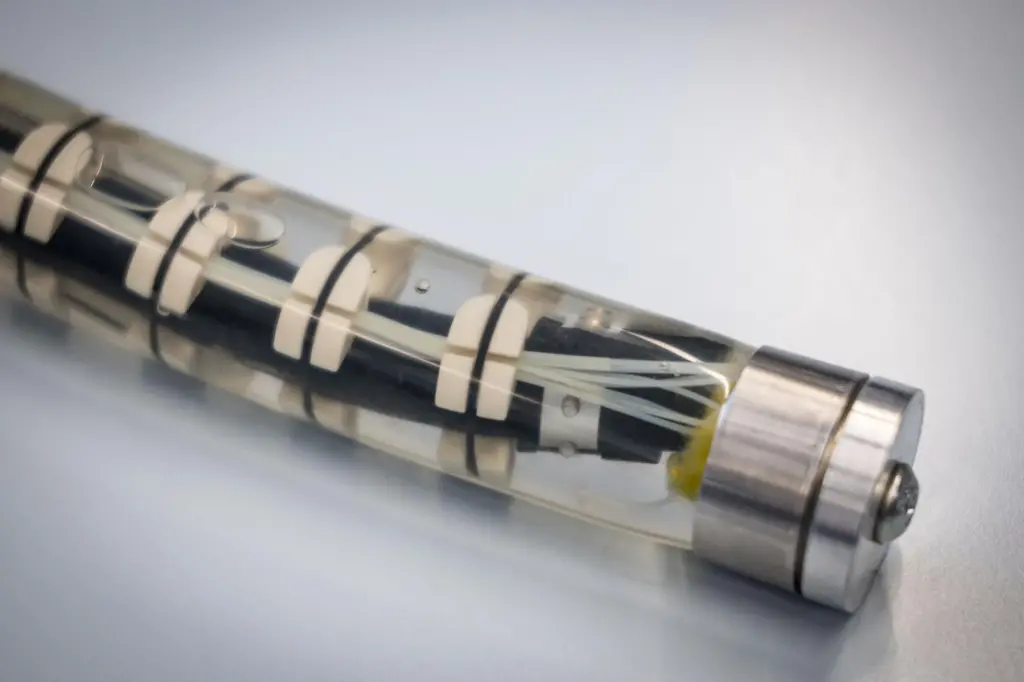
The company says it is one of the first fibre-optic passive sensing arrays that can be used on non-military vessels but can be deployed instantly to the navy when needed.
Optics11 says it has expanded its OptiArray passive fibre-optic towed array into a containerised system that allows underwater surveillance systems to be rapidly installed on crewed or uncrewed surface vessels and not just anti-submarine warfare platforms.
The technology has been selected by the Dutch Ministry of Defence under its Anti-Submarine Warfare In A Box (ASWINABO) programme, with the first operational systems ordered for the Royal Netherlands Navy.
Conventional towed array sonars are typically integrated into dedicated naval vessels during construction, making them expensive and difficult to deploy across larger fleets. By packaging the system into a transportable container, Optics11 says the technology can be retrofitted to ‘vessels of opportunity’, allowing operators to rapidly add underwater surveillance capability as operational requirements evolve.
The development reflects growing demand for more flexible underwater sensing as autonomous underwater vehicles proliferate and critical maritime infrastructure faces increasing security threats.
At the heart of the system is passive fibre-optic hydrophone technology, which differs from conventional electrical towed arrays by eliminating powered electronics throughout the sensing chain. Optics11 says this reduces self-generated electrical noise, avoids electromagnetic interference and allows the array to collect richer acoustic data while remaining acoustically silent.
The increased sensitivity enables earlier detection of underwater contacts and improves target classification, providing operators with greater confidence when identifying submarines and other underwater threats.
“We’re making world-class detection faster, more flexible and cheaper,” said Paul Heiden, CEO. “The underwater threat environment is evolving rapidly, but advanced threat sensing has traditionally been confined to a small number of specialist naval platforms. By containerising OptiArray, we’re enabling navies to deploy advanced underwater surveillance across a much broader range of vessels.”
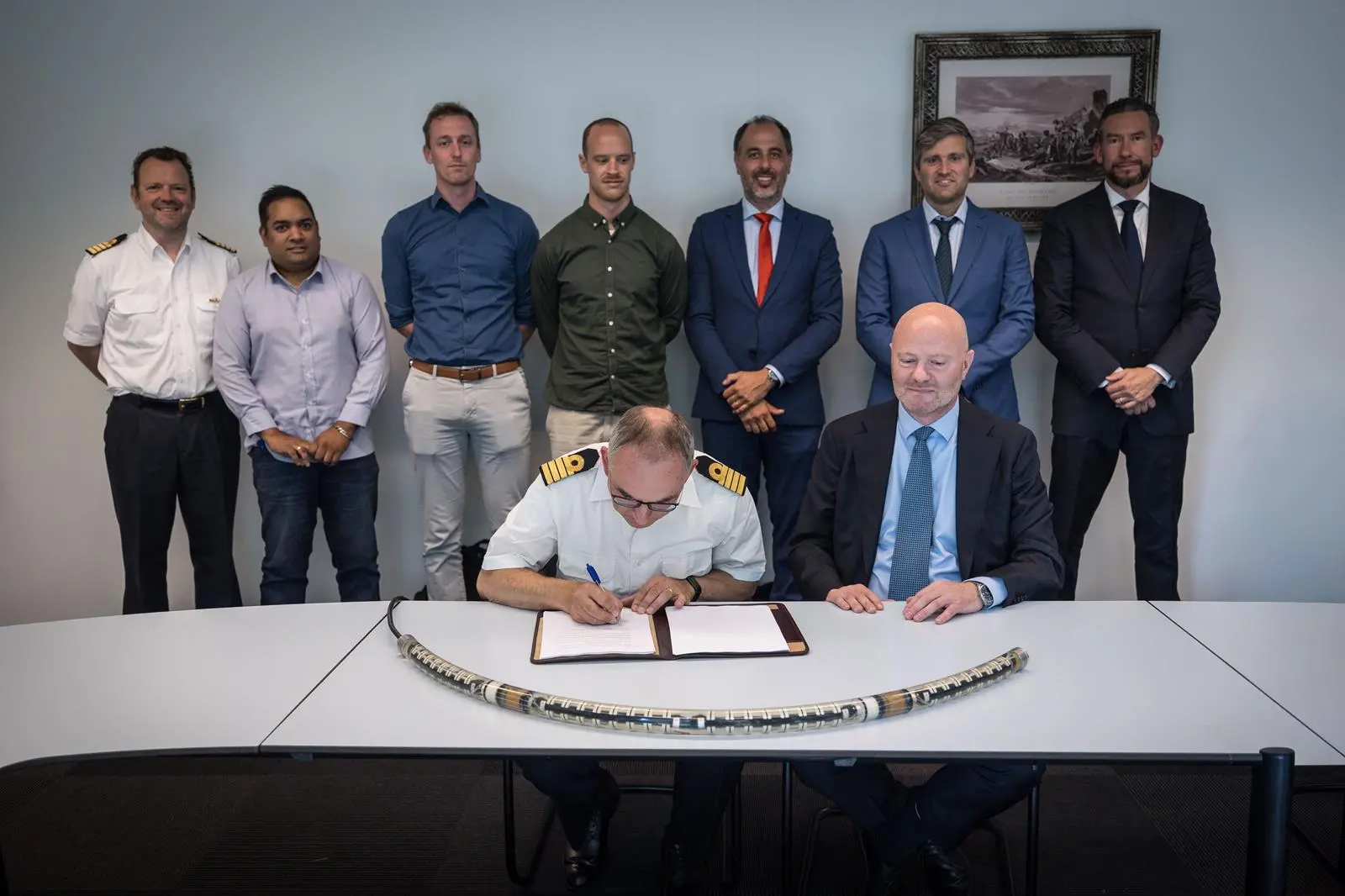
Heiden said the technology is well suited to emerging autonomous maritime operations because it is lightweight, compact and highly sensitive.
“As critical subsea infrastructure becomes increasingly contested, prevention starts with detection,” he said.
Alongside delivery of the first operational systems, the ASWINABO programme will establish manufacturing, integration and validation capabilities intended to support larger-scale production in the future. The investment is also expected to strengthen domestic industrial capacity for underwater sensing technologies in the Netherlands.
“With ASWINABO, the Royal Netherlands Navy will be able to equip its surface ships, unmanned surface vessels and any other vessel of opportunity with underwater surveillance capability,” said Captain Lucas Leppink, head of the Maritime Systems Department at the Dutch Ministry of Defence’s COMMIT organisation. “This is a game changer for maritime security operations and undersea infrastructure protection.”
The technology arrives as European navies place greater emphasis on protecting subsea infrastructure, including offshore energy assets, communications cables and ports, amid growing concern over sabotage, espionage and the increasing use of unmanned underwater systems.
Rather than relying solely on dedicated anti-submarine warfare frigates, portable sensing systems such as containerised towed arrays could allow surveillance capability to be distributed across a much broader range of naval and civilian support vessels, increasing maritime domain awareness while reducing the need for specialist platforms.
Related Articles
 OTHER NEWS
 MARINE CIVILS
 MARINE CIVILS