






Severn tidal power study underway
The UK Government’ s Department for Business, Enterprise and Regulatory Reform (BERR) appointed contractors last month to undertake a Severn tidal power feasibility study which will determine the potential of a tidal energy generator in the Severn Estuary.
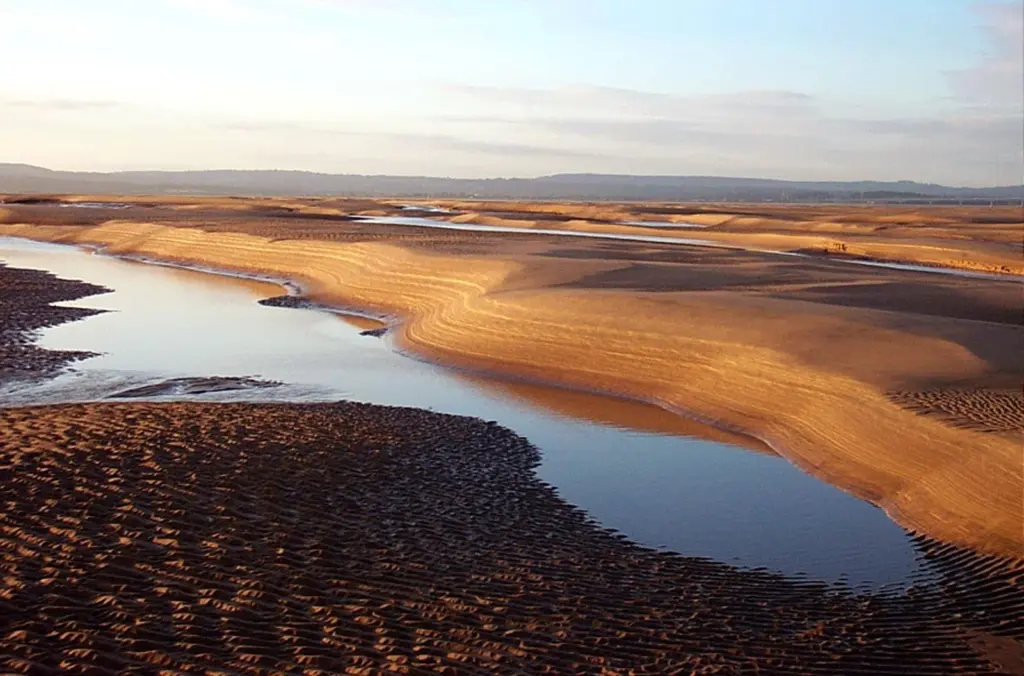
A consortium led by consulting firm Parsons Brinckerhoff will manage the Strategic Environmental Assessment (SEA). Also included in the two year contract are Black & Veatch, The Environment Council, Environ, ABPmer, HR Wallingford, Hartley Anderson and George Corderoy.
The SEA is a major part of the Severn Tidal Power Feasibility Study. It will provide analysis of how the environment around the estuary will be affected if a tidal range power project goes ahead.
The Secretary of State for Energy, John Hutton, announced the start of the two year long feasibility study in January. The tidal energy resource in the Severn Estuary provides the largest potential of all the UK’s estuaries for renewable electricity generation.
The feasibility study will consider all tidal range technologies, but not tidal stream technologies. Tidal range is the vertical difference between the highest high tide and the lowest low tide (up to 14m in the Severn Estuary). Electricity is generated by impounding a large volume of water on the high tide and then passing this water through turbines once a height difference is created.
There are two main tidal range technologies, barrages and lagoons. A Severn Barrage would be a barrier from the English to the Welsh coast over the Severn estuary. There are several proposed locations for such a barrage including between Cardiff and Weston, as recommended by studies in the 1980s, which would have a capacity of 8,640 MW and an estimated output of 17 Tera Watt Hours a year, providing around 5% of current UK electricity demand. A tidal lagoon is an artificial impoundment that would be constructed in shallow water areas with a high tidal range. Any such development would need to be undertaken in a sustainable manner which takes into account other interests in the estuary, in particular the major importance of the estuary for nature conservation. The Minister for the Environment at the Welsh Assembly Government, Jane Davidson said, ‘The Welsh Assembly Government is committed to increasing the amount of energy generated from renewable sources so as to help address the serious issue of climate change. We must, therefore, consider carefully the opportunity to harness tidal power in the Severn Estuary.
‘I am very much aware of the estuary’s environmental importance and the environmental protection legislation that, quite rightly, will need to be taken fully into account. There is a great deal at stake and our assessments during the feasibility study must be rigorous and based on sound science.’
One of the first actions of the SEA Contractor was to issue a Call for Evidence. This is comprised of two parts, A call for proposals for tidal power schemes in the Severn Estuary using tidal range technology and a request for any information (environmental, technical, commercial, social) that currently exists or is under development that could potentially contribute to the evidence base for the assessment of schemes and the subsequent Strategic Environmental Assessment.
Related Articles
 OTHER NEWS
 MARINE CIVILS
 MARINE CONSTRUCTION