




Underwater gliders to survey 200m North Sea depths
Subsea ocean data will be collected by specialist gliders in the North Sea over a period of three years.
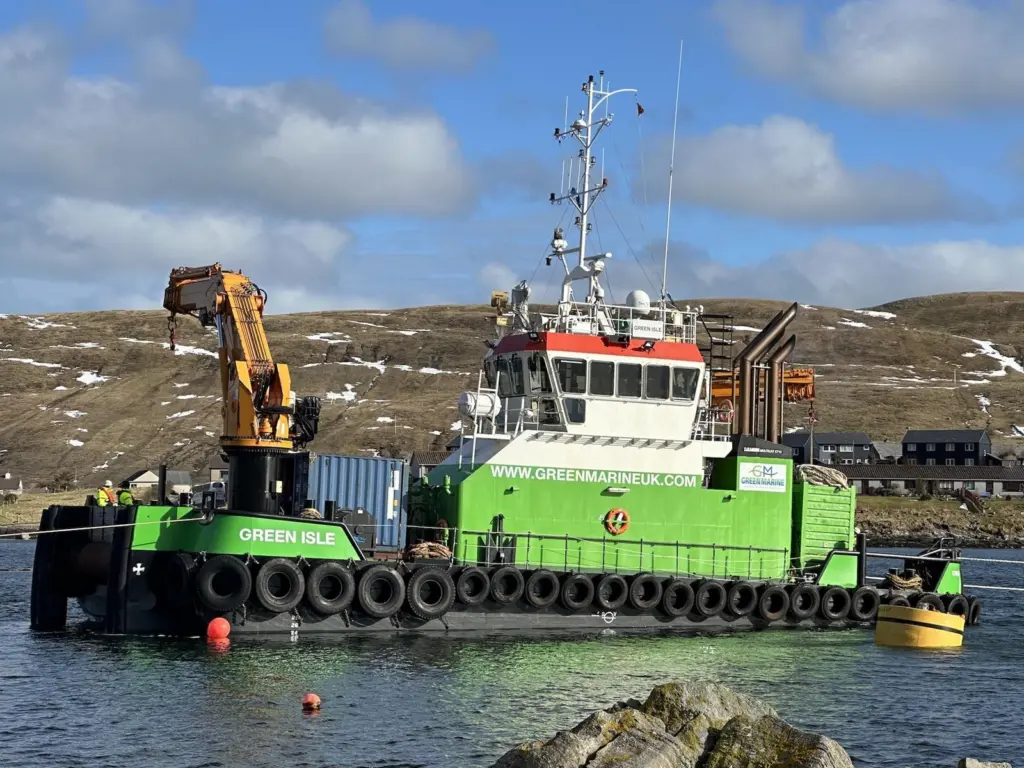
The data collection exercise is being led in the UK by the National Oceanography Centre (NOC) and Met Office to ‘dramatically improve the collection and distribution of data supporting both weather and ocean forecasts, which are vital for vessels operating in the territory’, says Green Marine UK, which will provide the gliders.
Salinity and temperature will be among the range of measurements delivered to the Met Office in near real-time as part of a wider programme to feed more information into a new super computer, which has been installed to help improve forecast accuracy.
Green Marine UK, based in the remote northern Scottish islands of Orkney, launched five gliders last year, also carried out with the NOC.
“We’re thrilled to be expanding our relationship with NOC supporting this ground-breaking initiative in the North Sea,” said Operations & Technology director Myles Metson. “It builds on a number of similar projects dating back several years. As the work scope expanded, Green Marine technicians travelled to NOC’s Southampton base to receive specialist training on best practice across a range of areas. This included pre-deployment, deployment and recovery strategies as well as on-site glider maintenance, battery charging and data extraction post recovery. In order to optimise deployment and recovery missions, our team has also developed a purpose-built frame to handle the gliders stationed on board the Green Quest and Green Isle vessels.”
The NOC has recently secured £101 million (€126 million) from the taxpayer-funded Natural Environment Research Council (NERC), of which £41.4 million has been earmarked for research on atmospheric, polar, freshwater and terrestrial environments.
The gliders in this project, says NOC engineering manager Stephen Woodward, can operate independently for long periods of time while their sensors gather ocean data.
“Securing a better understanding of ocean circulation and the data gathering potential of gliders is a key driving factor behind the project,” Woodward said. “It will be vital to inform future ocean modelling conditions and weather patterns, and, in time, this will support decision making in vital UK services, such as search and rescue, counter-pollution, and ocean biodiversity.”
Related Articles
 MERGERS & ACQUISITIONS
 OTHER NEWS
 ENVIRONMENT