![MaritimeJournal[Seawork]](https://www.maritimejournal.com/wp-content/uploads/2026/09/MaritimeJournalSeawork.svg)




Using nature for greener marine infrastructure projects
A pioneering oyster reef restoration project in the North Sea could help reshape the way marine infrastructure is designed and built, with nature at its core.
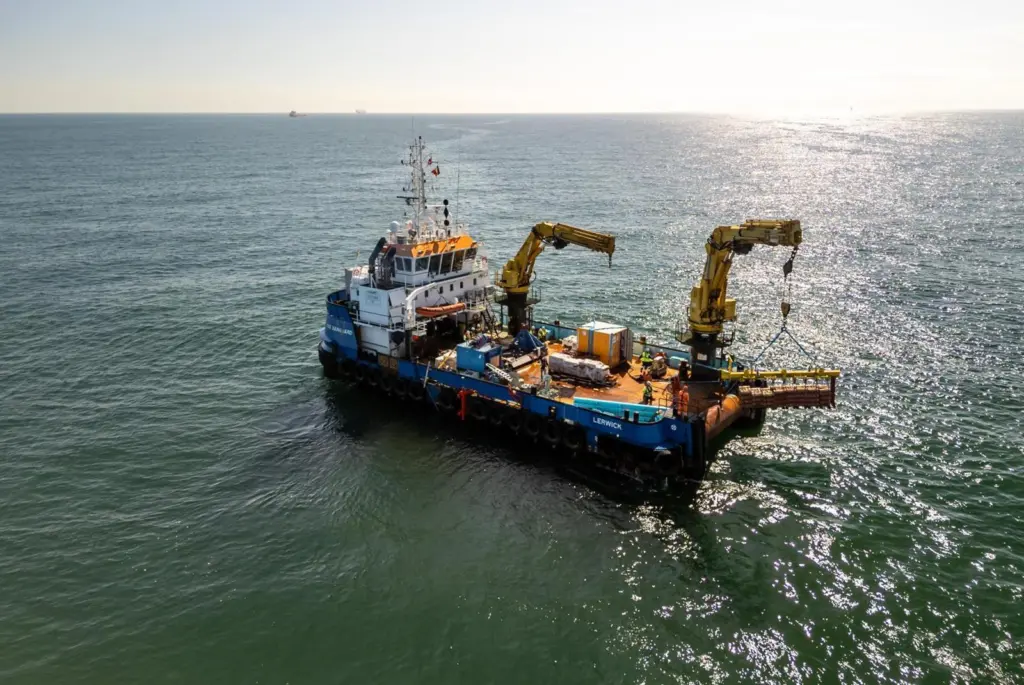
The BELREEFS project recently deployed more than 200,000 European flat oysters (Ostrea edulis) on the seabed around the protected Kilmore shipwreck, 30 kilometres off the Belgian coast.
“In our various marine construction projects, we often work with rocks, gravel and other hard materials,” said Vicky Stratigaki, marine engineer and BELREEFS project coordinator at Jan De Nul.
“We are constantly looking for new and efficient ways to integrate nature restoration into our core activities. With BELREEFS, we are laying the foundations for large-scale restoration of oyster reefs and working towards their integration into marine infrastructure.”
Unique know-how
These oysters, once abundant but now nearly extinct due to overfishing and habitat destruction, play a critical role as ecosystem engineers – creating reefs that support marine life, purify water and stabilise the seabed.
The insights and techniques developed in BELREEFS are already influencing the nature-inclusive design of offshore infrastructure such as windfarms and subsea cable protection.
Baked clay bricks were used during the project as reef substrates, offering a biodegradable, installation-friendly solution that could be adapted across multiple marine engineering applications.
An intensive monitoring programme will folow to assess the reef’s ecological impact, helping to inform future design and policy.
BELREEFS is funded under the LIFE Belgium for Biodiversity programme and brings together Jan De Nul, the Institute of Natural Sciences and other partners.
As the offshore energy sector grows, the BELREEFS project offers a model for embedding habitat restoration directly into sustainable marine development going forward.
Related Articles
 OTHER NEWS
 MARINE CIVILS
 MARINE CIVILS