![MaritimeJournal[Seawork]](https://www.maritimejournal.com/wp-content/uploads/2026/09/MaritimeJournalSeawork.svg)






Tape shapes up to seal safety
You could guess at what can happen if a flange carrying fuel fails, and just how nasty the resulting spray of fuel could be. But what happens if this fine spray meets the kind of hot spots commonly found in engine rooms?
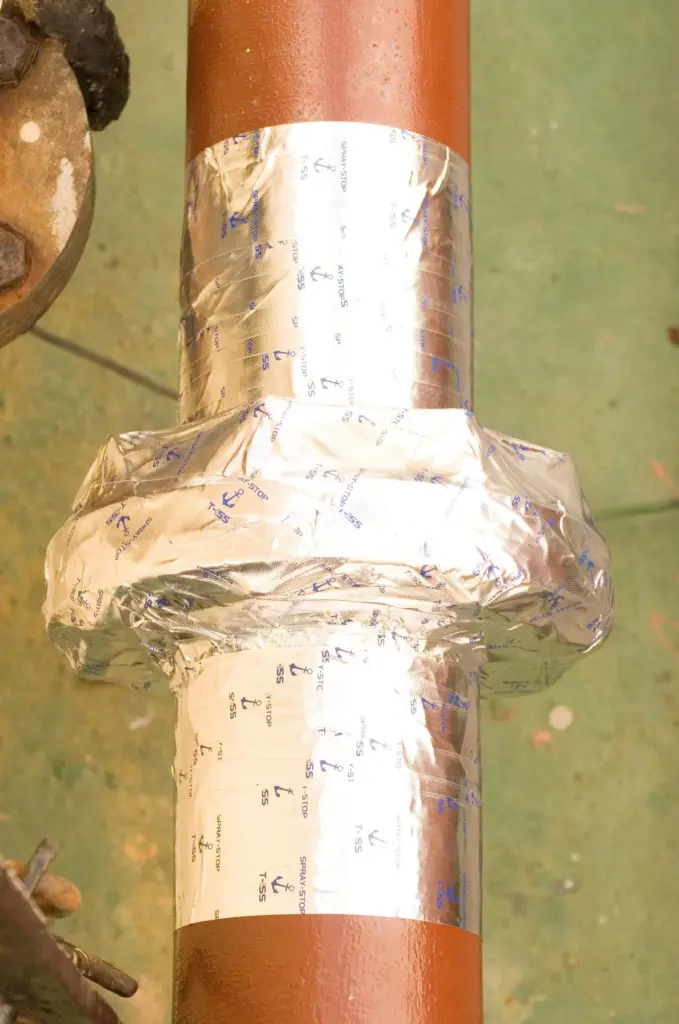
Pauline Morris of PSP Marine explained that the latest of IMO regulations, specifically the IMO A 653(16) 74 SOLAS 94 amendment, reflects just this danger of fire, or worse, explosion.
She told MJ that alongside the health and safety issues, one of the most niggling worries that operators have is that their vessels are not IMO compliant, something that would certainly cause major problems if it came up in relation to a mishap at sea. Since the new regulations apply to even quite small boats, those with engines over 500 horsepower, and covers all pipes carrying hazardous liquids or gasses, there has been a need to develop a flange tape that is both effective, compliant and easy to use.
The new Spray Stop tape is particularly strong, resistant to both heat over 160°C, chemicals and solvents (especially as found in engine rooms) plus, it will withstand pressures of 20 bar. At the same time, it is particularly conformable. ‘You can push it around the bolts of the flanges and make it very secure, said Ms Morris. ‘It also has a long life, and only needs to be removed on three year standard inspections or maintenance checks, and you can still get it off with a pair of scissors.’
Its construction, consisting of multiple layers of aluminium and glasscloth coated with a high performance acrylic adhesive, makes it particularly resilient. Pauline Morris added that the tape has been successfully used on the outer decks of vessels too (not just inside), remaining stable even under attack by salt spray and exposure to the sun’s UV rays.
Steve Spivey, engineering director at Marr Vessel Management (part of J Marr Shipping), said that since the firm puts safety firmly at the top of the list of priorities, compliance with all IMO regulations is especially important. ‘We use Spray Stop as a convenient way to cover flanges on pipe work that mainly carry fuel in and out of the engine room,’ he said.
As many engineers know, pipes are not always readily accessible, so the fact that taping is an undemanding process is an extra bonus. ‘It’s easy to apply and once it’s on it remains in place until we carry out any necessary inspections,’ concluded Mr Spivey. ‘It’s an ideal solution.’
Related Articles
 INDUSTRY NEWS
 OTHER NEWS
 MARINE RENEWABLES