![MaritimeJournal[Seawork]](https://www.maritimejournal.com/wp-content/uploads/2026/09/MaritimeJournalSeawork.svg)

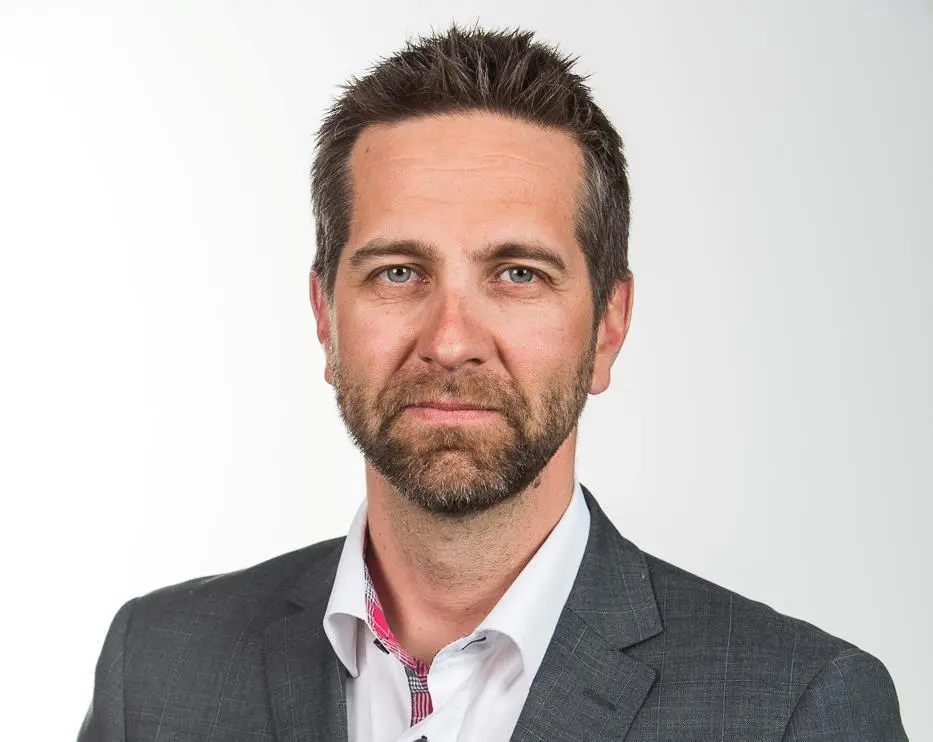
Tom Eystø: Massterly
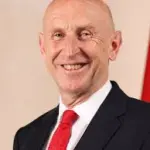
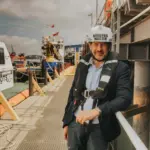
Development toward autonomous windfarm support has already started, according to Tom Eystø, MD of Massterly, a new Norwegian joint venture between Kongsberg Maritime and Wilhelm Wilhelmsen.
A remote-to-autonomous offshore utility vessel awaiting build may have wind service vessels sailing in its wake.“The functionality we’ve gained throughout Hrönn’s developmental programme will be implemented on windfarm service ships,” he predicted.
According to Eystø, “cargo supply for wind farms is one of those repetitive tasks that can be carried out by drones”. However, he sees a layered operation: “Within the farm will be advanced Walk-to-Work vessels with a high level of autonomy – but these will be manned, keeping a human ‘in the loop’.”
It has to be said, Eystø’s vision for the company is a broad one, embracing all kinds of innovation that “will improve the quality and regularity of service operations”.
“For example, we are designing a fully autonomous gangway: at present, deployment is time-consuming, you need crane operators and a high level of supervision on deck. With this system, the vessel moves up to the rig itself, the gangway deploys, everything is launched automatically.”
Despite his own enthusiasm, Eystø is aware that not everyone is happy about autonomous vessels and more, he explained its cradle is, unfortunately, within the most exacting of arenas.
“It would be much easier to sail deep sea where there’s no congestion, but international laws prevent that, so we have to begin autonomous operations in the most difficult areas – close to shore, around other vessels. Having said that, once achieved, the solutions will be appropriate for the global industry.”
Certainly, his lead in the new company should smooth a few furrowed brows: a veteran of dynamic and advanced positioning systems for the last two decades, he’s not surprised by the rise of autonomy “which has been a strategic goal for a very long time”.
He’s aware the present stumbling block isn’t the technology itself, its ‘hearts and minds’. “Acceptance is our biggest challenge,” he said and explained that Norway’s maritime and class organisations have supported the development but the next step is tackling legislation in different countries and more, helping take it to IMO level “as at the moment there are no international rules and regulations to create a framework”.
However, Eystø has a further, rather subtle point to make about the technology: “Don’t contaminate high-level ‘automation’ with the word ‘autonomy’,” he said, outlining a clear divide between the two.
“Most of the vessels we supply already have very advanced automatic solutions – today, you can sail out of the approach on autopilot or track-pilot. But the autonomous part comes in around collision avoidance – even there it’s only the reactive layer that has an autonomous functionality, the rest of it should be enacted strictly according to COLREGS… after all, these vessels are going to have to operate side-by-side with manned ships.”
What’s clear from Eystø is that the future of autonomy is being carved out, right now.
By Stevie Knight