


TROLling for radiation at Dounreay
Closing down Britain’ s abandoned fast nuclear reactor experiment has meant addressing Dounreay’ s legacy of radioactive particles in the local marine environment.
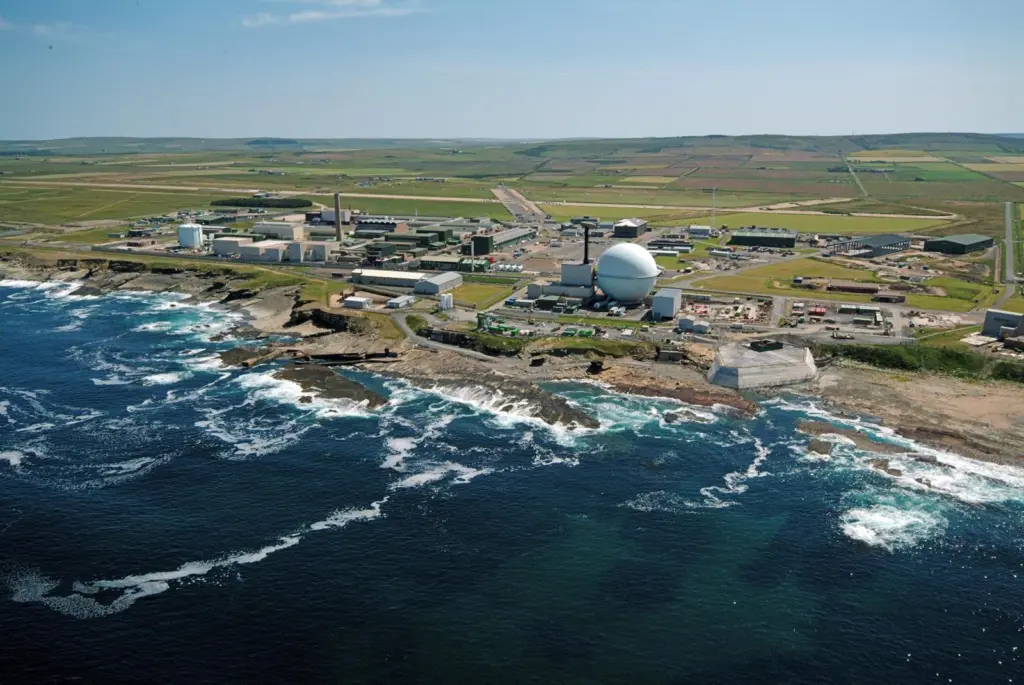
These particles are fragments of irradiated nuclear fuel discharged to sea as a result of practices in reprocessing during the 1960s and 1970s. The most hazardous fragments are located close to the old discharge point on the seabed and their disintegration is believe to be the source of smaller, less hazardous particles detected on local beaches. In August 2008, Dounreay Site Restoration Ltd (DSLR) started to clean up the seabed where the most hazardous of these particles are to be found, continuing in the summer of 2009, when more than a hundred particles were retrieved from the seabed.
Originally the programme used divers for the process but in 2007 DSRL commissioned a special trial asking potential suppliers to come up with a remote controlled system.
Subsea contractor Fathom’s trials with its tracked seabed crawler, the TROL, proved extremely effective, significantly more so than the original divers. Therefore the first TROL was tasked with detecting and mapping particles while an upgraded version took over the job of retrieval as well.
DSRL imposed strict parameters on Fathoms, setting out specified recovery rates which the company not only met but exceeded. The upgraded TROL system can even recover radioactive particles that are buried to a depth of 50cm. All operations are continuously recorded on video, so the depth of recovery is noted and a record is kept for posterity.
Fathoms’ next generation TROL, a small, tracked, seabed crawler, builds on the operational successes of the original system. The subsea company is keen on making the point that the new TROL’s upgraded ability to locate and recover radioactive particles from on and beneath the seabed makes the operation more cost effective. The innovative engineering also means that the unit can be adapted to a variety of other seabed tasks such as monitoring, sampling and recovery.
Related Articles
 MARINE CIVILS
 MERGERS & ACQUISITIONS
 OTHER NEWS