![MaritimeJournal[Seawork]](https://www.maritimejournal.com/wp-content/uploads/2026/09/MaritimeJournalSeawork.svg)


Conflict and fire: why salvage operations are getting harder
Reluctant ports, container ship fires and conflict zones are complicating salvage operations, forcing risky offshore cargo transfers, delaying repairs and exposing crews, cargo owners and responders.
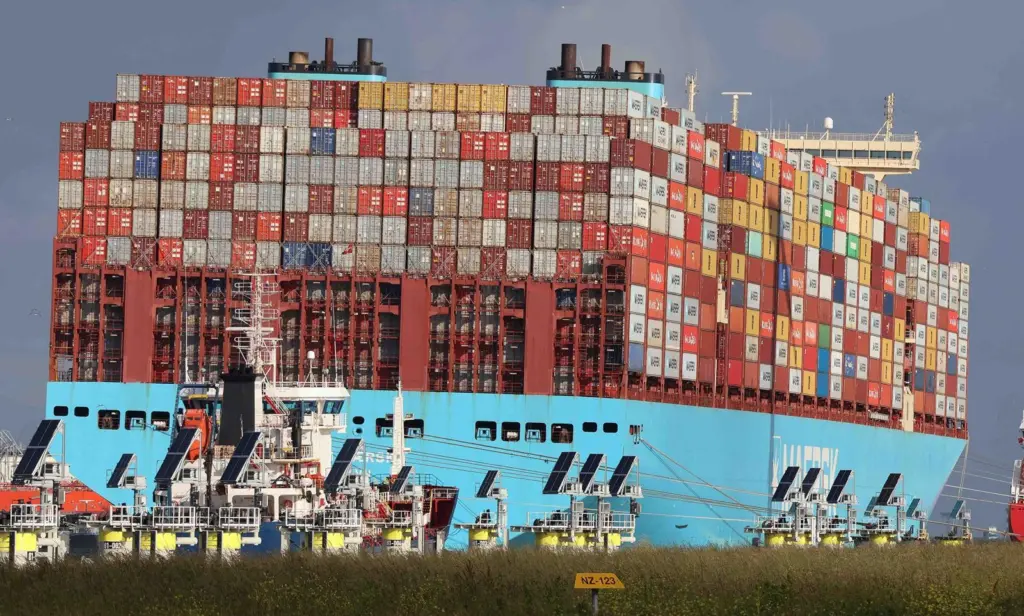
Details released by the International Salvage Union (ISU) have once again highlighted challenges faced by members.
When it comes to containerised cargo fires, it is vital that ports have the ability to offload affected vessels.
It is an odd paradox that in certain parts of the world, when bad weather is expected ships are ordered, and even themselves often prefer, to put to sea and ride out the storm in their natural environment rather than alongside, where could shoreside infrastructure could potentially be damaged, not to mention the ships running amok should their mooring lines fail.
A ship experiencing problems while at sea, however, for example machinery breakdown or grounding damage, will have to leave its natural environment and seek a shipyard or drydock for repairs.
If loaded at the time and in particular where drydocks or floating docks have draught restrictions, the vessel will usually have to discharge its cargo first. For the cargo owner it is of course imperative that their precious goods are secured, particularly when just-in-time production lines have a hunger for materials and components to keep the conveyor belts rolling.
With dry bulk or breakbulk cargoes, a berth with access to mobile craneage or capabilities to transship into barges may be sufficient. On occasion, ship-to-ship (STS) transfers can even be carried out at sea, but salvors dealing with a fire among the cargo on a large container ship face a particular set of challenges.
Removing containers
Most container ship fires involve the cargo rather than the vessel itself.
The tightly packed boxes, potentially 20,000 plus 20ft units per ship, make tackling the blaze difficult for the vessel’s own crew with their limited resources, and with professional assistance potentially several days away, the manpower on board are soon exhausted but the fire itself does not stop for a rest.
Containing the conflagration and preventing its spread is the priority. What’s on fire is in effect lost, but assuming the fire can be brought under sufficient control or put out, the same requirement to unload the ship of both damaged and unaffected containers exists before being docked for repairs.
Here the task can get complicated. As containers are unloaded, exposure to air can lead to reignition of smouldering contents, not to mention toxic fumes from the fire itself and any dangerous cargo which may include unfriendly chemicals.
Not welcome
The largest container ships, at around 61m wide, carry as many as 24 rows of boxes across their beam.
This can make STS transfer at sea difficult and while shoreside gantry cranes can accommodate vessels of this size, they may not be available for prolonged operations lasting weeks or even months, delicately unpacking the fire-ravaged ship.
Nearby container terminals and even conventional ports may also not have empty berths available for processing both damaged and undamaged cargo; in short, while ports are anxious to help out, these pariahs of the sea are often not really welcome.
Smit’s Singapore Emergency Response Centre has reported supporting five container fire-related incidents in Southeast Asia recently, and the Netherlands-based salvor has said there is a growing concern about the approach taken by some terminal operators or ports.
“It’s understandable, from a terminal’s perspective, to send any vessel that may pose a risk to operations out to the anchorage, but from the ship and salvage perspective this can be comparable to sending a patient in urgent need of care away from a sheltered and well-resourced environment,” ISU quotes Smit as saying.
Conflict

Salvors are used to dealing with vessels caught in the crossfire of armed conflict, and the risks are also faced by responders who often arrive as the vessel’s crew leaves.
Crude oil tankers became pawns in the Iran-Iraq wars of the 1980s, frequently targeted by Exocet missiles and within shipping circles salvage teams became folklore heroes, sometimes paying the ultimate price.
Shipping’s vulnerability during modern conflicts is again evident, such as in the Black Sea following Russia’s invasion of Ukraine. Nearby in the Mediterranean recently, Athens-based Five Oceans Salvage (FOS) responded after the tanker Vilamoura experienced explosions in the engine room, suspected to have been caused by limpet mines planted on the hull.
The vessel was around 100nm north of Zuetina, Libya at the time, loaded with 130,000 tonnes of heated crude oil destined for Vietnam and Malaysia.
The engine room was flooded and the vessel immobilised following the explosions and a Lloyd’s Open Form (LOF) contract was signed between FOS and Vilamoura’s owners, and with fears that the tanker could drift towards the Libyan coast, the Boskalis tug Boka Summit (200tbp) just 300nm away, was engaged to tow it away from danger.
Vilamoura would obviously need the services of a shipyard, but only after first offloading its cargo in a complex STS transfer operation requiring external pumping, inert gas and cargo heating provided by the receiving vessel.
The initial plan was to tow the vessel to Piraeus Anchorage for the operation, and personnel and equipment including divers and patching material were mobilised from Greece, Rotterdam, Houston, Singapore and Durban.
Four additional tugs, an accommodation barge and pollution control vessel were deployed and just over a week after the initial explosions the sister-vessel Petalidi, made available by Vilamoura’s owner, was secured alongside the stricken tanker while still drifting and connected to Boka Summit.
Following the complexity and demands of the Greek authorities it was decided to abandon the initial plan and carry out the cargo transfer in international waters off Laconic Bay. Boka Summit was replaced by the tug Protug-85 with patching work and cargo transfer commencing around a week later.
Transfer of Vilamoura’s cargo was completed 12 days later, the complex operation involving a 35-person salvage team working around the clock and an anti-pollution team standing by on shore.
Vilamoura was redelivered to its owners on termination of the LOF, the owners keeping the Protug-85 along with personnel and equipment on site on a separate contract, while the remaining craft, personnel and equipment demobilised accordingly.

Related Articles
 SPECIAL REPORTS
 TUGS & SALVAGE
 EQUIPMENT