




UK lighthouse saved for the nation
A UK lighthouse has been saved for the nation after being handed over to English Heritage by previous owners Trinity House.
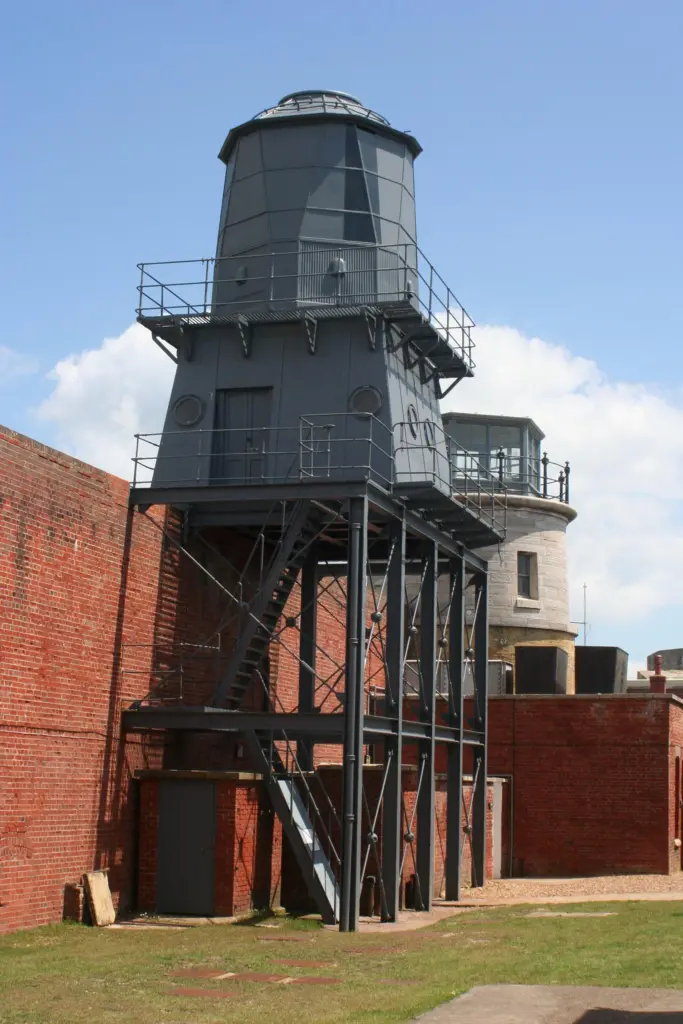
Low lighthouse, built on the ramparts of Hurst Castle in Lymington, was last used to safeguard shipping in the Solent in 1997 and is now protected as a Scheduled Monument.
During a handover ceremony, Deputy Master of Trinity House Rear Admiral Sir Jeremy De Halpert presented a set of antique lighthouse keys to Dawn Postlethwaite, Head of Visitor Operations for English Heritage, at an event attended by guests including Friends of Hurst Castle and members of the Association of Lighthouse Keepers.
Speaking at the ceremony, Sir Jeremy De Halpert said, ‘I know that English Heritage will continue to preserve the fabric of the structure and its presence within Hurst Castle, with its associated links to Trinity House and will ensure that the important role it played in the safety of shipping and the welfare of seafarers will be preserved and assured.’
Tracey Wahdan, English Heritage Visitor Operations Director for the South East said, ‘The transfer of guardianship to English Heritage will ensure that the Low Lighthouse and its colourful history can be enjoyed by future generations of visitors to Hurst Castle. We will be taking over the day to day maintenance of the structure which further adds to what is already an exciting day out at Hurst Castle, one of the most advanced of the artillery fortresses built by Henry VIII. Being situated on the narrowest stretch of water between the mainland and Isle of Wight made it the first line of defence against ships entering The Solent from the west.’
There has been a long history of lighthouses at Hurst castle, with the earliest built in 1733. The present Low Lighthouse was first lit on 30 November 1911, replacing an earlier lighthouse built in 1866. It’s red 70 foot tall structure stands on a framework of steel joists that were fixed to the ramparts of the west wing of Hurst Castle. The structure is unusual because it enabled the giant light to move laterally and horizontally along the castle walls, warning ships of the dangerous, ever-changing, shifting coastline at Shingles Bank which has been progressively moving eastward due to the prevailing south-westerly winds. The light was visible to ships for 10 miles out at sea.
The keepers were withdrawn in 1923 when the Low Lighthouse was automated, and by 1997, a high powered electric light was installed below the main light in the higher tower of Hurst Castle, effectively making the Low Lighthouse redundant. It was decommissioned and painted grey to match the surrounding background colour of the castle walls, in order to eliminate any navigational confusion.
Today, the castle is a museum which displays a range of guns and canons from various eras, up to and including World War II, when the castle was occupied by Coastal Artillery soldiers.
Related Articles
 VESSELS
 MARINE CONSTRUCTION
 VESSELS