![MaritimeJournal[Seawork]](https://www.maritimejournal.com/wp-content/uploads/2026/09/MaritimeJournalSeawork.svg)




Unmanned aircraft for air pollution monitoring
France’s Ministry of the Sea is deploying a sniffer drone in the Pas-de-Calais region of the Dover Straits in order to help enforce the emission regulations for shipping passing through this area writes Dag Pike.
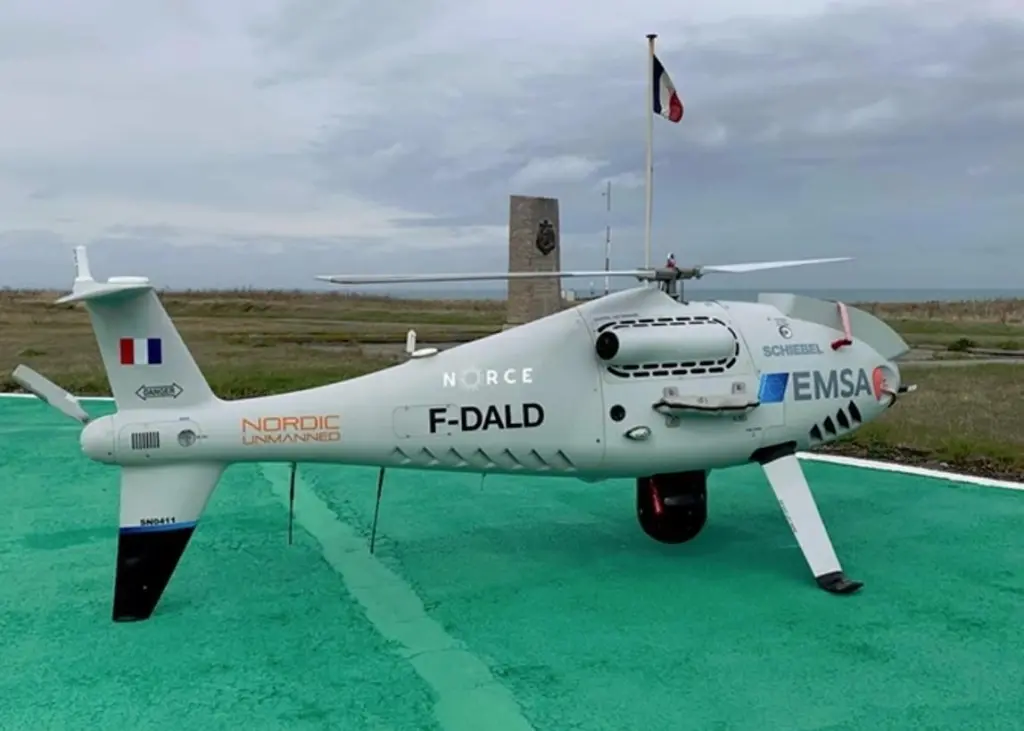
The Dover Straits are the World’s busiest area for ship movements in the two way traffic separation zone that concentrates incoming shipping to the French side of the Straits. The drone is being made available to France by the European Maritime Safety Agency (EMSA) and the unmanned aircraft will fly above the Dover Strait Traffic Separation Scheme, which is part of the North Sea Sulphur Emission Control Area (SECA) where tighter pollution emission rules apply. Ships navigating in this area must not use fuel with a sulphur concentration higher than 0.1% whereas in other areas the limitation is set at 0.5%.
The operations with the drone started in September and are planned to continue for a period of three months. The flights are operating from the Regional Surveillance and Rescue Operational Center (CROSS) at Cap Gris-Nez and this base will serve as logistical base and will coordinate the follow-up on the flights from any ships detected as not complying with the fuel requirement.
The information collected from the drone which includes the sulphur concentration in the emissions, images of vessels, the flight trajectory and the gas measurements can be transmitted live from the drone and they will be recorded at EMSA’s data centre. This RPAS Data Centre is linked to THETIS-EU, which is a European database used by authorities around Europe who are responsible for ship inspections. If the emissions measurement taken by the drone indicates a breach of the concentration limit, a subsequent ship inspection may be triggered at the next port of call and EU member states are informed of these breaches to facilitate coordination of ship inspections.
This use of drones to measure and help enforce the fuel quality requirements set by IMO matches a similar system being operated by the Danish authorities covering the area between Sweden and Denmark known as the Great Belt. If the results of both of these trials are successful, then this method of checking ship’s emissions is likely to expand as a cheaper alternative to using manned aircraft.
Related Articles
 ACCESSORIES & EQUIPMENT
 ENVIRONMENT
 MARINE CONSTRUCTION