

A floating laboratory onboard a research vessel
The German Aerospace Center (DLR) has awarded Lloyd Werft a contract to construct a pioneering research vessel designed to test alternative fuels and climate-friendly propulsion technologies.
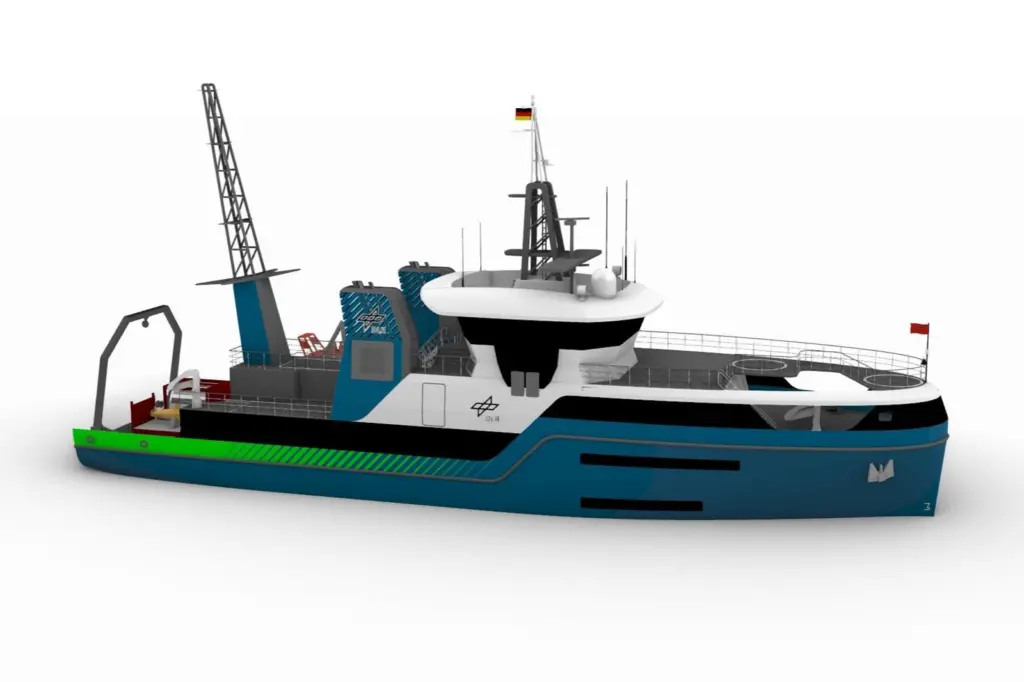
The 48-metre vessel will serve as a floating laboratory, focusing on hydrogen-based fuels and battery systems.
“The new DLR research ship will serve as a unique laboratory for real-world experiments,” said Anke Kaysser-Pyzalla, chair of the DLR Executive Board.
“It will create new opportunities for digital, climate-compatible, and competitive maritime mobility.”
Innovative trials
Scheduled for completion in summer 2027, the vessel build will include a specially designed test engine room, allowing DLR researchers and industry partners to trial innovative propulsion systems.
The ship will primarily operate in the North and Baltic Seas on test voyages lasting from one to several days, accommodating up to 20 people onboard.
Equipped with a digital twin, the vessel will enable extensive computer simulations to optimise propulsion components and navigation systems before real-world trials.
The platform will also support security authorities in maritime research, reinforcing Germany’s commitment to sustainable and digitalised shipping.
Friedrich Norden, managing director of Lloyd Werft Bremerhaven, highlighted the project’s significance.
“This flagship initiative actively contributes to shaping the maritime energy transition while reinforcing Lloyd Werft’s expertise in complex ship construction,” he said.
He added that this vessel build marks a significant step in reducing reliance on fossil fuels, solidifying Germany’s leadership in maritime innovation and alternative fuels research.