

Advanced Voith tractor tug delivered to Turkish owner
An advanced tug that is only the second to combine Voith Schneider propulsion with dual-fuel LNG/diesel engines has been delivered to a Turkish petrol company.
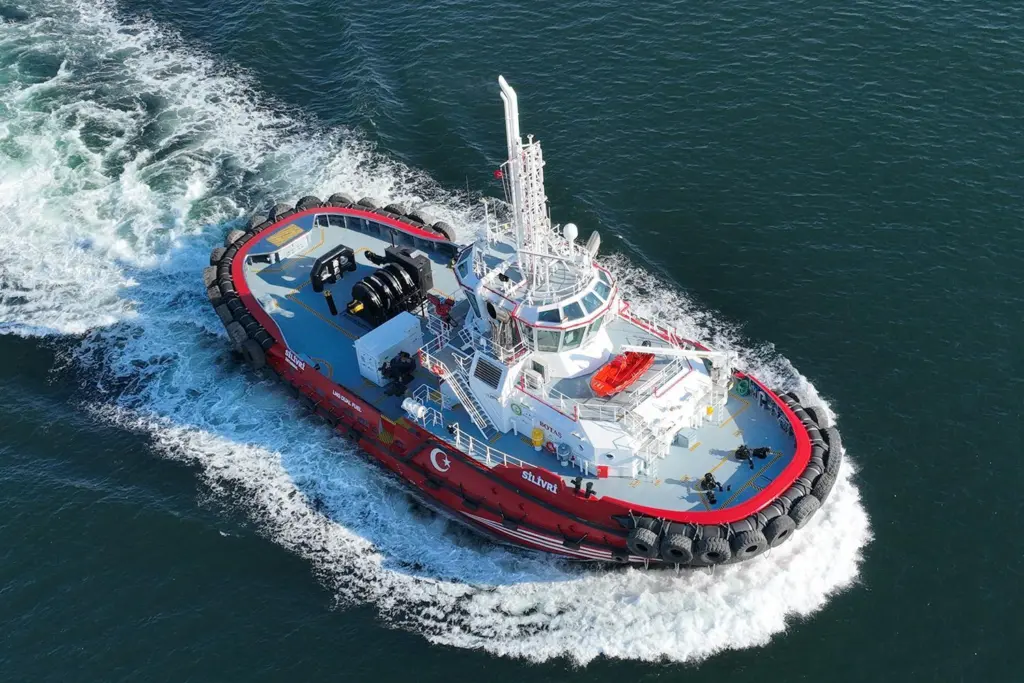
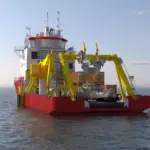
Turkey’s Uzmar Shipbuilding has delivered Silivri, the second of two advanced 80tbp tractor tugs after Sultanhani, to BOTAŞ Petroleum Pipeline Corporation.
Sister ship Sultanhani was also built by Uzmar late in 2024 and both 39m vessels are based on Robert Allan Ltd’s TRAktor V3900-DF series tug.
The duo can easily be defined as advanced and significant vessels within the pattern of new-build tugs that are emerging from European shipyards as owners weigh up the options of refitting older vessels versus new-buildings to meet evolving environmental requirements globally.
Two aspects of these deliveries stand out – the selection of Voith’s 32X6 VSP, the latest innovation in cycloidal propeller design, and the adoption of LNG alongside diesel to fuel the vessels.
Notable features
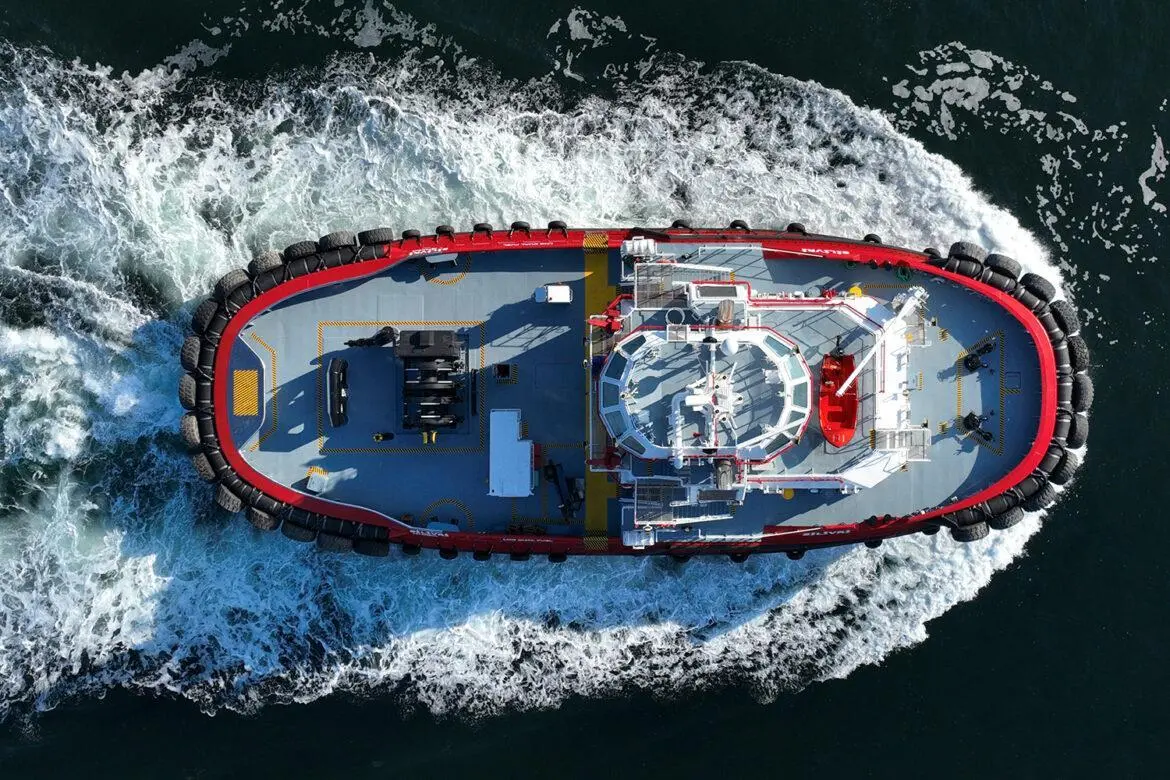
Voith says the choice of VSP is well suited for the intended role of escort tug, offering ‘fast response time and precise manoeuvring capabilities’This latest iteration features several improvements over its predecessors.
The 32X6 VSP includes a ‘simpler yet more robust design’, the particular TRAktor V3900-DF marque of vessel featuring a new geometry for the VSP guard plate, optimising bollard pull performance and simplifying construction.
The second stand-out aspect is the choice of fuel for both vessels.
Tug owners, along with most sectors of the shipping industry, have a number of options here as they address the conundrum of meeting emissions standards along with efficient operation.
LNG is one such option, and although not particularly common in shiphandling/escort tugs, the owner, vessel designer and builder have decided to choose it for Silivri and Sultanhani.
Wärtsilä 6L34DF dual fuel engines, capable of operating on natural gas or diesel, have been selected, RAL saying the engines provide ‘seamless transition between the two fuels’.
IMO Tier III emission compliance is achieved, including in diesel operating mode, thanks to an SCR after-treatment arrangement and a dedicated diesel exhaust fluid system.
Design and location of the LNG tank is an area that demands particular attention, and the 40m3 tank is sited aft of the engine room in a dedicated compartment, installed transversely allowing a compact and efficient arrangement, as well as separating associated hazardous zones from the accommodation block forward.
A force ventilated LNG mast allows vented natural gas from the LNG tank and system to be well dispersed on exit from the vessel without the potential for cold vapour collapse. The mast outlet is well above the working deck, away from any crew areas or ventilation intakes.
Vessel details
Ensuring directional stability was foremost in the vessel’s design, with the inclusion of RAL’s strake stabilisers at the stern of the tug, these small appendages ensuring the vessel is directionally stable yet highly manoeuvrable with very minimal impact to resistance.
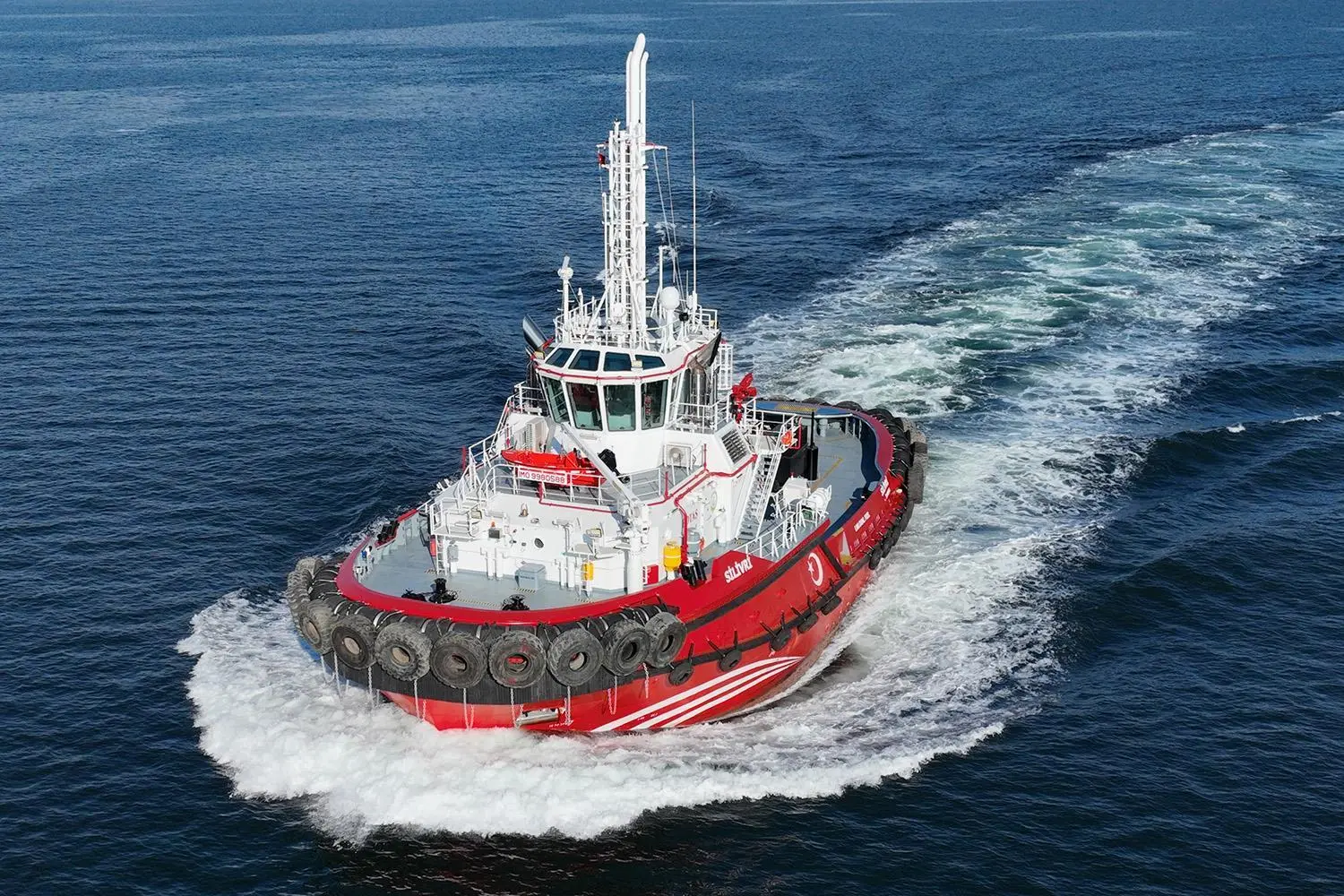
Computational fluid dynamics were used in the vessel’s hull form design, the results verified in model tests and later confirmed during sea trials.
RAL’s development of LNG-fuelled tugs addresses space and regulatory limitations specific to small vessels not present in larger LNG-fuelled examples, and the design took in lessons learned and operational feedback from the 10 previous RAL-designed LNG-fuelled tugs.
The resulting BV-classed Silivri’s notation includes ‘Escort Tug’ and as standard with tractor-configured tugs, towing is over the stern from a winch towards the aft end of the main deck.
Tank capacities include 164m3 of diesel and 40m3 of LNG, and the impressive performance figures for the 12.5kn vessel include a bollard pull of 80t, 107t steering force during escort operations and 188t of braking force, more than twice the static bollard pull.
Related Articles
 OTHER NEWS
 MARINE CIVILS
 AUTONOMOUS VESSELS & TECHNOLOGY