
Blazing oil tanker disaster averted by salvors
A million barrels of crude oil have been saved from causing unprecedented ocean pollution after salvors successfully towed the blazing tanker Sounion to safety.
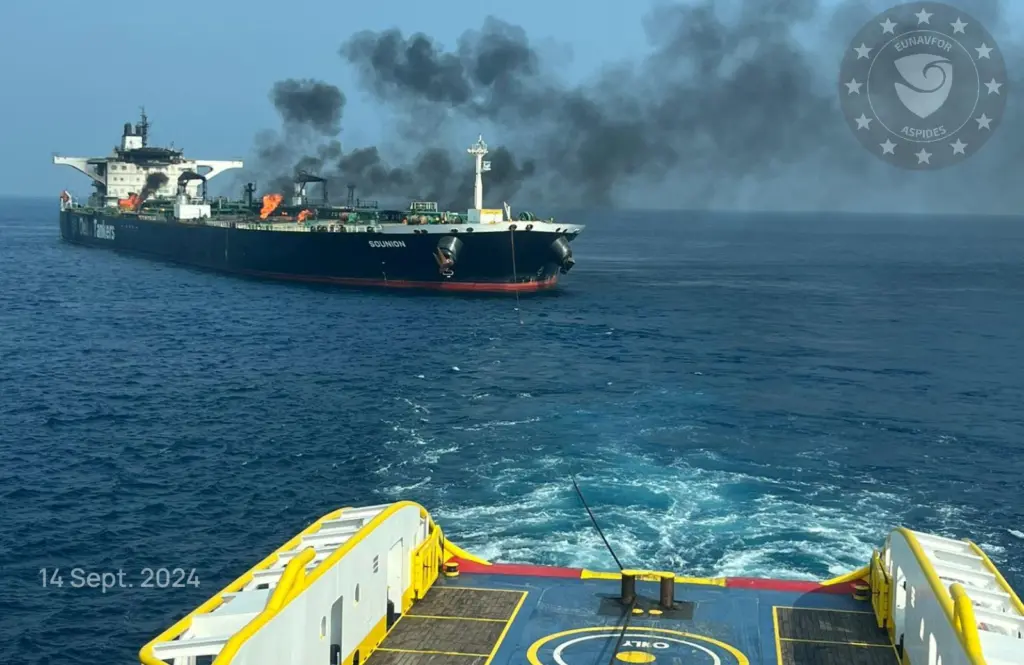
Protection forces have confirmed that the difficult and risky operation to rescue Sounion after being attacked by Houthi rebels in the Red Sea is progressing well, so far avoiding any oil spill.
In August, while on passage from Basrah in Iraq to Greece and reportedly laden with more than a million barrels of crude oil, Sounion was attacked by Houthi militants. Three projectiles struck the vessel and a fire broke out on board, which was put out but resulted in disabling the vessel.
The crew of 25 plus four security personnel were evacuated safely by vessels of the EUNAVFOR ASPIDES naval military operation, which was set up in February to try and safeguard maritime security in the Red Sea, Indian Ocean and Gulf, under the EU Common Security and Defence Policy.
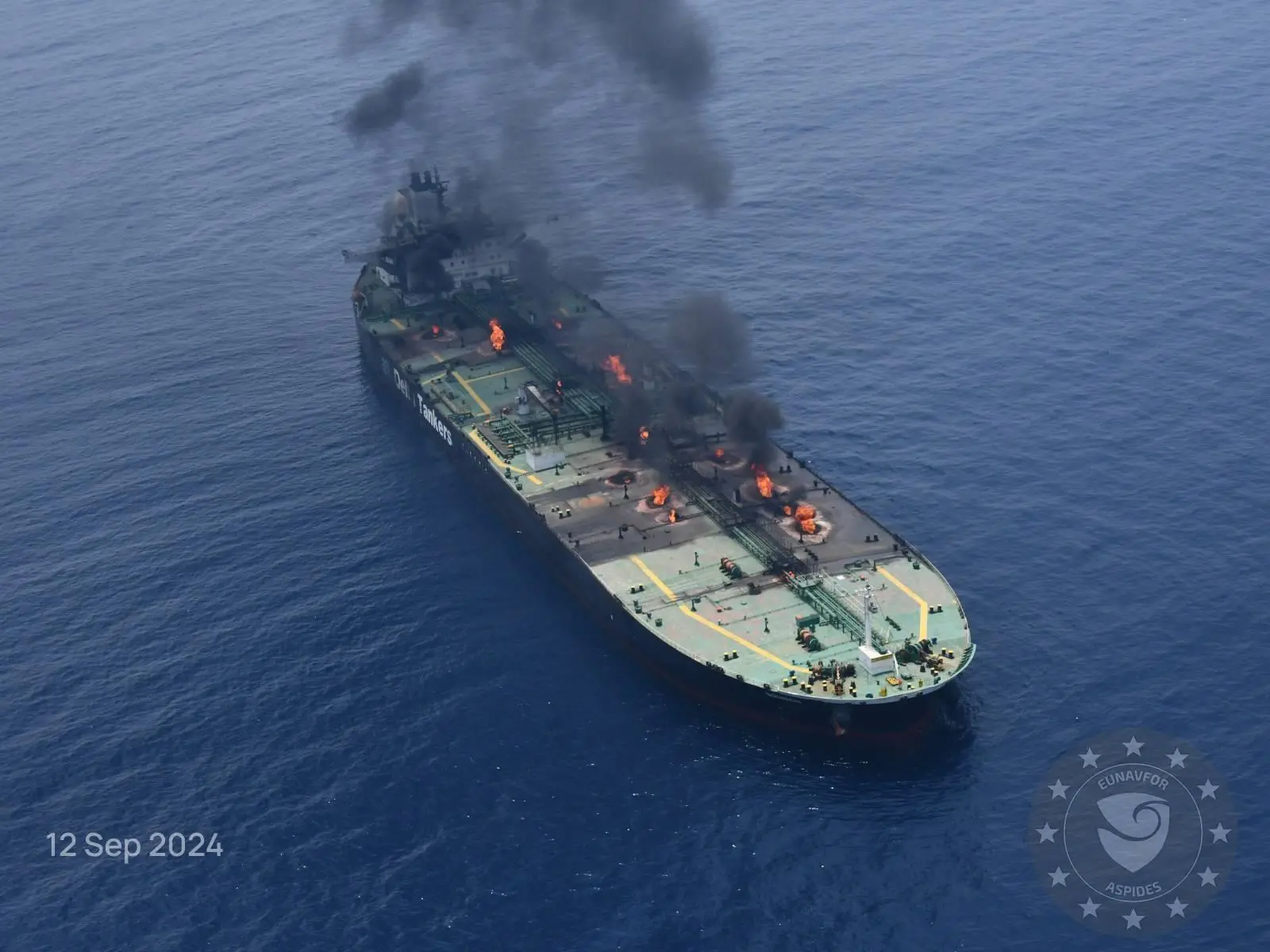
Houthi rebels then boarded Sounion, planting explosives that led to simultaneous explosions and fierce fires emanating from several locations along the vessel’s deck.
It is not uncommon for civilians to be caught up in geopolitical disputes involving force and in the case of the Sounion, once again innocent seafarers have been put at risk.
Once safely removed from the vessel the risk passes to commercial salvage contractors, who are called upon to save the vessel and more importantly, avoid what in this case could lead to catastrophic environmental damage on a scale not seen before.
Salvage attempt
Particularly concerning was the length of time the fires were allowed to continue, risking the structural integrity of the vessel.
While military forces often have salvage capabilities, they are mainly aimed at protecting their own and it is the commercial salvage industry that responds to such incidents on a daily basis, providing the essential hardware and expertise.
Salvors are in the ‘risk business’ by default, occasionally involving operation in war zones; indeed the ‘tanker wars’ in the Persian Gulf and Strait of Hormuz in the late 1980s involved commercial salvors operating while under fire.
The identity of the salvors in this case was initially not made public to protect their own safety and as is the norm in such incidents they had to weigh up not only the commercial risks which, depending on the contract negotiated, could involve a ‘no cure-no pay’ element, but also the risk to their own personnel working on site.
On this occasion, with the Houthi rebels reportedly still threatening further attacks on the vessel, the risk was considered too great for any salvage operation to continue without military protection.
Three potential phases existed in dealing with Sounion: towing the vessel to a safe area; extinguishing the fires; and stabilising the situation on board before offloading the remaining crude oil from the vessel to eliminate the threat to the environment.
EUNAVOR ASPIDES
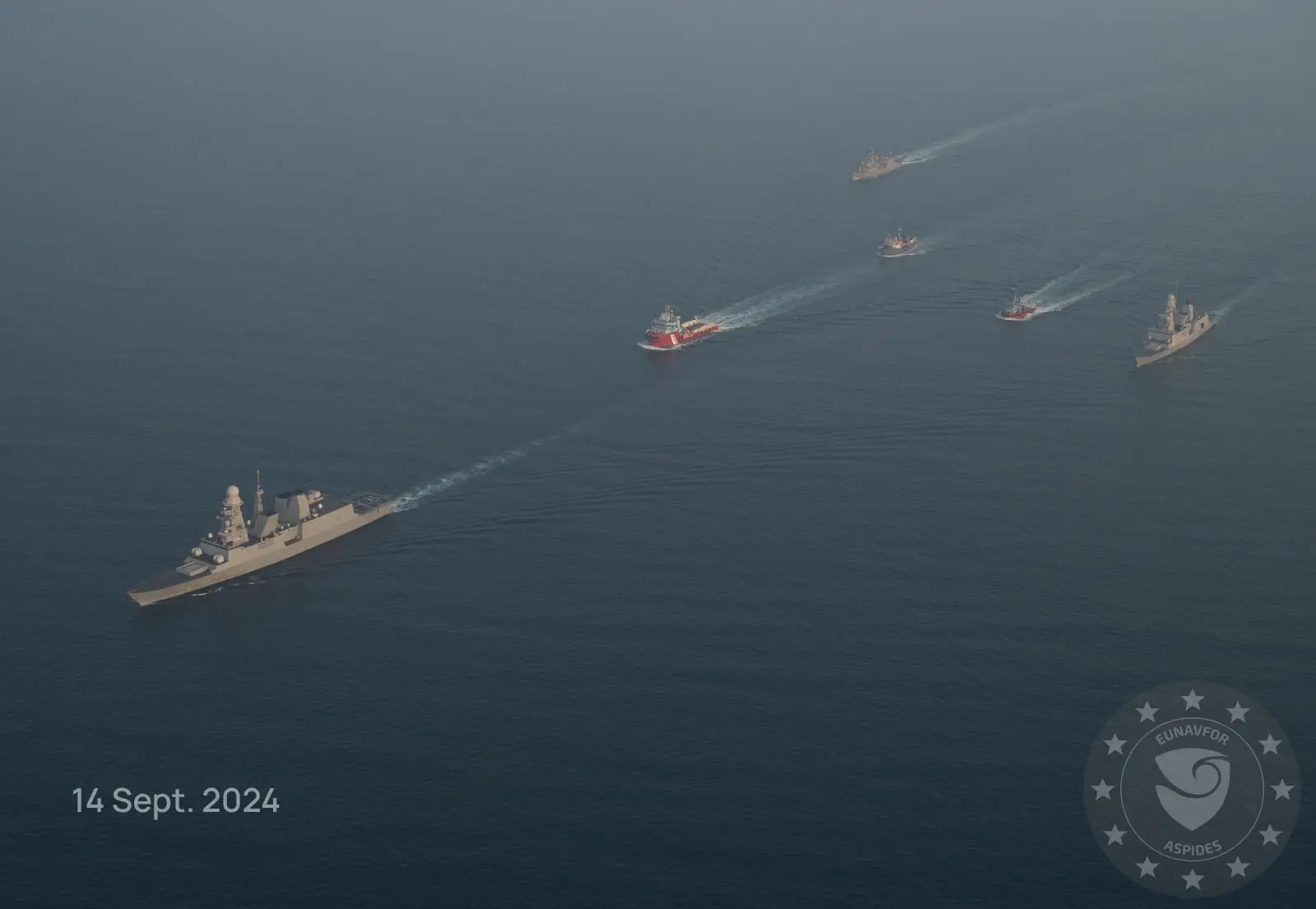
EUNAVFOR ASPIDES quickly became the umbrella organisation that would take on the role of protecting salvors and also report on progress with the operation, naturally involving a delicate balance of diplomacy, practical action and providing information while ensuring the safety of those involved.
The private companies involved requested that EUNAVFOR ASPIDES provide protection for tugs that would be involved in towing Sounion to a safe area, a request that was agreed to.
At that time fires were still burning on Sounion’s main deck, the vessel remaining at anchor with no visible signs of any oil spill.
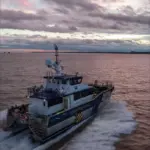
Three tugs were dispatched from Greece, one widely reported as the AHTS vessel Aigaion Pelagos with still no information provided about the commercial salvors involved.
Most recently EUNAVFOR ASPIDES has reported: “Under protection of EUNAVFOR ASPIDES, Sounion has been successfully towed to a safe area without any oil spill. While private stakeholders complete the salvage operation, ASPIDES will continue to monitor the situation.
“The completion of this phase of the salvage operation is the result of a comprehensive approach and close cooperation between all stakeholders committed to preventing an environmental disaster affecting the whole region.”
At the time of going to press, the blaze was believed to be out.