



Boskalis’ largest Dutch-built dredger enters commercial service
Boskalis has put its new 31,000m³ trailing suction hopper dredger Seaway into commercial service, with the vessel undertaking its first project off Den Helder on a Dutch coastal-defence programme.
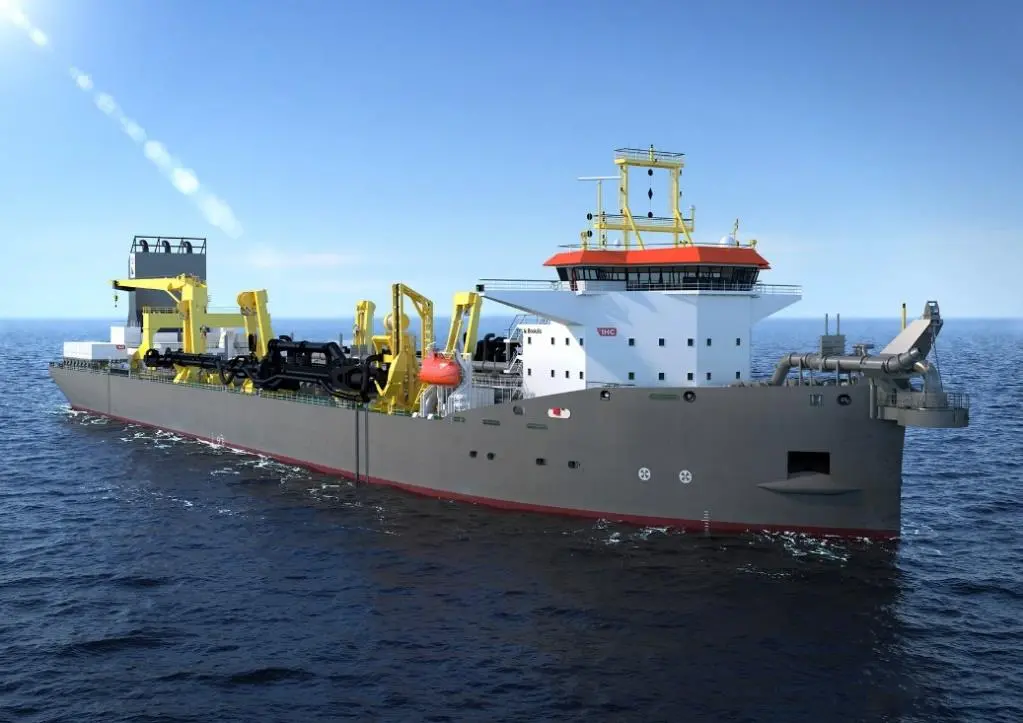
The 178m-long dredger, built by Royal IHC at Krimpen aan den IJssel, is the largest trailing suction hopper dredger ever built at a Dutch shipyard. It is also the largest newbuild in Boskalis’ history.
The Seaway was handed over to Boskalis on 20 July after completing sea trials. Royal IHC describes the vessel as “one of the largest trailing suction hopper dredgers of its kind in the world”.
The vessel has now begun work on the Dutch coast, where it is being used to nourish a channel embankment off Den Helder. The work is intended to counter natural erosion and the effects of rising sea levels.
Boskalis said the project forms part of a contract awarded to Boskalis Nederland by Rijkswaterstaat (the Dutch waterboard) for coastal protection. The programme also includes beach nourishment on the Wadden Sea island of Texel and foreshore nourishment near Julianadorp. Other Boskalis hopper dredgers are due to participate in the work.
The Den Helder package covers 5.5 million cubic metres of nourishment, with the announced work window running from 14 July to mid-October. The overall Boskalis contract is valued at €26.098m, according to marine-project intelligence service IMWO, which cites Rijkswaterstaat and TenderNed records.
Seaway is equipped with a full diesel-electric installation and Azipod propulsion and is prepared for operation on methanol. Royal IHC said the design combines high production capacity with technologies intended to improve efficiency, operational flexibility and environmental performance.
“The delivery of Seaway is a proud milestone for IHC Dredging and a testament to the strong partnership between Boskalis and Royal IHC,” said Rogier Kalis, director of IHC Dredging. “Seaway is ready to support major dredging projects around the world for decades to come.”
Boskalis confirmed in its half-year results that the vessel had entered service following successful July sea trials, with the Den Helder assignment identified as its maiden project. The company said its Dutch market continues to offer opportunities driven by climate adaptation and flood protection.
The Seaway’s first commercial assignment therefore puts its exceptional capacity directly into a marine-civil-engineering and coastal-protection project, rather than an offshore-energy campaign.
Related Articles
 AUTONOMOUS VESSELS & TECHNOLOGY
 OTHER NEWS
 OTHER NEWS