![MaritimeJournal[Seawork]](https://www.maritimejournal.com/wp-content/uploads/2026/09/MaritimeJournalSeawork.svg)





Demand boom for SOVs and CSOVs – analysis
As offshore wind grows globally, demand is likely to shift towards larger vessels because of the expansion and greater distance from shore of developments.

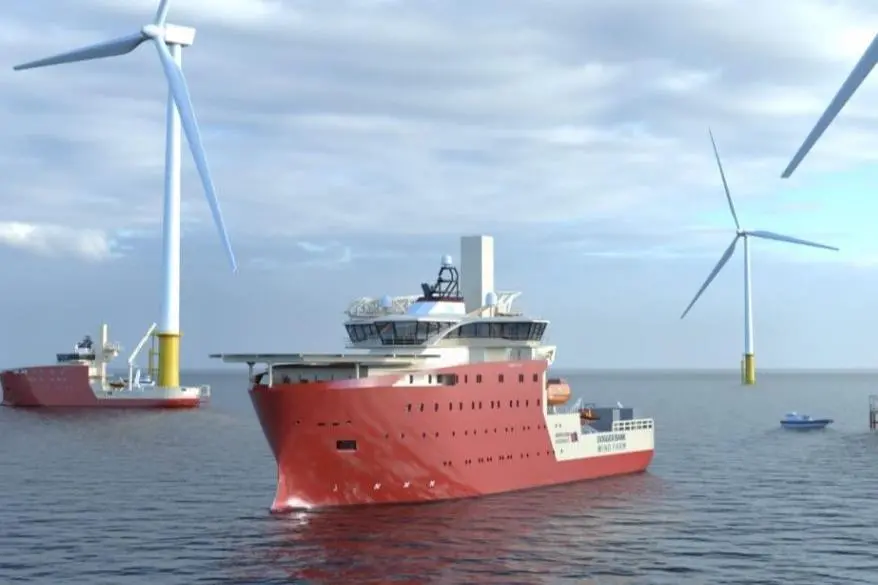
Philip Lewis, consultant with energy sector consultants Intelatus Global Partners, believes that where Crew Transfer Vessels (CTVs) will still be needed for smaller wind farms and those near shore, the current fleet of purpose-built Service Operation Vessels (SOVs) and Construction Service Operation Vessels (CSOVs) is likely to double from its current 60 by 2028.
Where SOVs are built against long-term charters to ensure balanced supply-demand dynamics, there could be oversupply in CSOVs in the short to mid-term, he says, because of ‘aggressive investment’, as they are often built speculatively to cater for shorter duration construction and commissioning projects.
The oversupply might see CSOVs being deployed in the oil and gas segment, which is seeing increased activity, he says, and this also applies to the early offshore wind walk-to-work vessels, which were adapted from oil and gas service vessels in the first place.
“Many of these vessels are finding utilisation in their traditional markets,” Lewis says.
With the mixed picture being presented to SOV and CSOV operators, the sector is also poised for Merger and Acquisition activity in the coming years, ‘as companies seek to acquire financially distressed players’.
“The sector offers substantial growth opportunities, but strategic positioning will be key.”
When it comes to the Trump effect, there will be new uncertainties but Lewis is sanguine.
“While key projects may face delays and some investments will be re-evaluated, the US offshore wind industry is far from stalled,” Lewis said. “The market’s reliance on robust European supply chains and its inherent growth potential support longer-term prospects, despite the current headwinds.”
Related Articles
 INDUSTRY NEWS
 OTHER NEWS
 MERGERS & ACQUISITIONS