



Heerema plans float-over barge for North Sea wind farms
Dutch engineering giant Heerema Marine Contractors has signed a contract with European transmission system operator TenneT for a float-over barge.
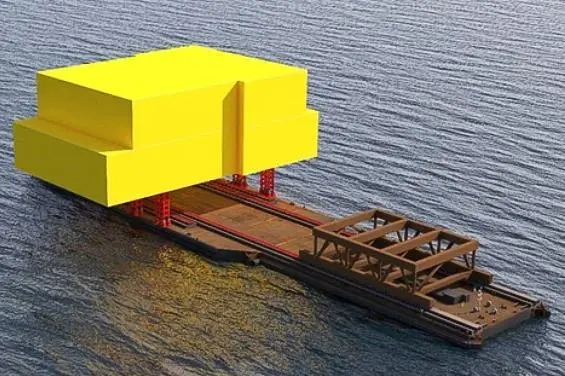
It comes at a time when the increasing size of offshore wind turbines approaches the scale that contractors like Heerema have previously taken in their stride, during the earlier North Sea oil and gas boom.
The barge will install ultra-heavy offshore substation topsides now weighing more than 30,000mt, described as crucial for the expansion of Dutch and German electricity grids.
Offshore wind farms in areas including the North Sea are witnessing increases both in turbine size and their number, and while adding more turbines is a simple case of duplication, providing the infrastructure to transfer energy to shore demands larger and more complex structures and cables.
Rather than the traditional hub-and-spoke arrangement, inter-connection including creation of an offshore grid is a long-held goal, allowing energy to be ‘transported’ between wind farms and also between individual countries’ grids, depending on supply and demand. In short, the transmission infrastructure is growing in parallel.
The topsides will accommodate TenneT’s 2GW offshore facilities and the project is part of its ambitious investment strategy to aim at enhancing the energy infrastructure in the North Sea.
“The Dutch and German governments, on the basis of European climate goals and the desire to become more independent from fossil fuel, have tasked TenneT to expand the national power grids in support of offshore wind energy,” said Dick Lagerweij, responsible for TenneT’s 2GW transport and Installation contracts.
“Vital parts of the 2GW grid connections are the DC (direct current) offshore power converters, of which TenneT is planning to install more than 14 in the North Sea.”
Heerema’s response
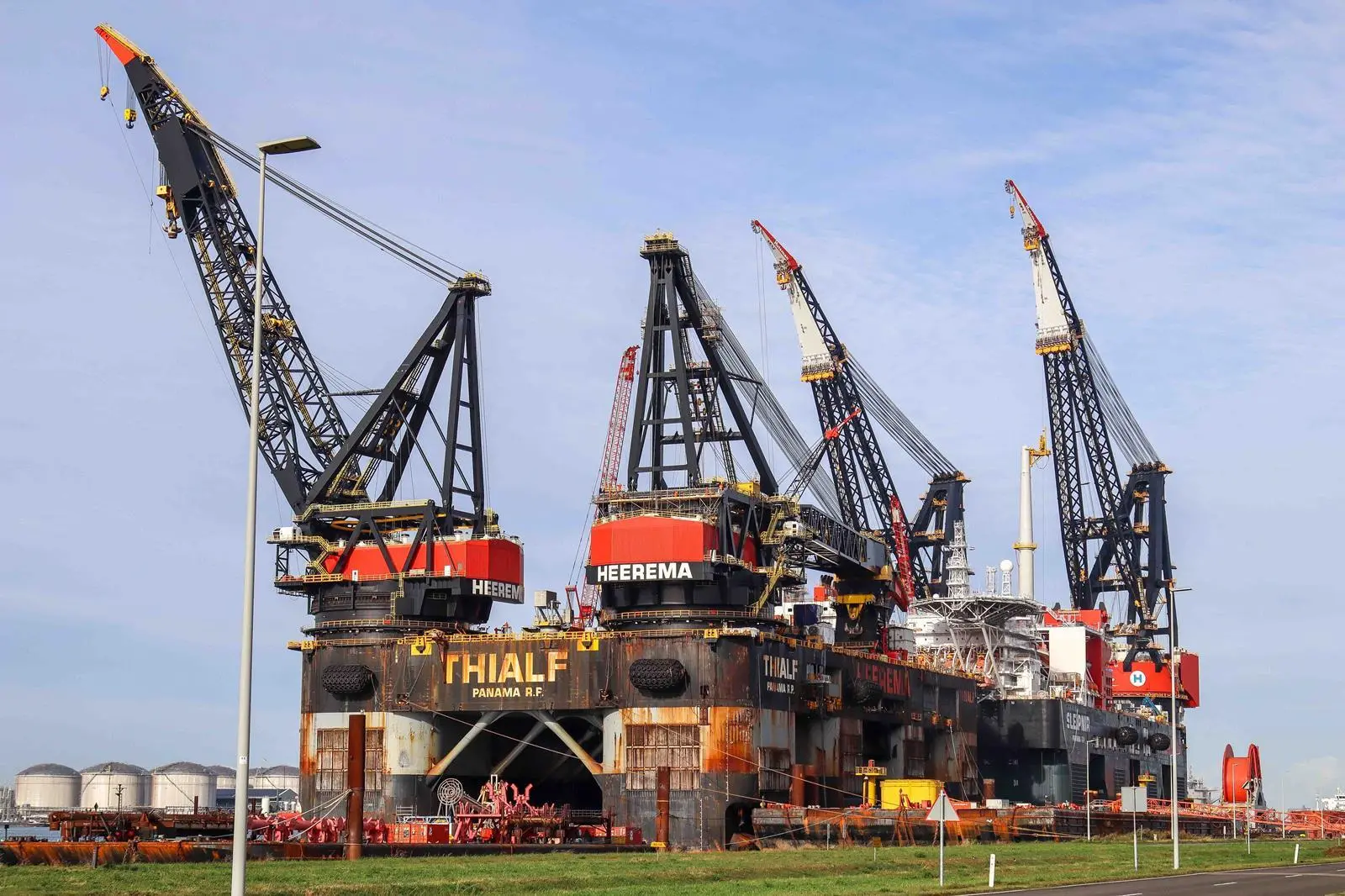
For Heerema, the growth of offshore wind has seen its ultra-heavy-lift crane ships and barges come full circle from the demands of the North Sea O&G industry that required heavy-lift capabilities for installation of jackets and topsides.
Its expertise has been deployed globally, and the evolution and natural lifespan of offshore oil and gas fields is now seeing the same support vessels that installed the structures employed once again in the complex process of decommissioning them and bringing them back to shore to be recycled.
The goal of gaining maximum return from the huge investment in such vessels has now entered another phase as energy from fossil fuels moves to renewable energy, and once again Heerema’s fleet has the potential to achieve what is required.
Its origins date from 1948 when, based near Lake Maracaibo, Venezuela, Constructora Heerema specialised in the construction and installation of drilling platforms in the region.
In the 1960s, offshore O&G developments in the hostile North Sea became the focus of attention and one indication of the industry’s growth in just a few decades is Jeerema’s lift capability, In 1969, Heerema could lift 800mt with its crane ship Challenger; now, its latest and largest vessel, the 2019-built semi-submersible crane ship (SSCV) Sleipnir, has two cranes which in tandem can lift 20,000mt.
Sleipnir was the fourth of a quartet of similar SSCVs and joined Balder, Hermod and Thialf (Hermod was later recycled). With oil and gas fields being developed in water depths up to 3,000m, Balder was converted to an advanced Deep-water Construction Vessel.
Ultra-deepwater pipelaying and repair became another string to Heerema’s bow, and in 2013 the monohull heavy-lift vessel Aegir, with a lifting capacity of 5,000mt, joined the fleet.
The first signs of Heerema’s move away from pipe-laying and into the renewables market was in 2018, when Aegir was converted into a heavy-lift vessel suited for offshore wind projects.
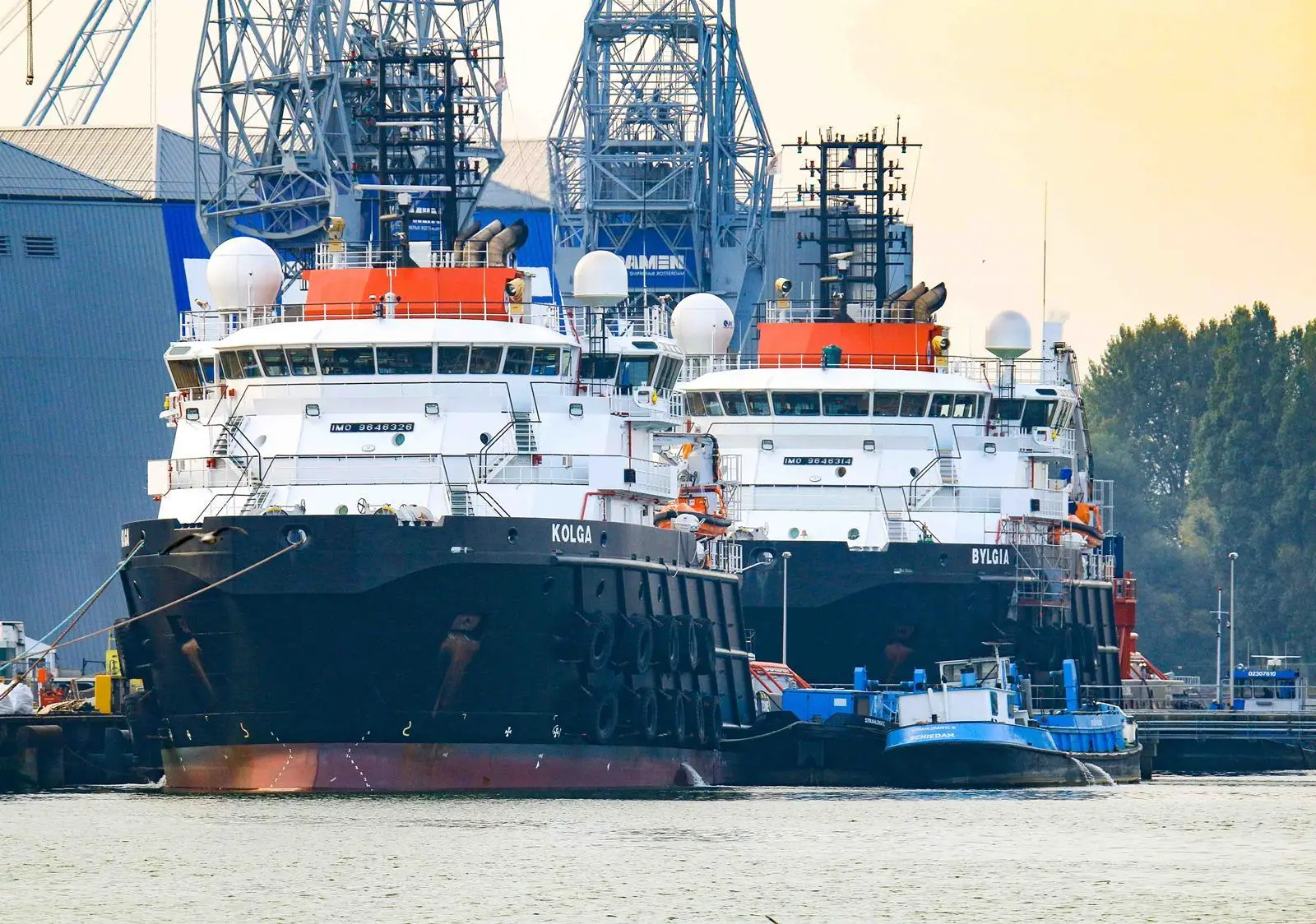
Heerema also has a fleet of 10 float-over, launch and transport barges, the largest being the 260m long H-851, with a dead-weight tonnage of 110,730t. Last but not least, supporting the SSCVs and barges are the 2013-built tugs Bylgia and Kolga, which with around 200tbp provide long-distance towing, mooring and anchor-handling services.
The evolution from fossil fuels to renewables has subsequently placed Heerema in a promising position for its fleet of vessels to provide their services into the future.
Related Articles
 OTHER NEWS
 MARINE CIVILS
 AUTONOMOUS VESSELS & TECHNOLOGY