
LOI signed for vessels that tick the green box
The first of a series of multi-purpose vessels (MPVs) will begin next year in a collaboration between Herman Sr and Damen Shipyards.
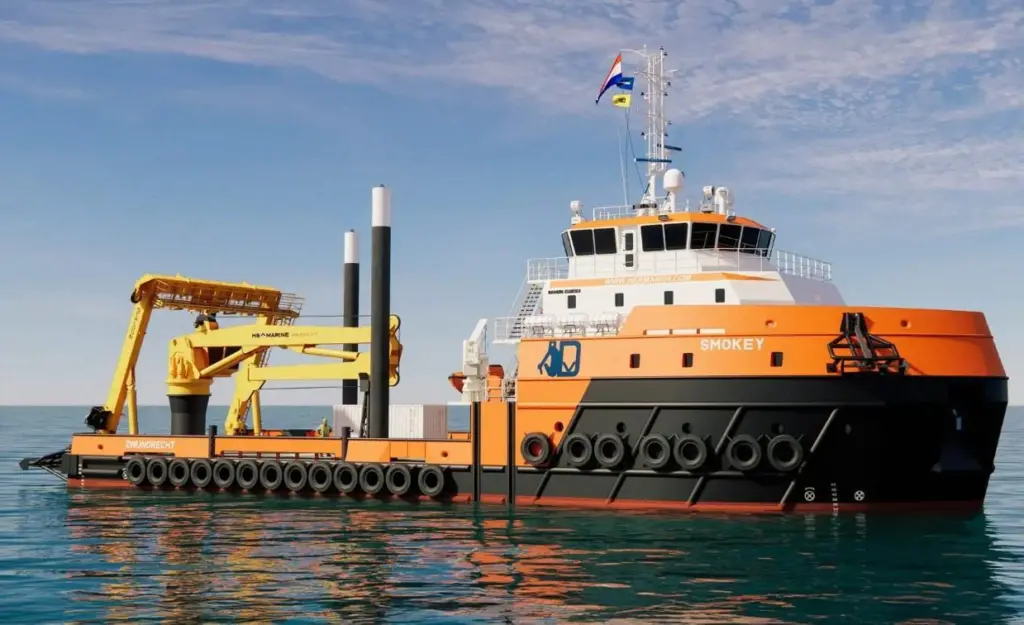
The design ticks the ‘green’ box, with promises that it will make the vessels capable of running on batteries or future fuels ‘when the associated technology reaches maturity in the coming years’.
Damen says the vessels will combine the qualities of the Damen Shoalbuster and Multi-Cat series ‘to offer next level versatility in the workboat sector’.
These include multiple means of positioning, such as spid poles, four-point mooring, DP2 and even beaching.
This means the vessels will be able to maintain position in all circumstances and shallow and deep waters.
A moveable, hydraulic A-frame, two knuckle boom cranes and an aft crane featuring an active heave-compensated winch will be accommodated on a stable, 16m beam, says Damen.
The MPV 4916 vessels will be able to transport cargo, support offshore wind farm and cable maintenance as well as carry 350 tonnes of their own cable.
To fit with today’s green requirements, the vessel, says Damen, will be prepared for conversion to full electric propulsion in the future.
“The design is also future-proofed with an eye on advancing maritime sustainability, a statement says. Initially, the MPV will be powered by a diesel-electric propulsion system. A Damen Marine NOx reduction system ensures its compliance with IMO Tier III requirements.
“Additionally, the design provides the necessary space to convert to use of dual-fuel methanol engines when the associated technology reaches maturity in the coming years.”
The Van Dodewaard family, owners of Herman Sr, have been clients of Damen for more than 75 years, and this is not the first time the companies have worked together on a first-in-series vessel, said John Krielaart, Damen Shipyard’s Design & Proposal engineer.
“This is a boat that ticks all the boxes,” he said. “The MPV 4916 allows for the use of a single platform and crew to perform the widest possible range of workboat operations. The standard vessel can be reconfigured for change of use, or for project specific tasks, offering added value.”
The first vessel will be built in the Middle East with delivery expected in 2027.