



Offshore wind prompts project cargo expansion
News that project heavy-lift carrier AAL Shipping is expanding its fleet and service provision is an indication of increased demand for transporting project cargo on an increasingly global scale – partly because of the offshore wind industry.
AAL Shipping, founded in the Netherlands in 1995 and now head-quartered in Singapore, has added to its existing scheduled network with a new ‘fast-track’ monthly Europe-Asia Express Liner Service in support of what it calls a “plethora of customer needs” in the premium multi-purpose sector.
Multi-purpose describes the vessels that cater for the niche project cargo sector, and while AAL’s new service is described as a ‘liner’ service it is reminiscent of traditional tramp services, highlighting how the requirement for what was previously a somewhat speculative trading regime now demands regular services but still with the flexibility to serve various key trading markets.
The new monthly service is labelled Europe-Asia rather than the familiar container routes referred to the other way round, suggesting demand is strong for heavy-lift, multi-purpose tonnage exporting specialist cargoes from Europe to Asia.
The flexibility of AAL’s vessels provides employment opportunities for what is perhaps misleadingly referred to as the return leg.
As offshore energy expands, wind farm components are increasingly required to be shipped over long distances where the economy of scale from larger ships operating on a regular basis caters for the expanding global footprint of the industry. It is an area AAL, along with other similar carriers, is now exploiting.
Its global route map is Asia-centric but the many European destinations, both in northwest Europe and the Mediterranean, suggest a potential requirement for export project cargo provision from the region. It also reflects Europe’s history of technical expertise set against the usual perception of everything we use in Europe being imported from Asia.
The company operates several liner and ‘pendulum’ services globally and its fleet composition reflects the individual specific requirements therein.
The route map is extensive and currently involves routing via the Cape of Good Hope rather than the shorter Suez Canal/Red Sea route, due to the recent troubles in the region.
The new service will connect key project cargo hubs in Western Europe directly with Taichung, Shanghai, Masan/Busan and other ports and the current sailing schedules indicate Rotterdam, Hamburg, Gdansk and Antwerp as typical loading ports in Europe.
Bigger ships, better options
AAL’s fleet comprises 29 vessels, including a series of eight Super B Class ships currently under construction, two of which, AAL Limassol and AAL Hamburg, are now in service with the remainder due to be delivered through to 2026.
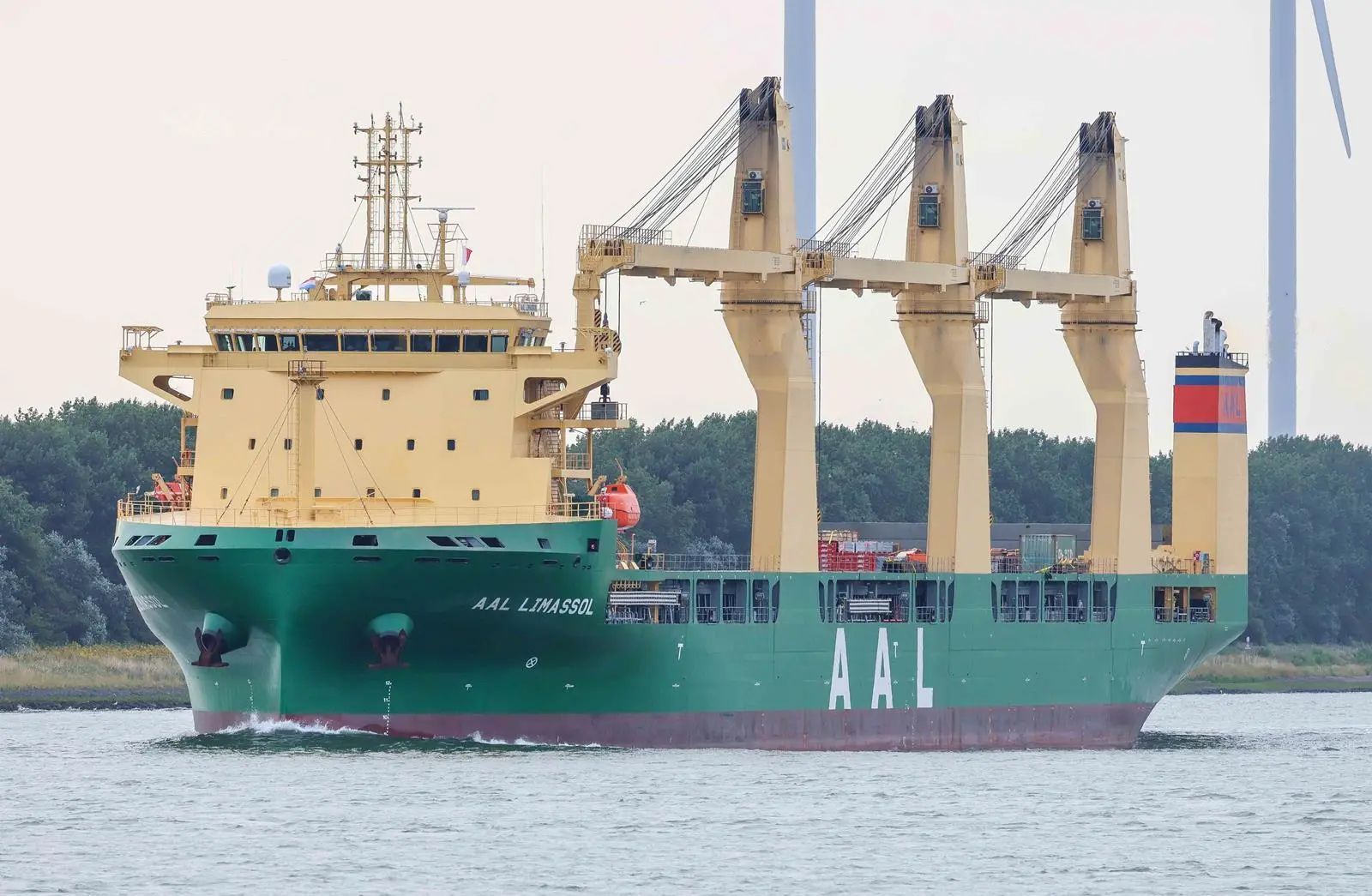
The five classes of vessels range from 19,000dwt to 33,000dwt, all geared with lifting capacities from 109t to 700t and deck space of more than 5,000m2.
First of the series, AAL Limassol recently completed its maiden voyage to Europe from the builder’s yard in China, carrying more than 89,000 freight tons of multi-purpose cargo.
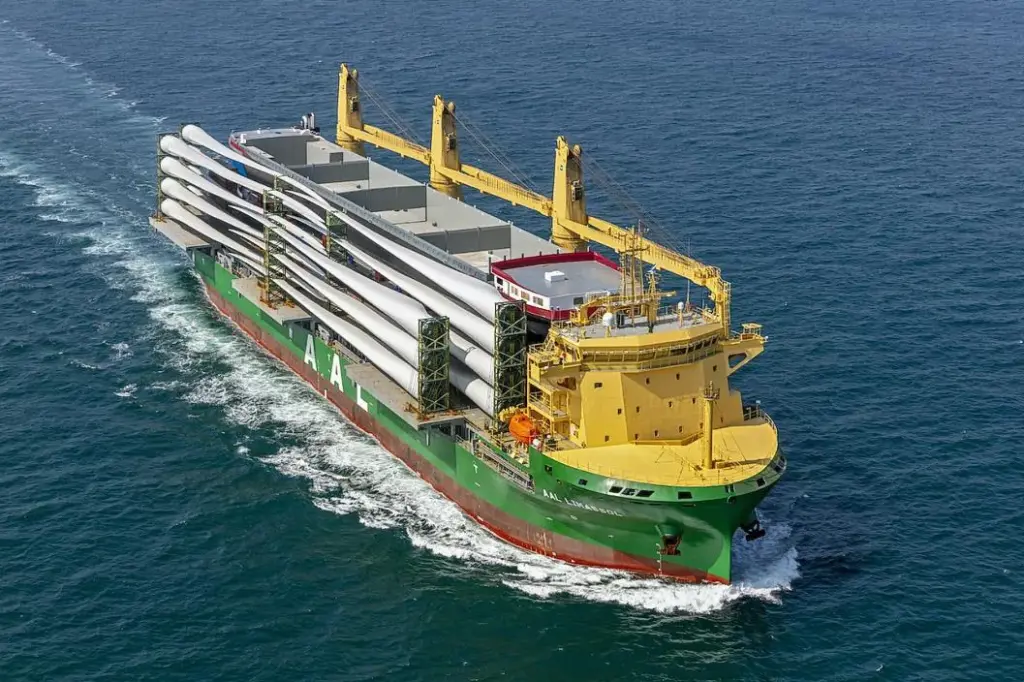
Obviously this was a westbound voyage, but its cargo reflected the typical variety of goods for this type of ship and included a dismantled crane, transformers, modules, trucks, two rotor houses and two 135m-long barges loaded in China before making its last call in Asia to load 15 wind turbine blades at Tuticorin in India.
The vessel features an ‘eco-deck’ system extending the width of the main deck to accommodate the turbine blades alongside the two barges. Its voyage, via the Cape of Good Hope, ended with the consignments discharged at Klaipeda, Rotterdam, Antwerp and Hamburg.