


String of errors causes ferry grounding – report
More than 40 passengers and crew were injured when a master fell asleep at the helm of a ro-ro passenger ferry, investigators have found.
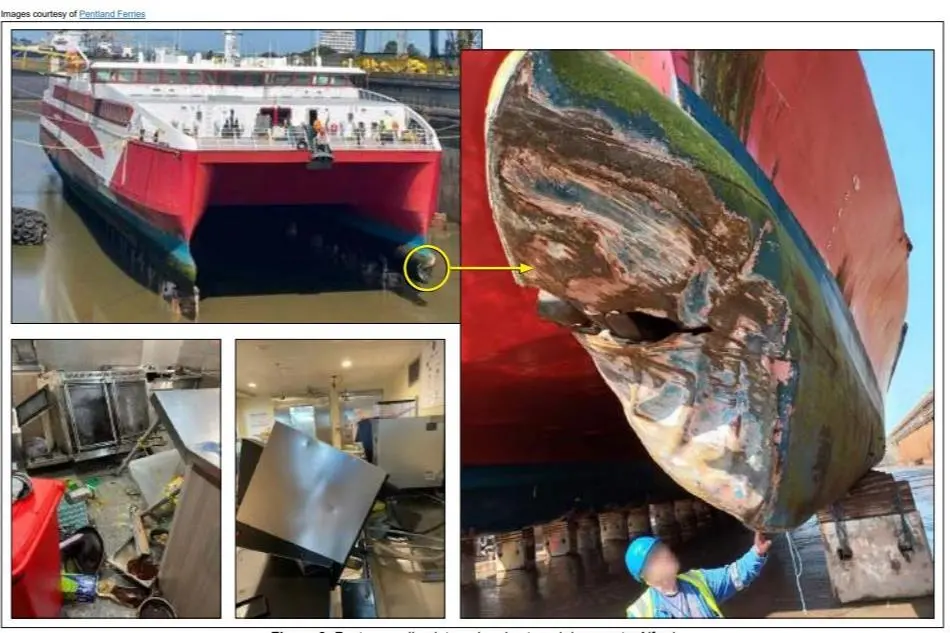
Almost all 37 vehicles on board were damaged, the report by the Marine Accident Investigation Branch says, and 36 of the 84 passengers injured along with five of 13 crew on board. Ten were injured seriously.
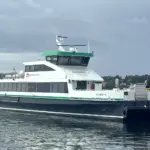
The UK-registered 84.5m LOA Alfred passenger ferry, built in 2019 and owned by Pentland Ferries, grounded off the east coast of Swona Island, Scotland while on passage from mainland Scotland in July 2022.
It was a bright, sunny afternoon, visibility was good and sea state calm, yet it struck rocks at 13 knots after heading to swing towards the coast unchecked, which the master could not prevent when he realised the predicament the vessel was in, the report says.
“The investigation found that Alfred grounded because the master experienced a loss of awareness while helming the vessel close inshore, almost certainly as a result of falling asleep for approximately 70 seconds,” the report says.
“The ferry began to swing towards the coast and, 70 seconds afterwards, the master gave a startled shout and applied 60° of starboard rudder. At 1400, with Alfred only a few metres from shore and the ferry’s bow slowly swinging to starboard, the master put the engine control levers to full astern and warned the chief engineer that the vessel was about to ground.
“Alfred ran aground on the east coast of Swona Island 10 seconds later, at a speed of approximately 13kts. Many of the ferry’s passengers and crew were thrown to the deck when the vessel struck the rocks; this included the chief officer, who had rushed to the bridge when he heard the engines go astern.”
Another issue identified was that the ferry’s passage plan was inadequate, and that its Electronic Chart Display Information System, the ferry’s primary means of navigation, ‘was not being used effectively to support safe navigation and warn of danger’.
“Despite the passage plan being in place since the vessel entered service in 2019, neither the Pentland Ferries’ annual audits nor the Maritime and Coastguard Agency’s surveys had detected this safety issue,” the report says.
Inadequate emergency response
Some passengers were transferred to lifeboats until the captain noticed the ferry had re-floated and had enough engine power to pull away form the rocks and continue to berth.
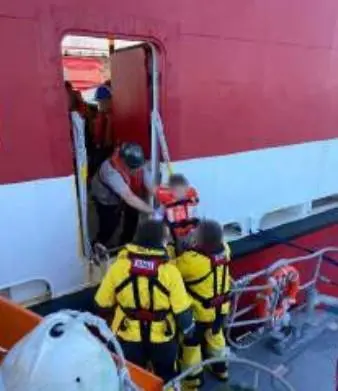
However the investigation later found that the Orkney Islands Council Harbour Authority, which has control of the waters where Alfred ran aground, had not been monitoring its movement through the vessel traffic service, therefore did not raise the alarm when the vessel entered the guard zone around Swona Island.
“Once aground, Alfred’s emergency response did not follow the safety video shown to passengers before departure from port. The investigation established that this was because the vessel’s procedures and weekly drills had not adequately prepared the crew for the emergency,” says the report.
“The investigation also found that the Pentland Ferries emergency response team ashore did not prompt the master to create a nominal list of those on board.”
Alfred has two diesel engines in each hull, each driving a fixed pitch propeller. The grounding caused damage to the port side bulbous bow and around the collision bulkhead, which have been cut out and replaced.
Related Articles
 OTHER NEWS
 ELECTRICAL SYSTEMS
 VESSELS