

The green fuel dilemma: What vessel operators really think
Offshore wind support is currently having a choppy ride, with at least one industry lead saying it’s not keeping pace with low-carbon objectives.

Ben Colman, founder and director of Diverse Marine, is blunt. “I would say at the moment we’re not heading towards current [Net Zero] targets,” he says, adding that over the last few years, concern about emissions has been replaced with a general rejection of electric and alternative fuel running. That, he says, is both due to cost and a sentiment of ‘we’ll just stick with what we’ve got for now’: that is, until pushed.
It hasn’t helped that a number of owners and operators who’d enthusiastically taken up alternatives like methanol, batteries and hybridisation took a hit when these suffered unexpected challenges.
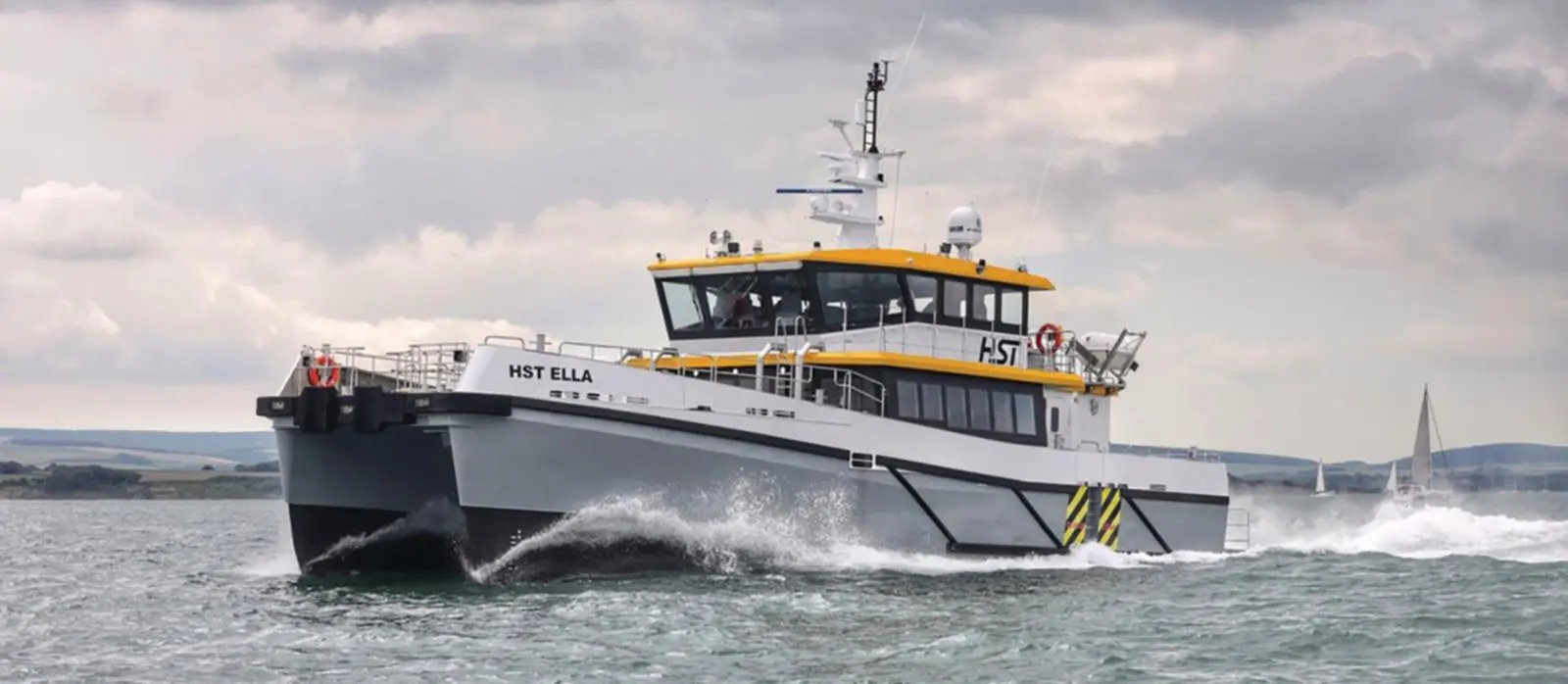
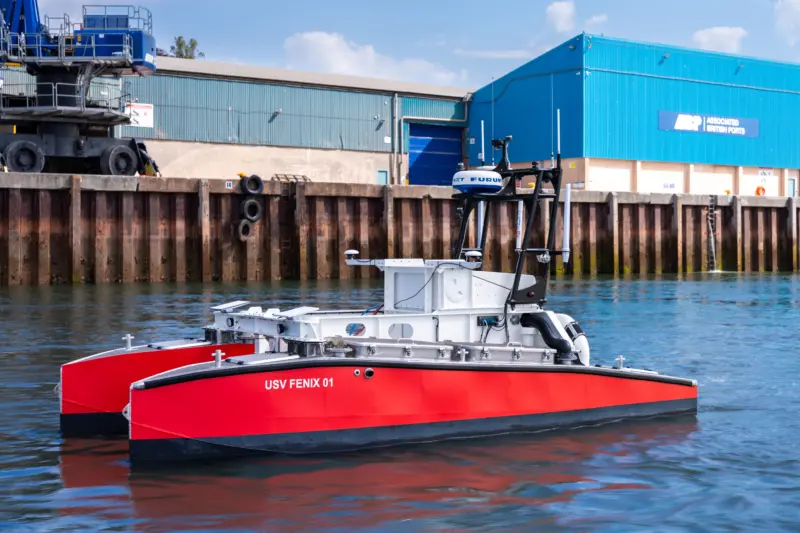
Between 2021 and 2024, Diverse built five hybrid offshore CTVs which retained diesel engines for transits, but could run on batteries in port or while loitering.
“Rough numbers, I think that added about £600,000 to the build,” says Colman, which accounted for around 15% of the total. And clients are not prepared to pay extra.
“It’s become untenable for operators to cover additional capital costs that cannot be recovered through the charter rate,” he says.
Put this against wind energy’s recent pricing setbacks, the historic boom ‘n’ bust cycle, and it looks complicated. So, why should the industry start taking alternative power seriously now? It’s not just carbon taxes – or not directly. But it’s worth saying, the challenges ahead will likely affect the entire business, from CTVs to SOVs.
Service Operation Vessels
Take the SOVs first. The EU Emissions Trading Scheme (ETS) applies to vessels over 5,000GT operating in EU waters with the UK ETS likely to follow suit. However, while Ken Coughlan, CTO of North Star, explains that owners will need to work with charterers to assess cost impact ‘across a huge number of variables’, he underlines that when it comes to getting industry to shape up on carbon emissions, ‘the tax alone won’t do it’.
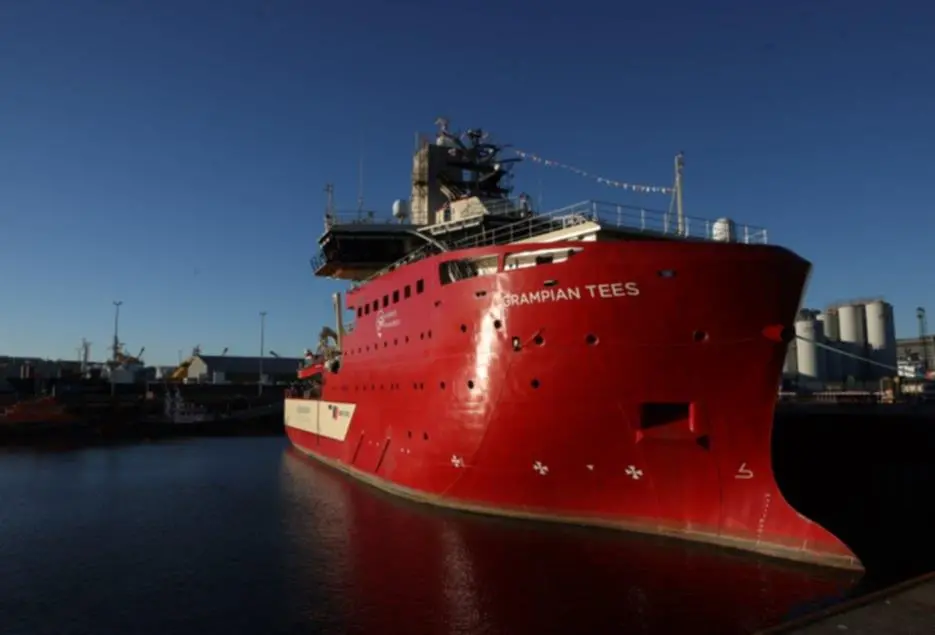
In fact, simple pressure – even considering IMO’s potentially aggressive Net Zero Framework – isn’t the point. Coughlan admits some got burned financially due to unforeseen challenges with technology, but adds: “That’s not a reason to stop, it’s a reason to de-risk before scaling.
“The industry needs to keep investing so that a genuine alternative exists. Owners will need to work with charterers to look at the impact and help drive the push towards greener solutions.
“However, for those vessels getting in the water today, the budget was set six, seven years ago – and it comes straight off the top line of the owner.”
Even before any wind site bids are submitted, the charter rate is determined by the current logistics model. There’s no additional budget for, say, repowering these big ships with an alternative 10 or 15 years into the contract, an issue which, he says, often spins low-carbon development into a Catch-22.
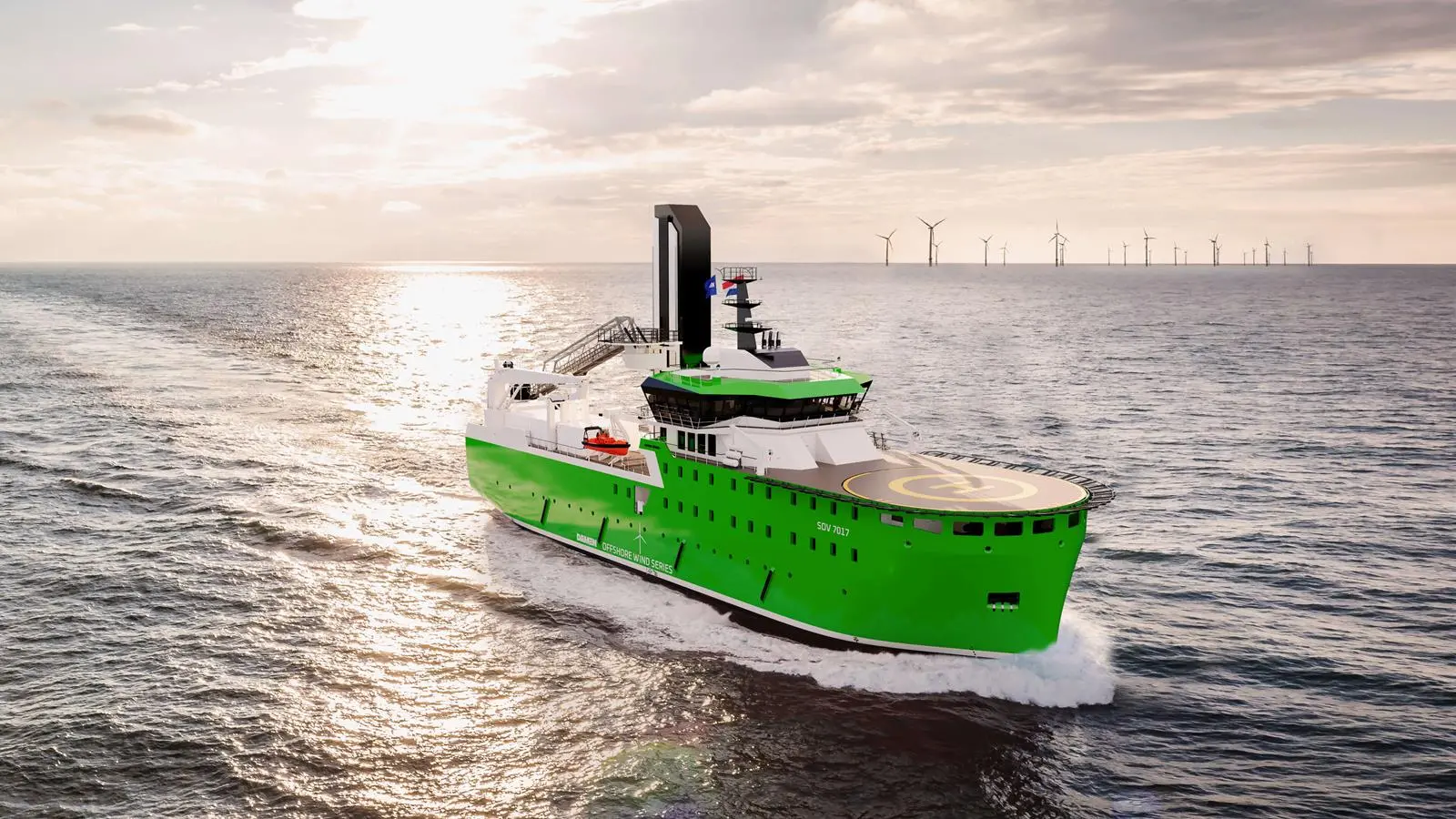
Instead, he underlines North Star’s effort is being put into the early newbuild stages, allowing low-carbon options to be designed in from day one.
Still, newer SOVs generally come with a huge refit space – unlike CTVs, which also fall far outside the EU/UK emissions schemes. So where’s the initiative to go green?
Data
“We have mandatory reporting coming down the line, and this will apply to a large list of companies,” says consultant Zennor Pascoe of environmental services company Seaotool, explaining it isn’t all about trading schemes: corporate reporting is likewise growing in reach.
Pretty soon, Scope Three emissions are going to be required in your clients’ reports – also embracing those related to purchased or contracted goods and services. In short, it’s going to matter to them, so it’s going to matter to you.
Therefore it’ll be useful to measure your emissions from specific client contracts, says Pascoe: “However, it doesn’t need to be a massive fact-finding exercise that stresses everybody out and takes loads of time.”
Getting the right ware to fish it out of the vessel or fleet management system eliminates fragmented, manual entries, making it as easy as reading off a dataset.
The figures are aimed at providing something equally important – a view on repeated, avoidable expenses: “Firstly, it’s about savings and efficiency gains, and accessing data that enables investment decisions delivering the best value in both cost and emission reductions,” she says.
There is another element: growing industry disruption from weather events will raise the importance of automated recording and tracking these along with their financial impact. It also allows getting ahead on risk analysis.
It’s worth noting that what’s included in these emission reports is not all down to IMO or EU bodies: outcry over extreme weather has already pushed certain activities into the mandatory reporting category. And public pressure is quite likely to rise.
Pascoe points out that not so far into the future this data – or lack of it – may also determine who lands the job in the first place.
Realities
Since it’s down to the vessel operators to come up with low-carbon offerings, how does the industry balance the price of alternative power with pragmatism? And how much risk are we actually taking now?
According to senior designer and naval architect Robin Saunders of Chartwell Marine, things have altered considerably on the tech front in the past few years.
Firstly, a variety of battery-electric configurations have matured and become a known quantity, with hybrid motors being available as straightforward, bolt-on units.
“A lot is off-the-shelf these days,” he says.
Energy storage remains the largest item on the bill, yet while some expected battery costs to rise, prices have actually decreased by about 15% year on year, says Saunders.
“The industry has moved beyond ‘can we electrify?’ to ‘how do we electrify – and keep a decent range without emissions?’” he says.
That likely involves an alternative fuel. Here, both Coughlan and Saunders agree: innovation funding – such the Clean Maritime Demonstration Competition – is crucial to de-risk new technology. Usefully, there’s quite a bit of collaborative development such as Methanol Pathfinder UK, a project being driven by Chartwell and Archipelago. This, says Saunders, is testing a full methanol drivetrain, including fuel cells, in a modularised unit that’s specifically being designed for integration with electric propulsion.
These projects are also necessary to allow both regulators and partners to get a handle on shaping the emerging standards. And this in turn, pushes take-up forward.
So, what about the industry’s cyclic history? That might be stabilising – at least for the O&M segment.
“I do not see a reduction in the requirement for vessels – these are the foundation of offshore wind farms,” says Coughlan. “Turbines are complex machines: they need regular maintenance and they do have failures.”

He points out that as turbines become more powerful, having one out of action will result in a proportionally greater loss, prompting a demand for higher performing assets. He also sees an eventual aligning of carbon taxes, especially since extreme weather events are hitting the headlines.
There are still details to be untangled and processes aligned with wind’s 21C realities. Essentially, site operators – who pay fuel and carbon bills – need to get in step with their support segment to sort out where the cost of low-carbon technology actually lands. It is happening to some degree – but not widely enough.
“Nobody should be subsidising another part of the supply chain,” says Coughlan. “Finally, it has to be included in the energy price. But that doesn’t mean waiting for someone else to move first. We’re not sitting on our hands while this gets resolved.”
Despite all the above, “you’ve still got this push and pull”, Coughlan says. “Become too proactive and you can risk your current competitiveness, stay too passive and you could risk your future.”