![MaritimeJournal[Seawork]](https://www.maritimejournal.com/wp-content/uploads/2026/09/MaritimeJournalSeawork.svg)

Tomorrows raising of sunk superyacht ‘Bayesian’ to be live streamed
The raising of superyacht ‘Bayesian’ after a year on the bottom of the sea will be live streamed this weekend, beginning now.
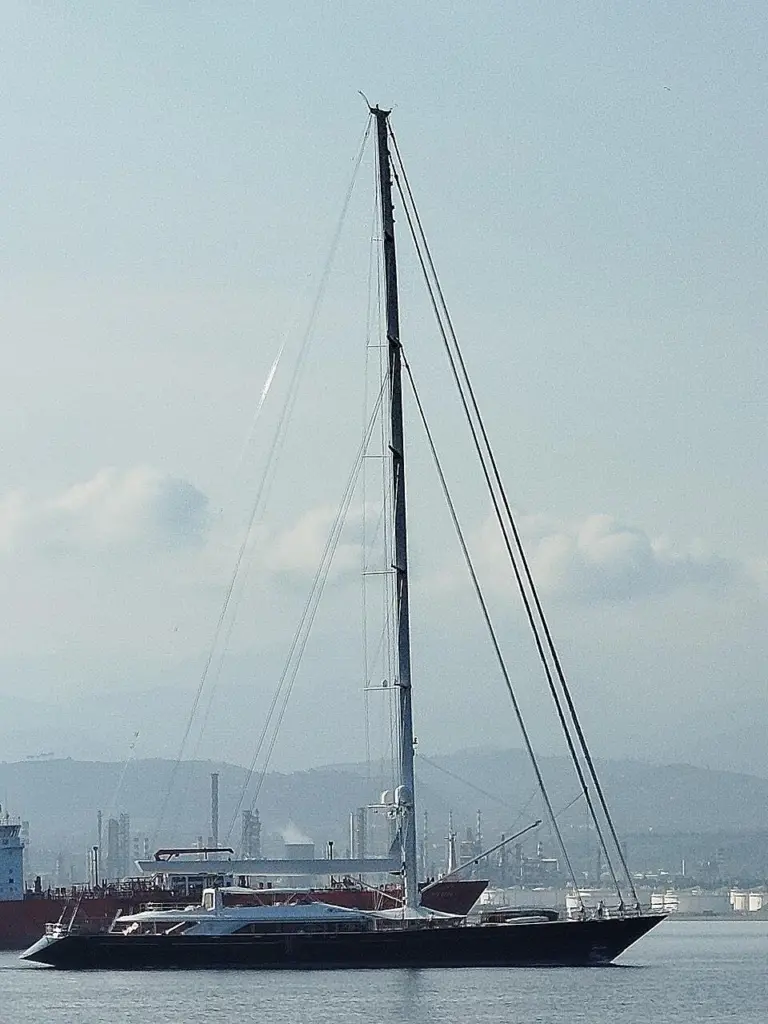
After months of meticulous planning, cutting-edge salvage equipment, and round-the-clock operations, the 56-metre sailing superyacht Bayesian is scheduled to be lifted from her 50m-deep seabed grave tomorrow, Saturday.
Nearly a year after the sinking off the coast of northern Sicily, one of Europe’s most powerful maritime cranes will finally raise the aluminium-hulled vessel to the surface – and the raising will be live streamed here.
The single-masted cutter rig Bayesian, with one of the world’s tallest masts at 72 metres, was originally delivered as Salute by Italian yacht builder Perini Navi in 2008. She was anchored 300 metres off Porticello when she sank. Six guests, including British tech entrepreneur Mike Lynch and his 18-year-old daughter Hannah, and one crew member lost their lives.
The recovery mission, one of the most complex private yacht salvage operations undertaken in recent European maritime history, centres around the combined expertise of Dutch firms HEBO and SMIT Salvage, under the coordination of British marine consultancy TMC Marine.
At the heart of the recovery is HEBO LIFT 10, a 5,695 gross tonne floating crane, specially mobilised from Rotterdam.
“We are now beginning to assemble, in Sicily, the expert salvage crews, key lifting and other capabilities that we need to safely recover Bayesian,” said Marcus Cave, head of Naval Architecture and director at TMC Marine.
Engineering complexity at depth
The lift employed eight steel lifting slings, precisely placed under Bayesian’s hull.
Four were positioned at the bow with the other four placed under the stern once the HEBO Lift 10 had raised it to enable the delicate installation, essentially of a steel matrix.
Subsea work has relied heavily on remote-controlled submersibles (ROVs), which have reduced the need for high-risk diving activity following the tragic death of a salvage diver on May 9.
“The team has developed alternate methods to undertake certain tasks,” Cave said. “This will minimise diving activity and increase the use of equipment that is controlled directly from the floating work platforms.”
One key operation involved cutting away the yacht’s towering 72-metre mast using a diamond wire precision tool.
“The mast had to be severed to reduce weight and complexity,” said Cave. “It was laid safely on the seabed and will be recovered later.”
Once the mast was removed, the hull was gradually parbuckled – gently rolled into an upright position – using the installed lifting slings and natural buoyancy. The vessel will be fully righted before the final lift.
Specialist tools and materials
HEBO’s salvage assets have included both the HEBO LIFT 10 and HEBO LIFT 2, a 700-square-metre multi-purpose work barge equipped with cranes and submersible handling gear. These platforms served as the base for the ROVs, environmental monitoring personnel and heavy lifting crews.
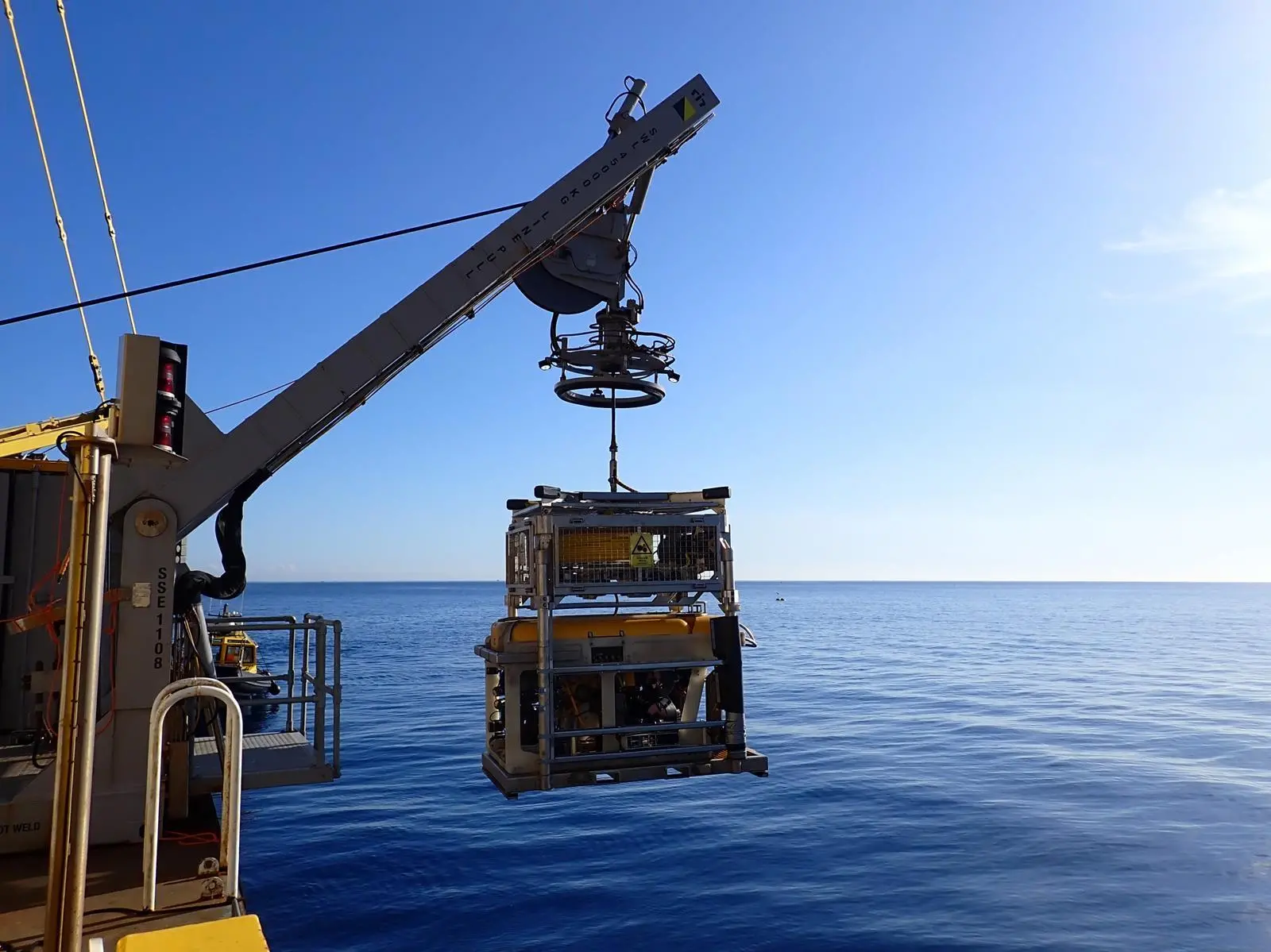
The lifting gear itself has been purpose built. The eight main steel strops, or slings, were drawn beneath the hull using messenger lines installed over several weeks by ROVs.
“The stern section was especially challenging due to the clay seabed and angle of the hull,” said Cave. “It’s required very deliberate, methodical work.”
A steel cradle has also been fabricated in Termini Imerese, where the vessel will be landed after recovery. The hull will be carefully lowered onto this cradle for post-recovery investigation and securement.
To match the engineering challenge, state-of-the-art tools were sourced from across Europe, including precision cutting tools, updated ROVs and specialised lifting slings.
Teams of 70 technical staff, including divers, engineers, ROV pilots, and environmental specialists, have coordinated operations on sea and land.
Environmental safeguards and monitoring
From the start, environmental protection has been a parallel priority. A detailed pollution prevention plan has guided every step, with no reported leaks since the sinking on August 19, 2024.
Precautionary oil booms have been deployed throughout, forming a perimeter between the wreck site and support vessels. Anti-pollution experts remain on-site and will continue surveillance during the lift and transit to shore.
A full 360-degree visual survey was conducted using ROVs, identifying 17 pieces of debris including a life-raft casing and deck furniture. All have since been recovered and transported ashore.
A final voyage to shore
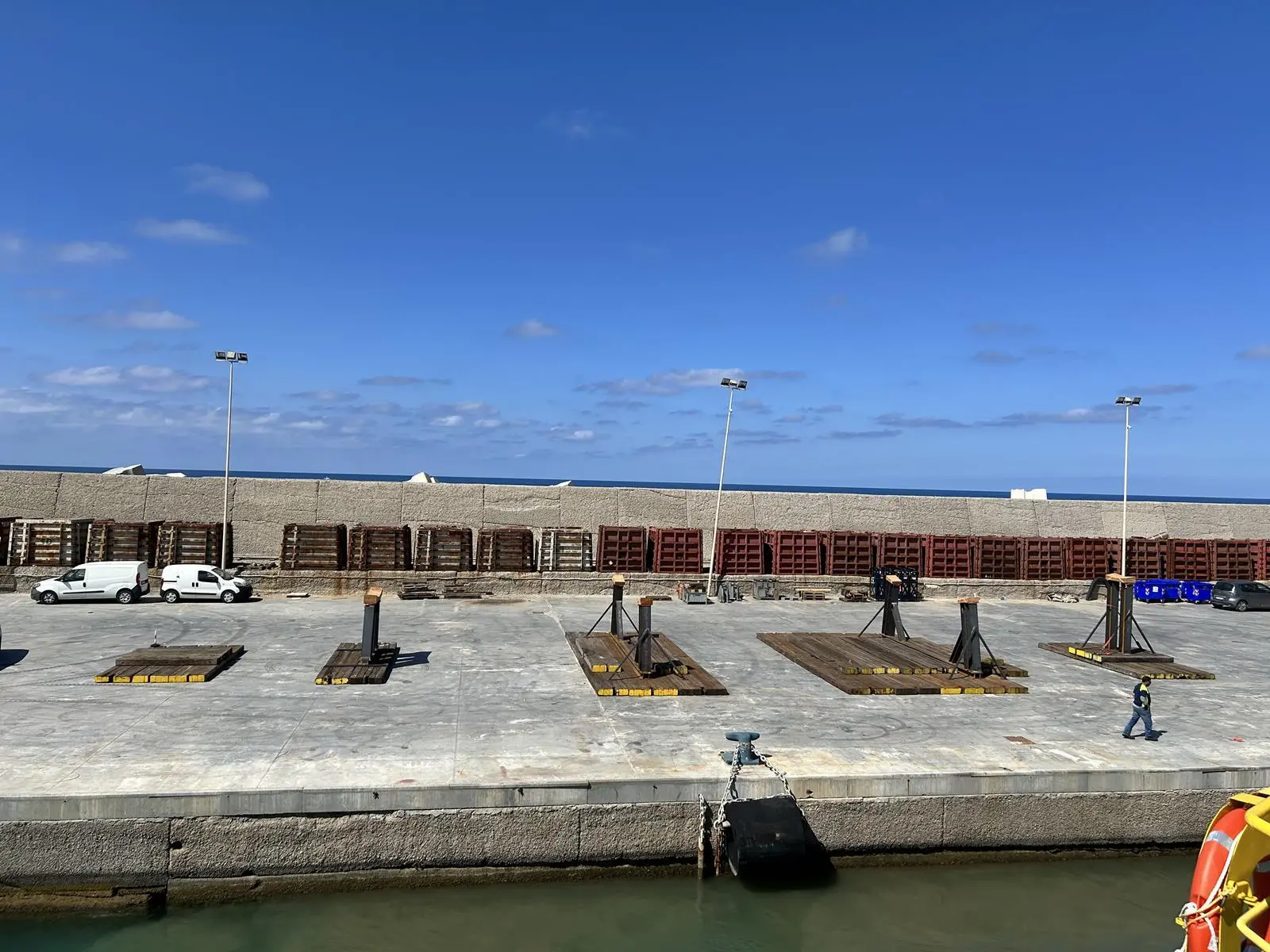
Following the full lift – currently scheduled for Saturday – the superyacht will be held in position overnight, before being transported to Termini Imerese. Security perimeters have been enforced throughout the project, covering a 1-nautical-mile airspace and 650-metre marine exclusion zone.
Once ashore, the vessel will be secured for examination by maritime investigators. Though authorities have not disclosed the cause of the sinking, the safe recovery of the hull may provide new insights.
Despite the complexity, progress has remained on schedule.
“Every marine salvage operation requires unique planning considerations,” said Cave. “The safety of personnel on site, environmental protection and recovery of Bayesian intact have been pivotal to the planning and decision-making process.
“This isn’t just a salvage job. It’s an intricate recovery of a technologically advanced yacht under tragic circumstances.”
Related Articles
 OTHER NEWS
 ACCESSORIES & EQUIPMENT
 SPECIAL REPORTS