



Hydrofoiling trimaran is first to use hydrogen fuel cell propulsion
The TU Delft Solar Boat Team has spent a year working towards their dream: Hydro Motion, claimed to be the first hydrofoiling hydrogen boat.
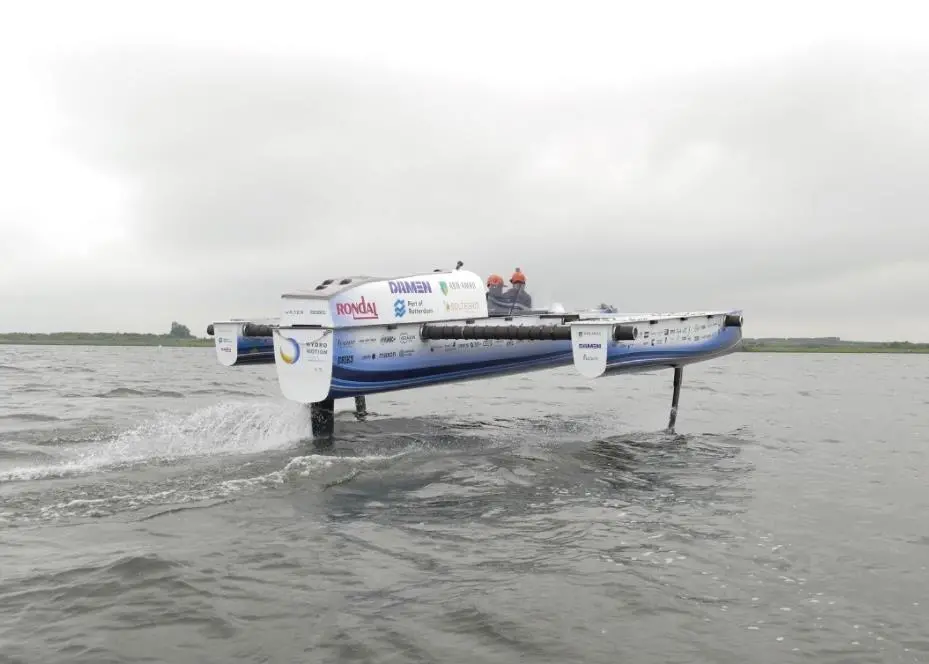
The 20 students have pulled it off. At a speed of 22 kilometres per hour, the hydrofoils make the boat, a trimaran weighing over 1000 kilos, fly above the water.
The boat was optimized to take on a race in Monaco in July, which required it to perform for 6 hours straight on the open sea without refueling. The team that covered the most distance would be the winner.
The boat is operated by three pilots and reaches speeds of up to 40 kilometers per hour. Hydrogen gas is stored under high pressure in an on-board tank. The fuel cell combines this hydrogen with oxygen from the air to generate electricity. This powers a motor to propel the boat.
The TU Delft Solar Boat Team is a multidisciplinary team consisting of 20 students. They all put their studies aside for a year for the Hydro Motion project. Last summer the close-knit team was formed with whom they work closely together day in and day out, learning a lot and making progress. The students are working on this cool project with an important mission. They want to inspire the maritime industry, currently a large consumer of fossil fuels, towards a green future.
Previously, the team made solar boats, as the name implies. After 15 years, a big step was taken with the transition to hydrogen. With the help of alumni and partner companies, the students took on the new challenge. They switched from generating green energy to storing it. Being able to store green energy on board is an essential step to greening shipping. Especially for larger ships and long distances, there is a need for a medium that can store a lot of green energy in little volume. Hydrogen is a good option for this.
By Jake Frith