

Dryport planning flowers during downturn
’ Green’ logistics solutions will remain a high priority for most companies even in the economic downturn, delegates at a Dryport conference in Bruges were told last month.
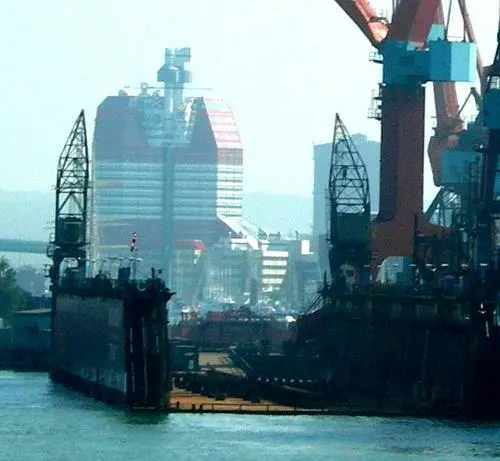
’Environmental discussion and environmental demands are here to stay, said project manager Dirk Harmsen, representing Region Västra Götaland, Sweden, the lead partner in the EU Dryport project. ’In many ways, the recession is giving companies time to reflect on their transport and logistics operations, and the feeling is that they are still looking for green solutions.’
The €4.8 million Dryport project is examining the critical role that dryports, hinterland intermodal freight transport hubs, can play in maximising the capacity and efficiency of sea ports, while also shifting traffic off the roads and on to rail or inland waterway.
The partners in the three year Dryport project are key players with strong regional and national impact and connections. They are all positioned to have influence in national policy making and regulations. Dryport is an EU funded Project through Interreg IVB North Sea Region Programme. Partners in the project are looking at monitoring carbon dioxide effects and the integration of dryports into the EU’s Motorways of the Sea concept.
Among those addressing the two day Bruges conference was Patrick Installé, managing director of Belgian green coffee and cocoa merchant Efico, which is investing a total €30m in a new dedicated European green coffee processing, warehousing and distribution facility at the port of Zeebrugge, one of the partners in Dryport.
The entire roof of Efico’s new rail-linked centre in Zeebrugge will be covered with photovoltaic modules, generating about 900,000 kW of eco-friendly energy per year. The company’s ’CO2-compensated green coffee supply chain’ also includes plans for five wind turbines to offset and compensate for carbon emissions from the transport of its coffee from port of shipment in producing countries to place of delivery at its client’s roasting plant in Europe.
’The important message is that Efico chose Zeebrugge because of its possibilities, said Mr Harmsen. ’They wanted a port which met their environmental criteria and thinking. Companies want to find low-carbon ways to handle cargo. This confirms that we have to work on modal shift from roads to rail and inland waterway, and we need to express that shift in clear figures.’
The Bruges conference, jointly organised by the Port of Zeebrugge and the West Flanders Chambers of Commerce, included a Site Assessment seminar at which partners discussed ways of identifying where a dryport site should be. One concern was how anyone could be sure that a Dryport developed now would still be considered a ’hub’ in three, four or five years’ time.
’Everybody tends to call a hub a ‘main hub’ in a region, but that can change, said Mr Harmsen. ’Investors or infrastructure planners need to know a bit more than one year planning. They want to make sure that any investment in waterway or railway is an investment that lasts and not that the market then decides to go this way instead of that.
’It is always difficult to look into the future but there is a tendency that gateways are there and traffic is probably going to come to these gateways in the future, and will expand when the economy starts to get better again.
’Hinterland connections are vital in this profiling. In essence, dryports, or inland hubs, are something you can steer towards and work for. You can never be certain where transatlantic cargo will land, for example, but you can make preconditions so it will work.’
The Swedish model of the public sector in the hinterland of Gothenburg port buying up a parcel of land and selling logistics sites to the private sector, was held up as a good example of public entrepreneurship and public/private sector cooperation.
Related Articles
 MARINE CONSTRUCTION
 POWER & PROPULSION
 ENVIRONMENT