![MaritimeJournal[Seawork]](https://www.maritimejournal.com/wp-content/uploads/2026/09/MaritimeJournalSeawork.svg)



UK Ports Fund retained amidst the carnage
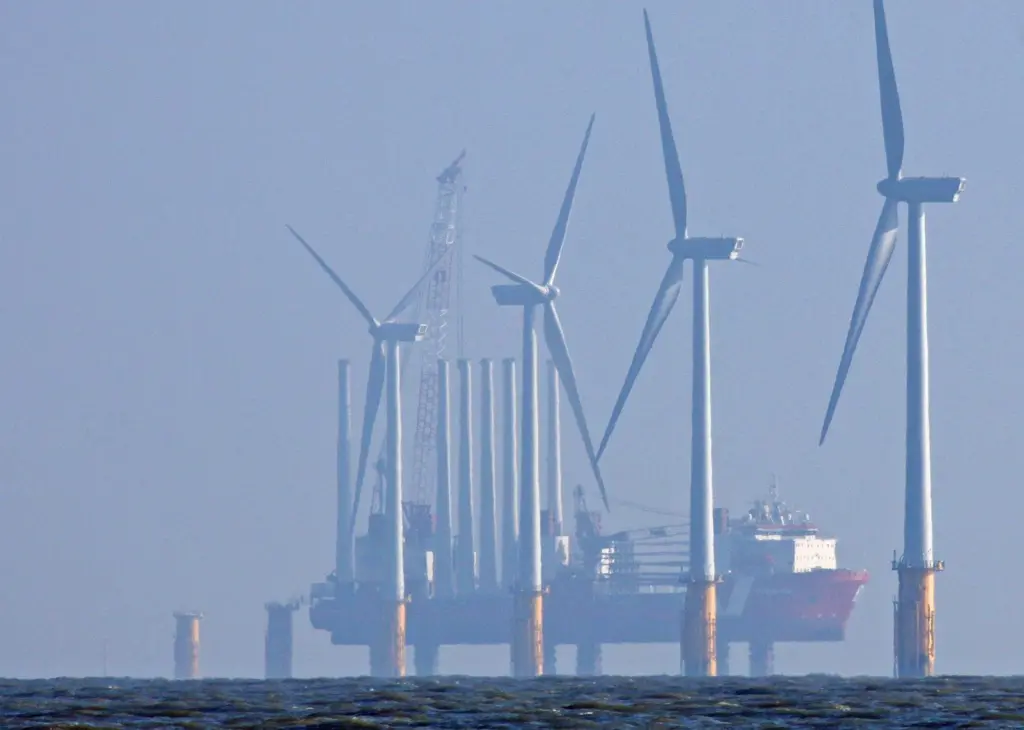
The UK Government has pledged £200m for the development of low carbon technologies, including funds for offshore wind power and the manufacturing of wind turbines at port sites.
In the long anticipated Comprehensive Spending Review announced recently, maritime interests fared better than many others as £81bn was slashed from public expenditure over the next four years in the biggest cuts the country has seen since the IMF imposed measures of 1976.
Details of how the Marine Renewables Development Fund will be allocated remain unclear, with further details from the Department for Energy and Climate Change expected on Monday, but its retention in the face of so many cuts elsewhere sends a message to investors that the Government is committed to establishing Britain as a leading low carbon economy.
RenewableUK chief executive Maria McCaffery MBE said, ‘Retaining the Ports Fund will give industry a huge boost and establish the UK as a major force in renewable energy manufacturing. ‘
Also announced on Wednesday was a Green Investment Bank, holding £1bn of initial funding to support environmental projects, including renewable energy and energy efficiency. The retention of support for Renewable Obligation Certificates at current levels signals to industry that the economics of major wind projects will be adequately supported. The feed in tariff is also retained up to the schedule review in 2014-15.
One casualty of the spending review is the proposed Severn Barrage, part of a tidal energy scheme which could have seen a massive concrete structure built across the Severn estuary from Cardiff to Weston-super-Mare. The scheme had significant implications for the environment and operations at the Port of Bristol but was dismissed primarily due to its potentially £30bn cost and a lack of residual export opportunities compared to the development of offshore wind and Carbon Capture & Storage (CCS) technologies.
Addressing the European Future Energy Forum in London on Tuesday, the UK Secretary of State for Energy and Climate Change, Chris Huhne said, ‘As we meet to sort out the state of the nation’s finances, the contribution of low carbon technologies, goods and services makes a compelling case. Even in an era of record breaking deficits, the numbers are impressive: a global low carbon goods and services market projected to reach £4 trillion by 2015, a UK domestic market worth over £100 billion, with 100,000 jobs up for grabs by 2020, and £200 billion to rebuild our energy infrastructure by the end of the decade.’
A survivor of the Review important for shipbuilding interests around the UK is the decision to proceed with building two new QE class aircraft carriers at the Rosyth Dockyard in Scotland. Sections for the 284m long, 65,000 ton ships are being built by Babcock Marine at Appledore and Rosyth, BVT in Portsmouth and Govan, A&P on the Tyne, and Cammell Laird on Merseyside. The sections are transported to Rosyth in a towage contract awarded to Anchor Marine.
Keith Hazlewood, national secretary of the shipbuilding workers union GMB welcomed the announcement, saying, ‘The decision to keep the carriers is good news, saving 10,000 frontline jobs, thousands more in the supply chain, and keeping the UK shipbuilding industry alive.’
However, as an indication of the austerity measures to come, one of the carriers will be mothballed or sold upon completion and in order to have planes on board the vessel commissioned, it must be re-designed to accommodate the Joint Strike Fighter being developed with other countries.