

Workboat changes coming down the pipeline
There is a big step change coming for the European workboat market, Vesa Marttinen of Wartsila told Maritime Journal.
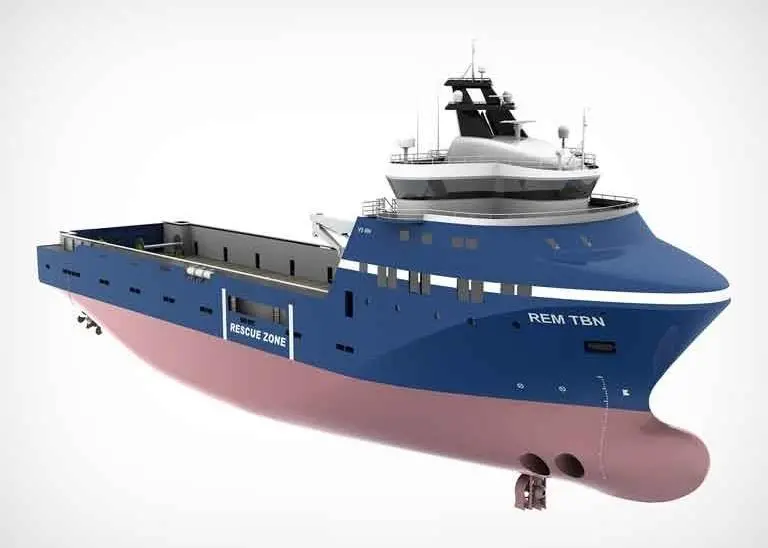
All kinds of workboats, from the larger cable layers down to supply craft, tugs and pilot boats will have to find ways of dealing with changes prompted by fuel costs and rising emissions legislation. Alongside this is the issue of public profile and accountability as ports and harbours are often in densely populated urban areas.
Mr Marttinen sees the advent of LNG as being a game changer. “The US is further ahead than most of Europe, apart from Norway, as it has begun utilising local deposits of shale gas, but Europe has now found its own domestic supply. It will make a change, not today or tomorrow, but certainly within the next five years”, he said.
Although it is more obvious that larger boats such as the dredgers and cable layers, many of which will be impacted by the low sulphur rules, may have to find alternative fuels, he says things like LNG power will trickle down even to the medium sized workboats. But it is “a big step change” for anybody who is more used to simple, shaft driven diesel propulsion. Given this, Mr Marttinen says he thinks companies like Wartsila will be asked more and more to provide complete solutions with innovative design, integrated engineering and lifecycle business models.
Given the fact that not just engines but entire systems are getting more complex, there is that much more need for features such as engine, propulsion and auxiliary engine monitoring so that these systems do not give trouble. “Condition based maintenance will keep downtime to a minimum, and lengthen the life of the system”, he said.
However, support goes much further than this. Wartsila can get together with any long term charterer to arrange appropriate propulsion and equipment installations and the package includes the training of the crew on specific applications. On bigger craft a tri-partite agreement between a lifetime service provider, investor and end-user can provide financial benefits, better insurance terms, a more fit for purpose craft, and even the ability to leverage a better financial deal against the initial costs.
Related Articles
 POWER & PROPULSION
 VESSELS
 POWER & PROPULSION