![MaritimeJournal[Seawork]](https://www.maritimejournal.com/wp-content/uploads/2026/09/MaritimeJournalSeawork.svg)



The importance of pyrotechnics
When an emergency occurs at sea, it is of paramount importance to raise the alarm as quickly and safely as possible.
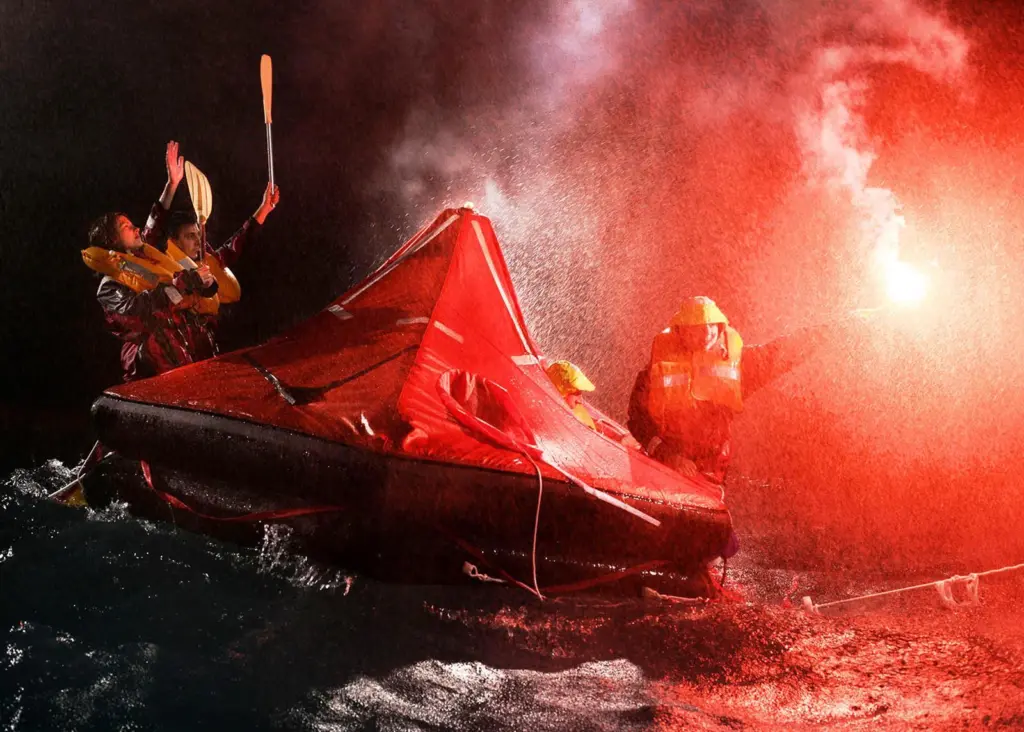
In a rescue situation, presenting an elevated signal, such as a parachute flare, which can be seen for many miles, is crucial to the safe rescue of those stranded at sea.
In this article for MJ, Justine Heeley, managing director of Drew Marine Signal and Safety, which manufactures Pains Wessex marine distress signals, discusses the importance of carrying a variety of marine distress signals on board.
The use of pyrotechnic flares to indicate distress at sea dates back over 100 years. The sight of a red parachute rocket flare, which when fired can reach altitudes of 300m, remains one of the most universally known signals indicating distress at sea. From walkers on a cliff head, swimmers on a beach, watch crew on commercial vessels and pilots flying thousands of feet overhead, the sight of a red parachute rocket burning steadily for 40 seconds, usually followed by a second and third flare, is internationally recognised as a call for help. Pyrotechnic flares are designed to withstand exceptional environmental exposure and perform reliably even after immersion in water.
Today, there are many other electronic devices available for commercial and leisure boaters which can be used to aid rescues at sea, in conjunction with marine distress signals, such as EPIRBS, AIS, DSC, and electronic marine safety signals (EVDS).
EVDS are a new addition to a sailor’s safety arsenal and, as with all marine safety products, have both benefits and drawbacks. EVDS are considered to be more environmentally friendly and have a longer ‘burn’ life than traditional flares, due to being battery operated. However, we do not yet fully understand the long term reliability of these devices.
The IMO issues regulations for commercial ships, which includes SOLAS regulations and COLREGS (the International Regulations for Preventing Collisions at Sea). These standards for shipping specify the requirements for a range of SOLAS approved pyrotechnics to be carried on board, with the range and quantity varying depending on the vessel’s size.
Recent information issued (Marine Information Notice 464) by the UK Maritime & Coastguard Agency states the international regulations for the Prevention of Collisions at Sea (COLREGS) applies to all vessels at sea. Equipment needed to make a distress signal is required on all seagoing commercial vessels, most non-seagoing commercial vessels and all pleasure vessels of 13.7m in length and over. The MCA is aware of the development and marketing of hand held non-pyrotechnic devices, often referred to as EVDS, which are offered as alternatives to pyrotechnic flares. Whilst noting the likely benefits of these, such as cost and ease of disposal, from a practical perspective, the signal produced by these devices is different to that produced by a hand held pyrotechnic flare and may not be recognised as a distress signal, which could potentially lead to fatal consequences.
It is our view that no one system is the last word in safety and all means of signalling distress are valid and work best when used in conjunction with each other. However, no one system or device currently replaces the specific function of pyrotechnic flares.
Related Articles
 ACCESSORIES & EQUIPMENT
 ACCESSORIES & EQUIPMENT
 ACCESSORIES & EQUIPMENT