FEATURE: A small port with big plans… but a power problem
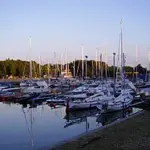
The trust port of Shoreham in West Sussex on the south coast of England has ambitions.

Although it’s probably the third largest fishing port in the country, according to director of Engineering & Environment Port Brian Rousell, who showed Maritime Journal around recently, it’s still a small port, and as such, it has to be creative about how it stays afloat.
Once built around coal, it now handles timber, aggregates, steel, grain and fishing vessels, while looking for new opportunities in offshore wind.
But as Brian Rousell says, not only are its ambitions constrained by working around a small, long and narrow site; power supply – or lack of – is a growing obstacle.
A small port, working hard
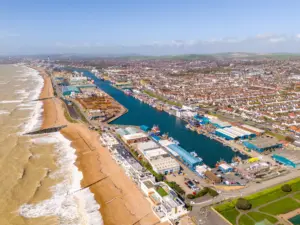
The port is long – about two miles – but very narrow, because it runs alongside the old River Adur. It is also shallow, with a maximum draught of just 6.7 metres.
Aggregates account for the biggest tonnage at about a million tonnes a year, while timber is a major volume business. Timber is where the port wants to become more efficient.
“We tend to get used a little bit as a storage facility, which we charge for and is okay to a point, but what works better for us is if it comes in and goes out on a rapid turnaround,” says Rousell.
“We need to keep trying to diversify, I think, because we’ve got a lot of eggs in one timber basket.”
One way to do that is to make better use of ships arriving with cargo.
“It’s good for us if we can get things that are being exported because the timber ships come in and we don’t want them to go out empty – we want to fill them up with something. So woodchip gets reloaded, logs like this go out.
“Because of the timber, steel, aggregates, it’s all very construction related. When construction dives, we struggle.”
Another potential income stream is Shoreham’s dry dock, which is available for hire, but Shoreham does not operate as a full repair yard.
“We’ll bring the vessel in, dry it out, hand it back and say, do what you want,” Rousell says. “Because we haven’t really got the facilities or the labour or the skills to do all the throughput of work in there.”
Power limits
Shoreham has set itself a 2035 zero-carbon target and Rousell says the route to achieving it is clear – but the electricity infrastructure is not keeping pace.
“The flight path is there for us. We can do it if we can get the power, basically.”
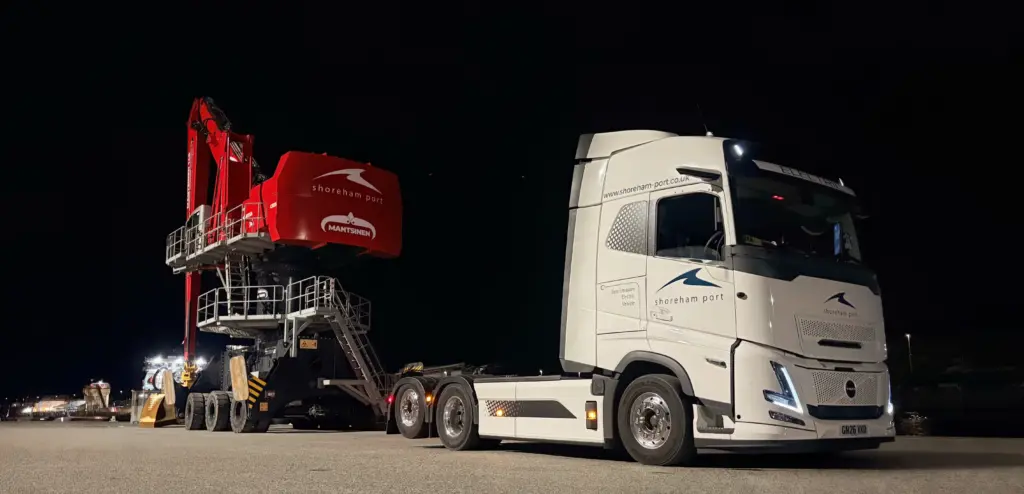
The port is already making changes. Its first electric heavy goods vehicle has a range of about 300 kilometres, and a second is due to arrive. The site also has around 250 kilowatts of solar power and battery storage.
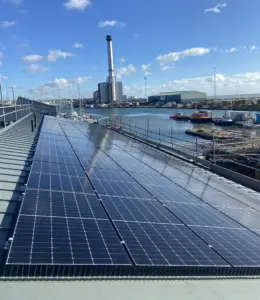
But electrifying the port’s cargo-handling equipment is a much bigger challenge.
“We’ve got 38 of those forklifts,” says Rousell. “We’re just in the process of renewing leases on batches of them and we’ve got our first two electric forklifts coming very soon. The trouble again is where to charge them” – and this is not the physical charging points, but the power itself.
One substation serves the busiest part of the port and it’s at capacity already. Rousell says the network operators have told the port it has to wait until 2039 for major increases – five years after the port’s own deadline.
“We’ve got to be able to charge 38 of these overnight when there’s no solar,” he says. “We’ve got to be able to charge 20 HGVs overnight when there’s no solar.
“On a long thin site is a challenge because you’ve got a lot of cabling to do.”
Shoreham is also trying to reduce emissions from vessels.
It has installed shore power for scallop trawlers, but uptake has been slow because of what Rousell believes is a mindset problem.
“There’s a whole kind of culture thing to overcome as well, I think, a mindset,” he says.
The port spent the best part of a million on the shore-power scheme, including the substation, yet some boats continue to run their engines while alongside.
Read more on Shoreham’s electrification challenges in our Special Report, coming soon
Rampion: An opportunity, within limits
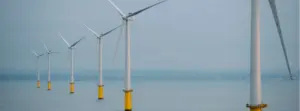
Offshore wind could offer another source of revenue. The existing 116-turbine Rampion offshore wind farm is already operating off the Sussex coast, and its proposed expansion, Rampion 2, received development consent in April 2025.
Developer RWE says Rampion 2 is a 1.2GW project, planned to add up to 90 turbines – more than doubling power generation capacity with slightly fewer turbines.
Rousell says Rampion’s existing operations base is in Newhaven, but there is potential for a new one to be based at Shoreham. It wouldn’t be able to accommodate the installation vessels as they are too big, but CTVs and survey vessels would not be a problem and give the port extra volume.
Making the space count
Shoreham is not planning one grand expansion but a series of practical decisions: moving cargo faster, bringing in new business, using its land more efficiently and trying to secure the power needed to electrify operations.
“We want to keep growing the haulage, we want to keep improving our property estate as well,” says Rousell, and the port has many small business units that it hires out to a wide range of companies, from cheese wholesalers to gyms to cafés.
Shoreham has plenty of ambition, from diversifying its cargoes to supporting offshore wind and electrifying its operations.
But with grid capacity not expected to increase significantly until 2039, four years after its own zero-carbon target, the port faces a fundamental challenge: it can plan for the future, but it needs the power to get there.