

Ports need to find €2.4 billion to enable offshore wind
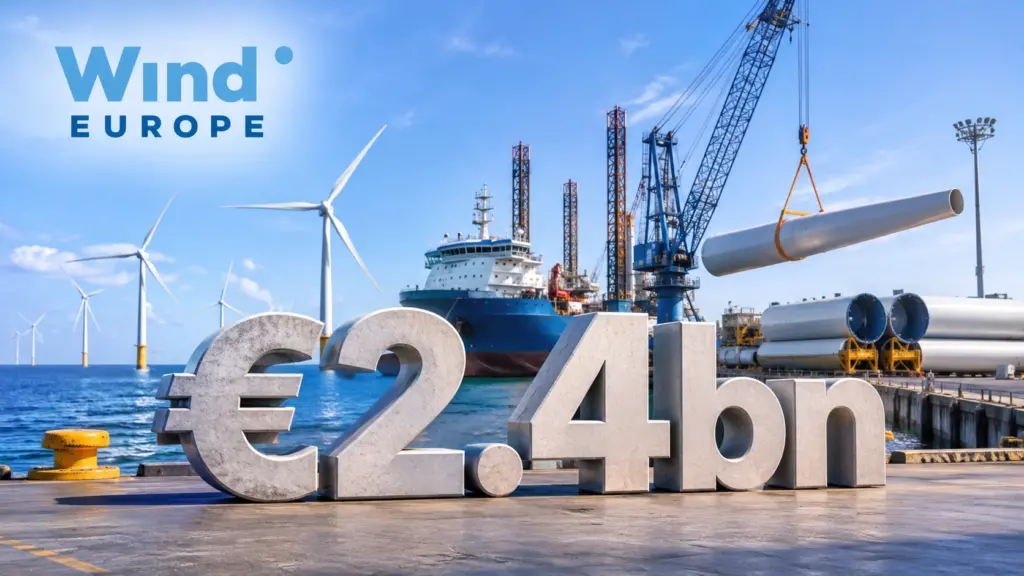
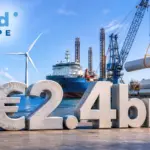
European ports will need to spend €2.4 billion more to equip themselves for the next phase of offshore wind development, industry body WindEurope says.
The cash will be needed to expand installation capacity and ensure ports can accommodate the increasingly large components, specialist vessels and logistics operations associated with offshore wind projects beyond 2030.
The investment requirement represents a significant opportunity for port operators, marine construction contractors, engineering companies and equipment manufacturers, as Europe looks to strengthen its offshore wind supply chain and avoid infrastructure becoming a constraint on deployment.
The required improvements are expected to include deeper berths, stronger quays capable of supporting exceptionally heavy loads, expanded storage and marshalling areas, and facilities for handling and assembling increasingly large turbine components, foundations and subsea cables.
For port developers, this could translate into substantial civil engineering programmes involving quay wall construction, piling, dredging, land reclamation, ground reinforcement and the installation of heavy-duty handling equipment. Specialist manufacturers could also benefit from demand for cranes, transport systems, lifting equipment, cable-handling machinery and other terminal infrastructure.
There are opportunities for offshore construction vessel operators and shipbuilders too. Greater installation capacity will require suitable vessels to transport and install foundations, turbines and cables, alongside a supporting fleet of service operation vessels, crew transfer vessels, tugs and other harbour craft.
However, investment decisions need to be made well ahead of demand. WindEurope has highlighted that developing port infrastructure can take between six and ten years, reflecting the time required for planning, permitting, financing and construction. Without greater certainty over the offshore wind project pipeline, ports may struggle to justify the capital expenditure required.
The €2.4bn figure therefore represents more than a funding challenge. It identifies a sizeable potential market for the European marine construction and manufacturing industries, provided governments and developers give ports sufficient confidence to invest.
For contractors, equipment suppliers and port operators, the message is clear: the next wave of offshore wind development will depend not only on turbines and installation vessels, but also on having the right infrastructure in place to get them offshore.
Related Articles
 ENVIRONMENT
 OFFSHORE RENEWABLES
 VESSELS