


Using AR in ship operations
Fraunhofer has produced a paper detailing its latest research into the use of augmented reality (AR) in ship operations.
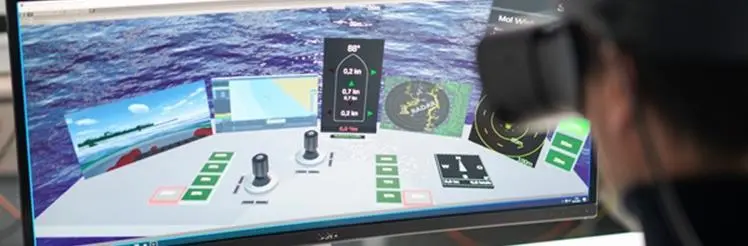
Despite AR’s increased use in a number of areas, such as maintenance, using computer-generated information to enhance real images is so far rare in day-to-day ship operations.
This area is ripe for exploring as the availability of data increases in tandem with falling numbers of personnel on board. At Fraunhofer’s Center for Maritime Logistics and Services (CML), researchers have been studying this area of conflict for several years.
To ensure that the large amount of information on board can be prepared and made available to different users in a targeted manner, data must be analysed, fit for purpose and presented in an easily interpretable way so that the correct decision is made.
Data on ship position and movement, environmental data, and nautical information on approach and specified berth, supplemented by the current maritime traffic situation, enable a pilot to control the ship from shore as well.
Camera systems and other optical monitoring sensors can provide important information, giving those on the bridge a more comprehensive overview than is currently possible. Thus the use of AR offers the possibility to improve the safety of shipping, as well as bringing economic benefits.
At the CML, Fraunhofer uses simulator to brings together navigators, pilots and tugboat operators with AR developments in a range of real-life situations to develop, test and evaluate AR-based human/machine interfaces that work intuitively and interactively.
Fraunhofer’s paper, ‘Increasing Maritime Situational Awareness by Augmented Reality Solutions’ is available for free download.
Related Articles
 AUTONOMOUS VESSELS & TECHNOLOGY
 OTHER NEWS
 EQUIPMENT