




Catering for modal shift in Rotterdam
United Waalhaven Terminals (UWT) and the Port of Rotterdam Authority have reached agreement for construction of a new quay on the Prins Johan Frisohaven, partly to handle empty containers.
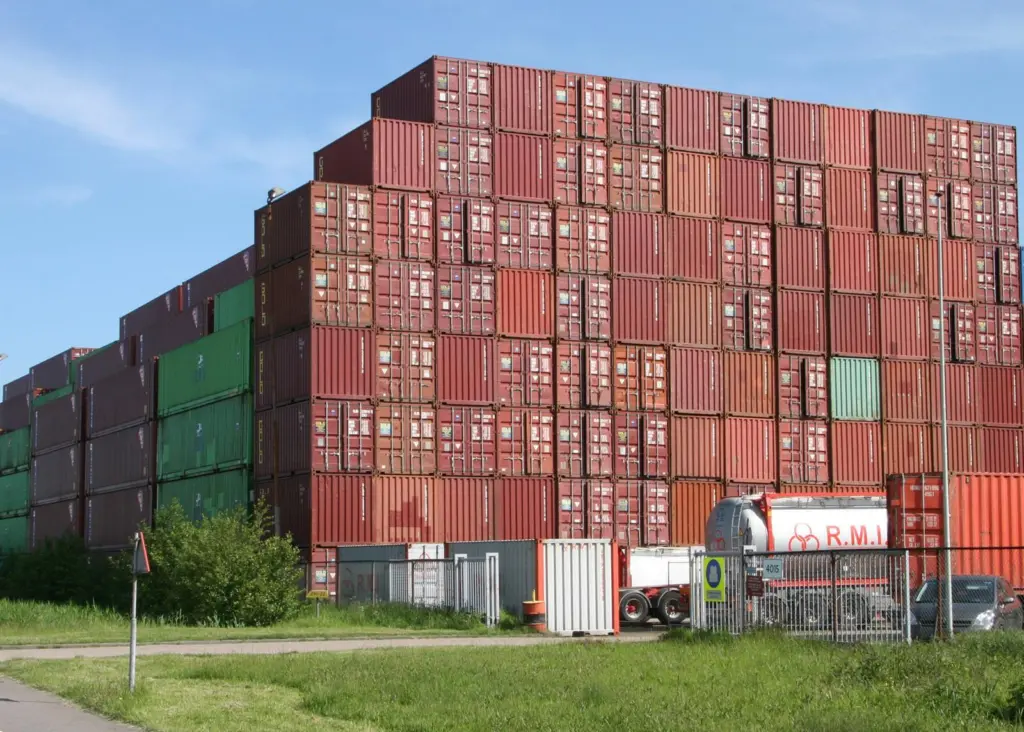
The term ‘modal shift’ is often heard these days. In this instance it refers to the changing balance of cargo distribution between road, rail and inland shipping. Rotterdam’s Maasvlakte 2 plans a modal shift away from road transport (for containers), the intention being to reduce the amount of container transport by road haulage from 47% to 35% over the period 2003 to 2033. Meanwhile, rail and inland shipping’s share will increase from 13% to 20% and 40% to 45% respectively over the same period.
Exploiting environmentally friendly modes of transport will be popular for the future but subtle changes to existing patterns have implications throughout the chain, including the movement of empty containers. The construction of the new quay on Bunschotenweg is intended to address such changes, UWT expecting that around 40% of all empty containers will ultimately be transported by inland shipping.
The new quay will be able to accommodate short sea and inland vessels with a draught of 7m and length of 135m. While primarily designed to handle empty containers, the quay will also be able to handle full ones.
The work is part of a total restructuring of the Bunschotenweg with UWT putting final touches to a new planning programme for handling trucks, intended to speed up the flow of traffic on roads currently dominated by freight traffic.
The new quay will be particularly important for inland shipping to and from the Maasvlakte. Having to make one less stop will yield an average time saving of around 45 minutes for the trucks. The tendering process for quay construction starts in October 2013 and completion is planned for the third quarter of 2015.
In a separate move, UWT recently took over the 50% interest in United Container Freight Station from the ECB Group. Containers to and from the 20,000m2 warehouse space and outdoor storage on Bunschotenweg will ultimately be transported solely by inland shipping.
By Peter Barker
Related Articles
 MARINE CONSTRUCTION
 EQUIPMENT
 MARINE CONSTRUCTION