


Caterpillar launches C7.1 marine diesel
US-headquartered propulsion giant Caterpillar has added a new diesel to its range that promises to offer a high power density combined with fast acceleration and quiet operation.
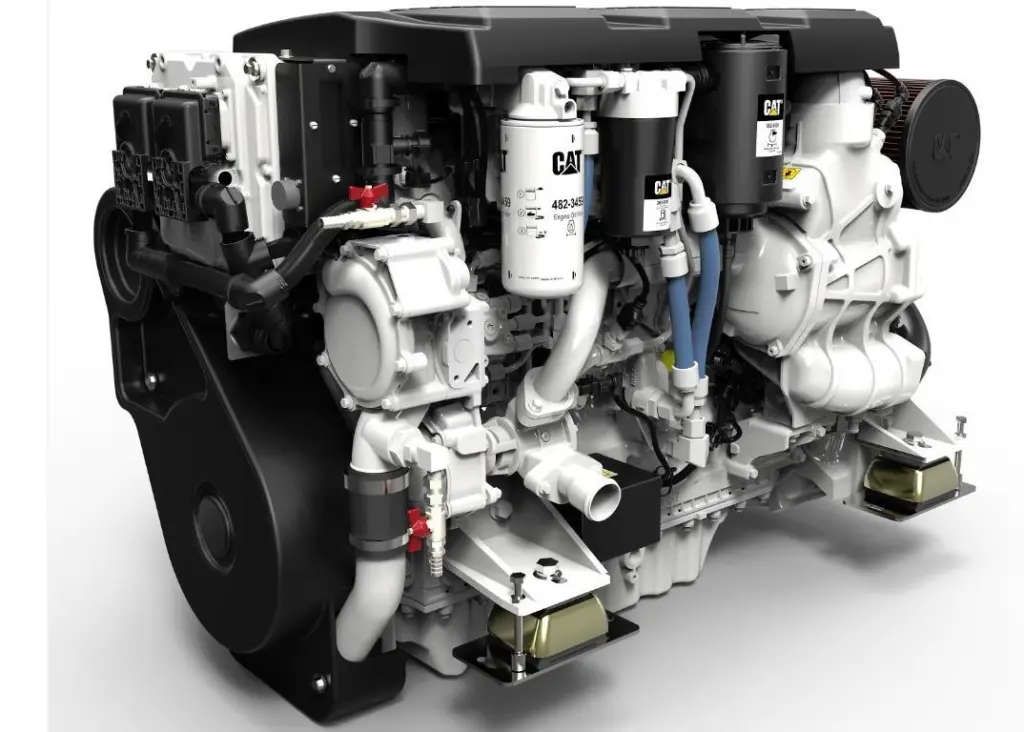
Called the C7.1 this new engine is a 6 cylinder unit that takes this manufacturer firmly into the high performance market.
As a marine propulsion engine, it is available in three ratings that can meet a variety of applications. The high performance version will produce 507hp (373 kW) whilst the lowest power version offers 406hp (298 kW). In between is the 456hp (336 kW) engine and unusually, all of these power outputs are achieved at the same 2900rpm. All of the C7.1 power ratings on offer meet the EPA Tier 3, the IMO II, the EU Recreational Craft Directive and EU Stage IIIA emission regulations.
“The new turbocharged C7.1 platform is a powerful, compact addition to our high performance product portfolio,” said Charlson Smith, the Caterpillar Marine sales manager. “The engine offers a superior power to weight ratio, resulting in a swift response time and speedy acceleration.”
The C7.1 is a 6 cylinder in line 4-stroke diesel with turbo-charging and after-cooling. The displacement is 7.1 litres and the engine features a common rail fuel system enabling optimum combustion and low emissions. Caterpillar claims that these engines provide noticeably quiet operation due to reduced combustion noise which is achieved mainly through advanced electronic control. Additionally, it is said that no visible smoke is emitted from the C7.1 engines during operation. Beyond the quiet, smokeless performance of the 7.1, a key benefit to the customer is the serviceability of the engine due to its small footprint which will allow easier access to all of the maintenance points even in a compact engine room.
The dimensions of the C7.1 are a length of 1394.0mm, a width of 798.0mm and a height of 876.0mm. The dry weight of the engine is 750.0kg. There is a wide range of standard equipment on the engine including an air cleaner, water cooling of the turbo-charger and a condensate drain on the after-cooler. There is a cold start strategy incorporated into the control system and full engine diagnostics and fault logging. The engine can accept three types of throttle inputs that cover most control systems and there is a 70 pin customer connector.
Obviously a major market for this new engine will be in the leisure sector but it will also bring serious competition into the performance workboat sector. The C7.1 can make a suitable engine for larger RIBs which are widely used as workboats and it will also work as the primary engine in pilot and patrol boats. A Caterpillar branded generator based on this new engine is also available.
By Dag Pike